Libreville has signaled a decisive shift in its approach to international financing. As delays continue to plague several initiatives backed by the African Development Bank (BAD), the Gabonese government is now insisting on concrete outcomes.
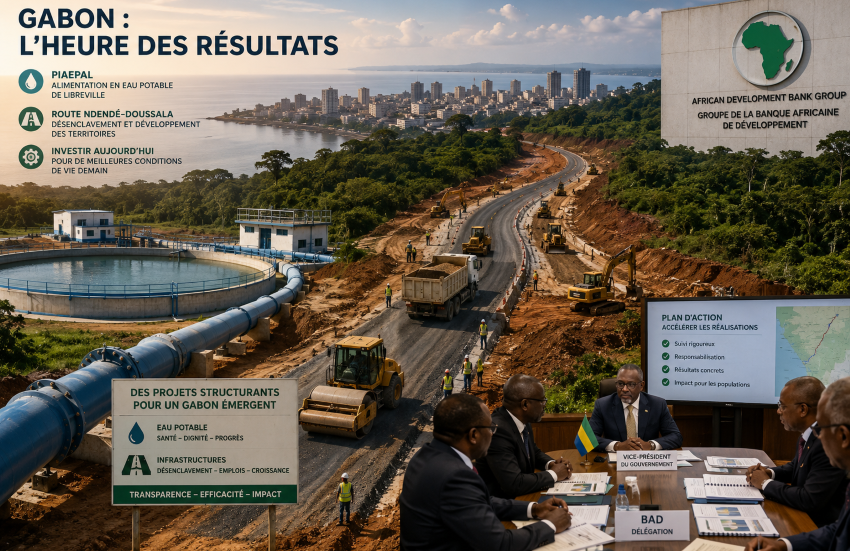
A high-level meeting held on June 29 in Libreville served as the backdrop for this new directive. Vice-President of the Government, Hermann Immongault, met with a delegation from the BAD, led by Country Administrator Mamour Ousmane Ba. The core message was clear: the capital mobilized through debt must translate into visible improvements for the population.
Strategic projects under the microscope
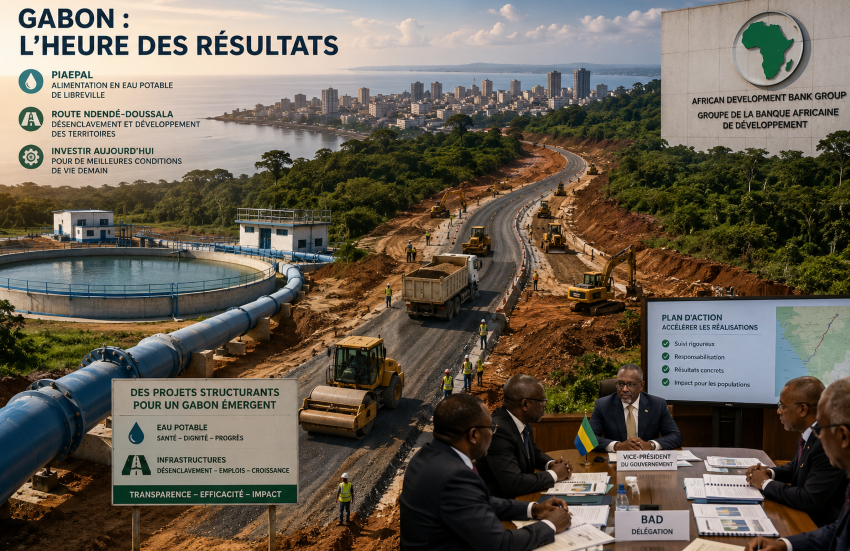
The discussions centered on two major infrastructure works. The first is the Integrated Program for Drinking Water Supply and Sanitation in Libreville (PIAEPAL), a vital project designed to provide sustainable water access to the capital’s residents. The second is the Ndendé-Doussala road, a critical link intended to boost regional integration and economic trade with neighboring countries. While both are considered top priorities, their slow progress has sparked growing concern and public impatience.
Moving beyond project delays
For years, Gabon has secured significant funding from international institutions to upgrade its infrastructure. However, many of these projects have failed to meet their original timelines, leading to widespread frustration. The recent dialogue with the BAD indicates a departure from past leniency, with the executive branch now prioritizing performance and accountability.
In an era of tightening budget constraints, the government’s focus has shifted. It is no longer enough to simply secure loans; those resources must be utilized effectively. For the average citizen, the success of a government program is measured by its impact on daily life rather than the amount of money spent.
The PIAEPAL initiative is a prime example of these high stakes. With many Libreville neighborhoods still facing chronic water shortages, every delay erodes public trust. Similarly, the Ndendé-Doussala road, long touted as a catalyst for economic development, remains stalled, postponing the benefits promised to local businesses and communities.
Identifying internal bottlenecks
A significant takeaway from the meeting was the government’s willingness to look inward. Hermann Immongault emphasized the need to clarify the roles of all stakeholders and pinpoint the specific obstacles hindering progress. This suggests a move away from the habit of blaming external contractors or lenders for every setback.
By acknowledging administrative shortcomings—such as heavy bureaucracy, poor coordination between agencies, and slow decision-making—the government is addressing the complex reality of public project management. This level of self-reflection is a necessary step toward breaking the cycle of chronic delays that often hampers development across West Africa and the wider continent.
A benchmark for future reforms
The BAD remains a committed partner, with Mamour Ousmane Ba reaffirming the institution’s support for Gabon’s development goals. However, the ultimate success of this partnership depends on the national capacity to execute projects efficiently.
The government’s new stance will be tested by the progress made on the water supply in Libreville and the completion of the Ndendé-Doussala highway. These projects now serve as litmus tests for the political will in Libreville. They will determine whether the change in rhetoric leads to a genuine transformation in how the African economy today is managed at the local level.
The message to international partners is unmistakable: Gabon expects every funded project to result in a physical achievement. In a global landscape where competition for development capital is fierce, the most attractive nations are those that can turn debt into durable, operational infrastructure that enhances the well-being of their people.