The countdown has begun. With just seven days remaining until the June 27 deadline for political parties to comply with Gabon’s sweeping new legislation, the nation is bracing for a profound political transformation. Under the new law, every registered party must submit complete documentation—or face automatic dissolution, no exceptions granted.
The gap between political rhetoric and administrative reality remains stark. Despite claims of readiness, official records from April reveal a troubling truth: out of 104 registered parties, fewer than ten had filed fully compliant dossiers. The Ministry of the Interior will deliver its final verdict on the 27th, a date that could reshape Gabon’s political landscape overnight.
Why the drastic reform?
Enacted following the April 2024 National Inclusive Dialogue, Law No. 016/2025 aims to purge Gabon’s political sphere of what officials describe as “empty shells”—superficial entities lacking genuine national representation or operational structure. The law demands far more than symbolic registration: parties must now prove they are viable, nationwide organizations with real grassroots support.
Key requirements include a minimum of 10,000 verified members, each identified through the National Identification Number system, evenly distributed across all nine provinces. Parties must also maintain a physical headquarters, a dedicated bank account, updated statutes, and undergo rigorous financial audits overseen by the Court of Auditors.
A test of political endurance
The Interior Minister, Adrien Nguema Mba, has made one thing clear: the deadline is non-negotiable. “No extensions will be granted,” he has stated repeatedly, leaving no room for ambiguity. Those failing to comply will be dissolved without appeal.
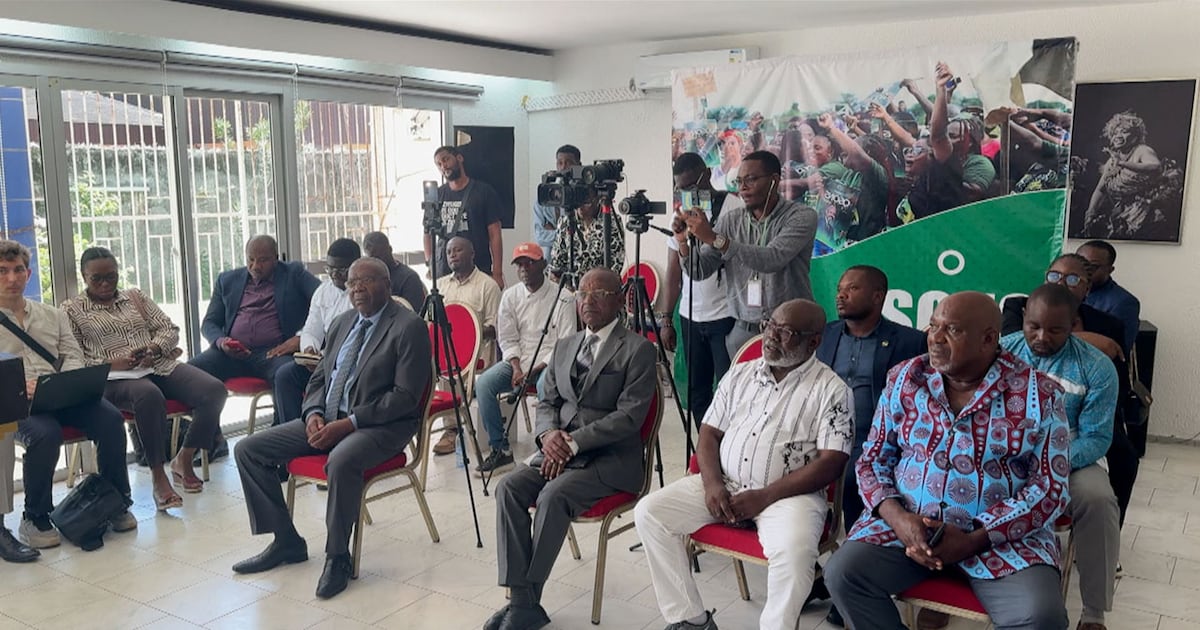
Reactions within the political class have been sharply divided. Joachim Mbatchi, leader of the Front for the Defense of the Republic (FDR), sees the reform as an opportunity for smaller parties to consolidate into stronger coalitions. “This is not a threat—it’s a chance to build more cohesive political forces,” he asserted.
In contrast, Theophile Makita Nyembo, vice president of Ensemble pour le Gabon, claims his party has already met all legal requirements. “We fulfill every condition,” he stated, though critics argue the law disproportionately targets newer or opposition groups.
Leadership weighs in—and controversy erupts
The president’s recent address to Parliament added another layer of tension. While reaffirming support for the reforms, he hinted at reservations about certain amendments, stating that “decisions made by the Gabonese people must be respected.” The remarks sparked immediate backlash from Francis Aubame, leader of the Sovereigntist-Ecologist Party (PSE), who accused the government of political manipulation. “This is an unprecedented interference in legislative affairs,” he argued. “The National Dialogue is not a sovereign national conference. Lawmakers are free to vote as they see fit.”
What’s at stake for Gabon’s democracy?
As the deadline approaches, only a handful of parties—among them the Union of the Democratic Bloc (UDB) and the Gabonese Democratic Party (PDG)—are reported to have submitted complete files. Most others are in a frantic race to gather the required membership and documentation, knowing the consequences of failure could be irreversible.
Beyond structural requirements, the law introduces a new electoral performance clause: any party failing to field candidates in two consecutive elections will lose its legal status. Critics warn this could shrink political pluralism, reducing the field to only the most established or compliant groups.
On June 27, the Ministry of the Interior will unveil its official list. Gabon will then face a defining moment: either enter a new era of disciplined, accountable politics—or witness the near-extinction of its once-vibrant multiparty system. The end of an era is near—an era where launching a political party was as simple as filing a form.