Transparency International has released its latest Corruption Perceptions Index (CPI) for 2025, revealing a troubling global trend: corruption is worsening even in long-standing democracies, where political leadership appears to be weakening.
The CPI evaluates 180 countries and territories, ranking them based on perceived levels of public-sector corruption. Each nation is scored on a scale from 0 (highly corrupt) to 100 (highly clean). Shockingly, over two-thirds of the countries scored below 50, signaling widespread governance failures.
how corruption is measured
Measuring corruption directly is nearly impossible—it thrives in secrecy. Instead, the CPI relies on perception-based assessments to gauge how corrupt a country appears to be. This year’s index draws from 13 independent data sources, including the World Bank, the World Economic Forum, risk consultancies, and think tanks.
The methodology evaluates key indicators such as:
- Prosecutions of corrupt officials
- Misappropriation of public funds
- Protection of whistleblowers
Denmark leads the ranking with 89 points, while South Sudan and Somalia trail at just 9 points each.
sub-Saharan Africa struggles with corruption
The region remains the worst-performing globally, with an average score of 32. Only four countries exceed 50 points: Seychelles (71), Cape Verde (58), Rwanda (58), and Botswana (55). Notably, no Francophone African nation ranks among the top performers.
Within Francophone West Africa, the average score is 34.2. Senegal (43), Benin (42), and Côte d’Ivoire (38) fare better than most, thanks to recent administrative reforms. However, Guinea lags behind due to institutional weaknesses and restricted civic freedoms.
the Sahel’s fragile institutions
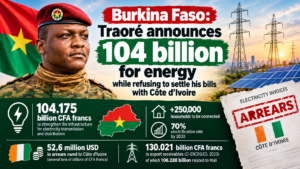
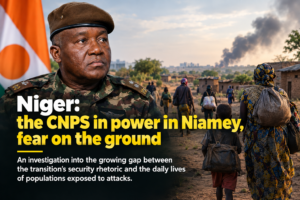
Countries in the Francophone Sahel face even greater challenges. Political instability, security threats, and eroding checks and balances create fertile ground for corruption. Burkina Faso leads the subregion with a score of 40, but this remains well below the 50-point threshold. Niger (31), Mali (28), and Chad (22) fare worse.
central Africa’s conflicts fuel corruption
In Francophone Central Africa, corruption is exacerbated by ongoing conflicts, particularly in the Democratic Republic of the Congo (20), where state control is fragmented. Burundi (17) also ranks poorly. Rwanda stands out with 58 points, defying regional trends.
Overall, no Francophone African country scores above 70, the threshold for “high integrity” as defined by Transparency International.
Europe’s mixed results
For context, Germany—ranked 10th globally—scores 77 points, placing it 27 spots ahead of France (66). François Valérian, president of Transparency International, warns: “Anti-corruption laws exist, and oversight bodies are in place. But enforcement is weak, and these bodies lack independence and resources.