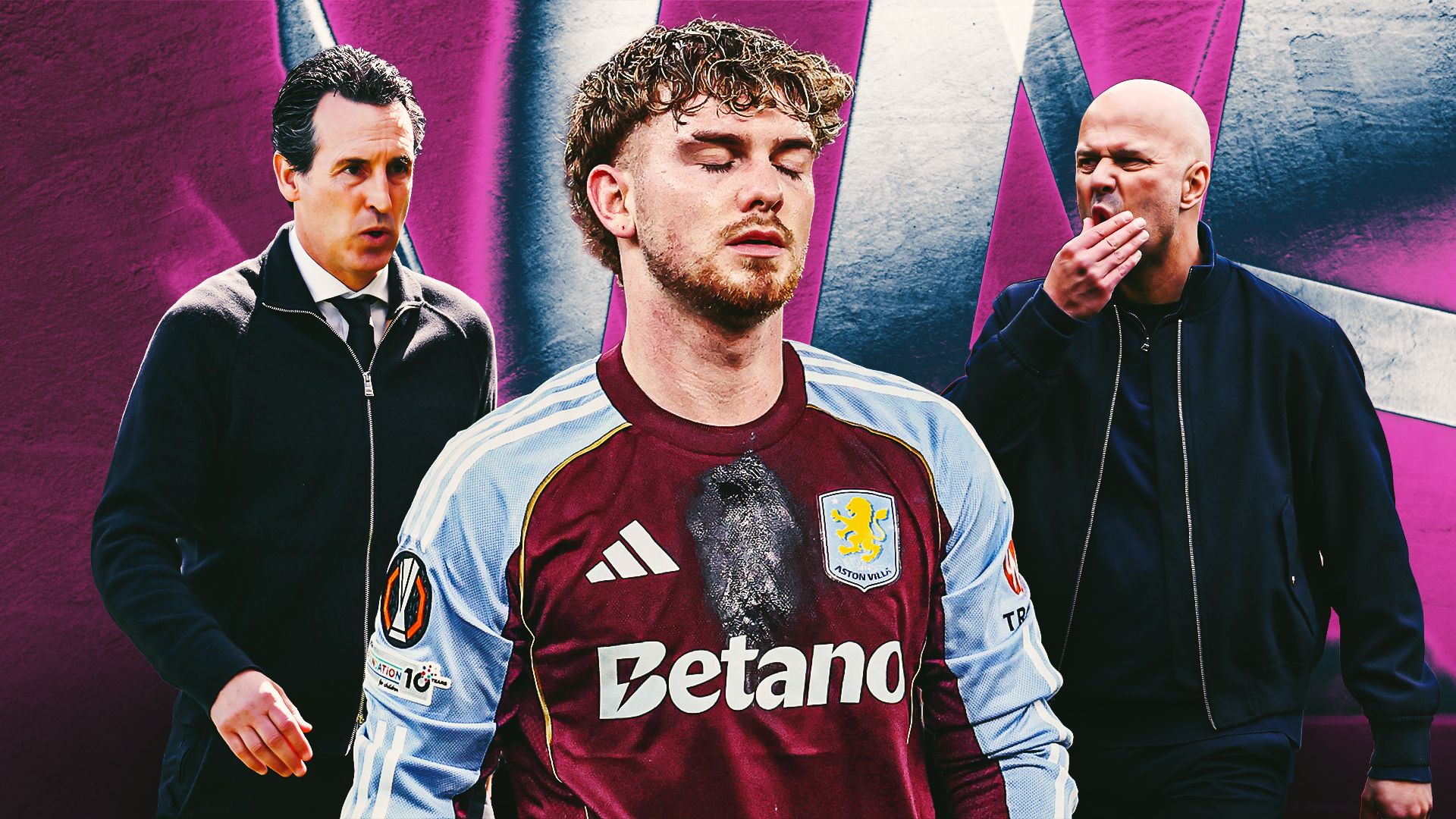
Harvey Elliott faces an uncertain future at Liverpool after Aston Villa made it clear the 23-year-old would not feature in their upcoming clash against his parent club. Even if the fixture hadn’t been on the cards, Unai Emery wouldn’t have selected him. The decision isn’t about preserving Elliott for next week’s Europa League final against Freiburg—it’s about avoiding a costly financial obligation. The England international hasn’t played a single minute since March, as one more appearance would trigger a £35 million (£46 million) buy clause that Villa simply cannot afford under Premier League profitability rules.
From hopeful return to sideline purgatory
Elliott’s season has been a non-starter in every sense. Emery decided early that the versatile attacker didn’t fit his vision, making his summer return to Liverpool look inevitable. But with Arne Slot sharing similar reservations, the young star’s prospects of staying at Anfield are fading fast.
Klopp’s lingering regret
Before departing Liverpool in May 2024, Jürgen Klopp was asked about potential regrets. The former manager admitted: « I don’t dwell on what we could have done differently, but if I had to pick one thing, it might be not giving Harvey enough game time. »
During a brutal January injury crisis, Elliott shone brightly, delivering match-winning performances whether deployed on the right wing or in midfield. « He was our best player, » Klopp recalled. Yet as soon as others recovered, Elliott was relegated to the bench, never reclaiming his starting spot.
The 23-year-old bears no ill will toward Klopp. A lifelong Liverpool supporter, Elliott calls the German a « legend » for helping him « live his dream »—and admits he’s surprised no statue of Klopp stands outside Anfield yet.
Slot’s summer promise, winter reality
At the start of the 2024-25 season, Elliott showed promise under Slot, tallying 53 appearances across all competitions and positioning himself as the ideal 10 under the new system. Pre-season performances reinforced this, with the youngster combining work rate with creative flair—exactly what the Dutch coach demanded from his playmaker.
« We build from the back, place him in the right positions, and he makes the most of those moments, » Slot said after Elliott set up two goals in a 2-1 preseason win over Arsenal in Philadelphia on August 1, 2024.
Injury, competition, and the bench
By season’s start, Elliott was back on the bench, managing just seven minutes across Liverpool’s first three games. A foot fracture sustained while training with England’s U21s cut short his momentum just before a grueling seven-match stretch in 21 days that Slot had planned to integrate him.
When Elliott returned, Liverpool were firing on all cylinders. Dominik Szoboszlai dominated as the pressing midfield engine, while Mohamed Salah shone on the right wing, leaving Elliott sidelined—a familiar and frustrating pattern. His lone Premier League starts came only after the Reds clinched the title.
Slot now views Elliott as surplus to requirements, and the arrival of Florian Wirtz this summer has made his departure both inevitable and necessary for the player’s career revival.
A wasted talent
Elliott remains one of football’s most gifted young players. While peers like Tino Livramento and Elliot Anderson impressed at the 2025 U21 Euros, Elliott stood out as the tournament’s standout performer, earning Best Player honors and lifting the trophy for a second time. His dazzling displays in Slovakia caught the eye of RB Leipzig, who needed a successor to departing star Xavi Simons.
Given Leipzig’s reputation for nurturing young talent, a move to the Red Bull Arena would have made sense. But financial constraints prevented an agreement. Instead, Aston Villa convinced Liverpool to accept a loan with a mandatory £35 million purchase clause triggered after just 10 competitive appearances—a condition met within Elliott’s first three Premier League games at Birmingham.
Yet Emery’s displeasure surfaced early. Elliott was substituted at halftime in Villa’s third league match, a 3-1 win over Fulham. Since then, he’s started just once, in the Europa League against Salzburg on January 29.
Monchi’s misguided gamble
Elliott had hoped for a swift return to Anfield, but Villa’s financial constraints under the Premier League’s Profitability and Sustainability Rules (PSR) made that impossible. In February, Emery revealed Villa had spent three months trying to persuade Liverpool to waive Elliott’s automatic appearance clause—an effort the Reds rightly rejected.
The blame, for the most part, lies with Monchi. The former Villa sporting director signed a player Emery never wanted, turning what should have been a shrewd loan into a financial and sporting misfire.
A career stalled
The harsh reality? While both clubs protected their interests, Elliott’s have been completely overlooked. Described as a « fantastic professional and an even better person, » he starred for England’s U21s last summer and was poised to make his mark at the 2026 World Cup. Instead, his career has been derailed for over a year through no fault of his own.
Liverpool could have benefited from his creativity and aggression during a difficult season plagued by injuries and attacking inefficiency. Under Slot, however, his chances of reprising his role look bleak. When asked about Elliott ahead of the Villans’ visit to Anfield, Slot remained vague, merely noting the player was « under contract » and would return to Liverpool before next season—adding that he hadn’t « played much in nearly two years. »
Hopes now rest on reports of RB Leipzig’s persistent interest in Elliott, which could offer him a fresh start. Yet whether a deal can be struck with Liverpool remains uncertain. One fact is undeniable: Elliott’s loan to Aston Villa has been the most damaging transfer of the Premier League season—for the player.