The month of May has long been synonymous with social upheaval in Senegal, a tradition stretching back to the global labor rights movements of 1968. Coinciding with International Workers’ Day on May 1st, this period now amplifies ongoing discontent across multiple sectors in 2024.
Workers, students, and civil servants are uniting in a crescendo of demands that show no signs of easing. From Dakar’s bustling transit systems to the corridors of academic institutions, tensions are reaching boiling points that threaten to disrupt daily life throughout the country.
Transportation sector paralyzed by digital ticketing dispute
The Association for Urban Transport Professionals (AFTU) launched a partial strike on May 15th after a major disagreement with a transport operator over electronic ticketing systems. The conflict escalated when the Dakar Court of First Instance intervened by ordering a halt to new ticketing machine deployments and seizing existing ones from various terminals.
The workers’ protest immediately impacted Dakar’s transportation network, creating ripple effects through the capital’s daily commute. Meanwhile, the Trade Point Senegal Foundation held an emergency press briefing to expose what they termed “alarming” internal governance failures, citing deteriorating workplace conditions and questionable hiring practices.
Government agency faces internal rebellion over leadership decisions
Tensions at the Roads and Highways Agency (Ageroute) reached new heights when Human Resources Director Cheikh Ahmed Tidiane Thiam publicly criticized the agency’s new director general for what he described as a systematic undermining of staff morale and lack of consultation in administrative decisions. Workers allege that 23 employees were abruptly dismissed without proper justification, fueling further discontent.University students demand unpaid scholarship funds
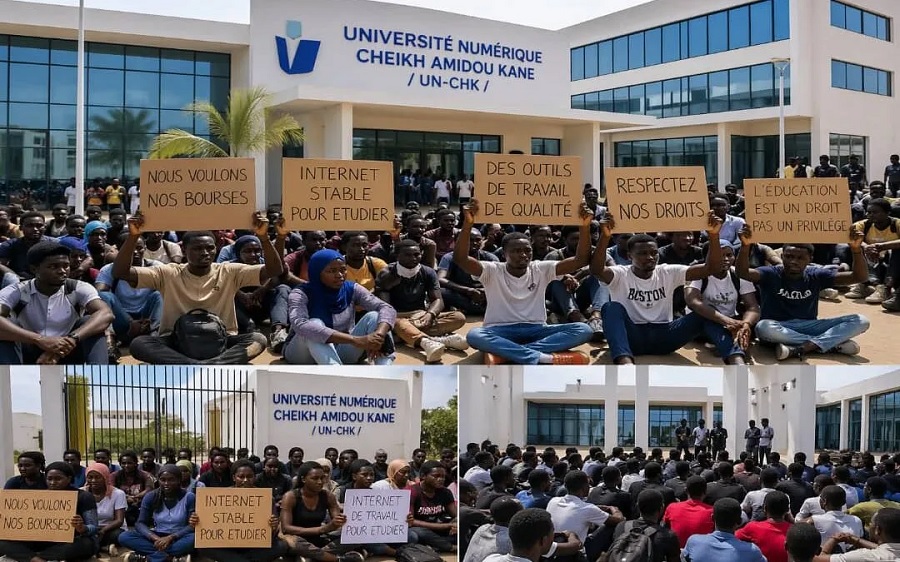
Students from the 10th cohort of the Cheikh Hamidou Kane Digital University (UNCHK) have taken to the streets to protest non-payment of their full scholarship entitlements. According to the students, they have only received two years of the three-year financial support promised for their undergraduate programs, prompting urgent appeals to authorities for immediate resolution of their financial situation.
As May progresses, the convergence of these diverse grievances—transportation disruptions, institutional governance failures, and academic financial disputes—creates an unprecedented social pressure cooker. Whether this represents a coordinated movement or parallel expressions of frustration remains to be seen, but one thing is certain: Senegal is experiencing its most turbulent May in recent memory.