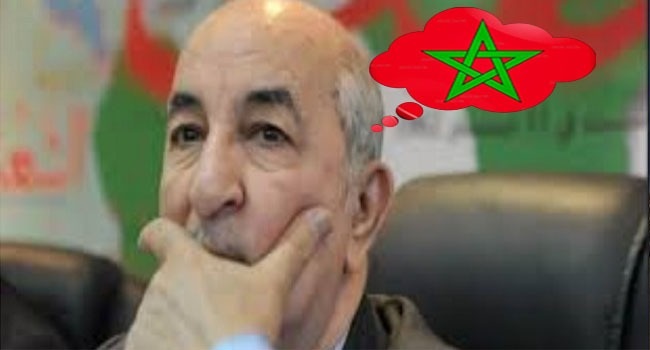
Algeria’s leadership under President Abdelmadjid Tebboune has escalated its public posture of hostility toward Morocco into a calculated political strategy. Critics argue this aggressive stance, marked by relentless verbal attacks, represents a stark departure from the more restrained approach observed during former President Abdelaziz Bouteflika’s tenure.
From silent disdain to vocal antagonism
While tensions between Algiers and Rabat have long simmered beneath the surface, the current administration has abandoned any pretense of restraint. Where Bouteflika’s governance often sought to mitigate friction, Tebboune’s government openly embraces confrontation. The president’s overt animosity now permeates state discourse, fueling a climate where derision and insults replace diplomacy.
This shift is further amplified by the launch of AL24 News, a state-backed television channel whose programming appears designed to amplify Tebboune’s image while pouring scorn on Morocco. Viewers tuning into its broadcasts or scrolling through its social media feeds quickly notice the channel’s commentators reveling in their most vicious attacks on the neighboring Kingdom. The pursuit of the most cutting insult takes precedence over factual accuracy, with propaganda trumping professionalism.
When sports become a battleground
The Algerian media’s campaign has reached surreal extremes, particularly in sports coverage. During major international tournaments like the World Cup, state broadcasters have gone so far as to omit Morocco’s name in highlights or commentary, as if refusing to acknowledge its achievements would somehow diminish them. This tactic was glaringly evident during the 2022 World Cup in Qatar, where Morocco’s historic run to the semifinals—celebrated worldwide—was met with stony silence on Algerian airwaves. Now, as the 2026 edition approaches, the pattern of erasure continues.
One commentator recently crossed into outright conspiracy, claiming Lionel Messi—who scored three goals against Algeria—was manipulated by «the Jewish lobby.» This accusation was framed as retaliation for Algeria’s «support for Western Sahara and the Palestinian cause.»
The absurdity of such rhetoric exposes a troubling reality: Algeria’s state media is not merely indulging in petty nationalism but is actively normalizing antisemitic tropes under the guise of political discourse. The international circulation of these remarks underscores the regime’s role as an exporter of division, blurring the line between state propaganda and outright bigotry.
A poisoned legacy of political opportunism
Algeria’s ruling elite has made a deliberate choice to weaponize anti-Morocco sentiment, turning it into a currency of political advancement. Loyalty to the regime is increasingly measured not by competence or vision but by the vehemence of one’s opposition to Morocco. For those seeking influence or promotion, the formula is simple: demonize Morocco at all costs. This toxic dynamic has reshaped Algeria’s political landscape, where hatred is no longer a byproduct of governance but its very foundation.
The consequences extend beyond domestic power struggles. Algeria’s neighbors—both Arab and African—now view its foreign policy through the lens of this confrontational ethos. Since Tebboune assumed office, the country has abandoned its traditional role as a mediator in favor of a doctrine of perpetual rupture. The result is a foreign policy that prioritizes antagonism over cooperation, with Morocco consistently cast as the primary antagonist.
In this environment, dissent is drowned out by a chorus of regime-aligned voices that thrive on division. From official media outlets to social media influencers, the message is consistent: Morocco is not just a rival but an existential threat. For the architects of this strategy, the goal is clear—to entrench power by manufacturing an external enemy. Whether through fabricated narratives or outright hate speech, Algeria’s political class has transformed anti-Morocco sentiment into a lucrative, self-sustaining industry.