How kidnapping fuels Boko Haram’s war machine in West Africa
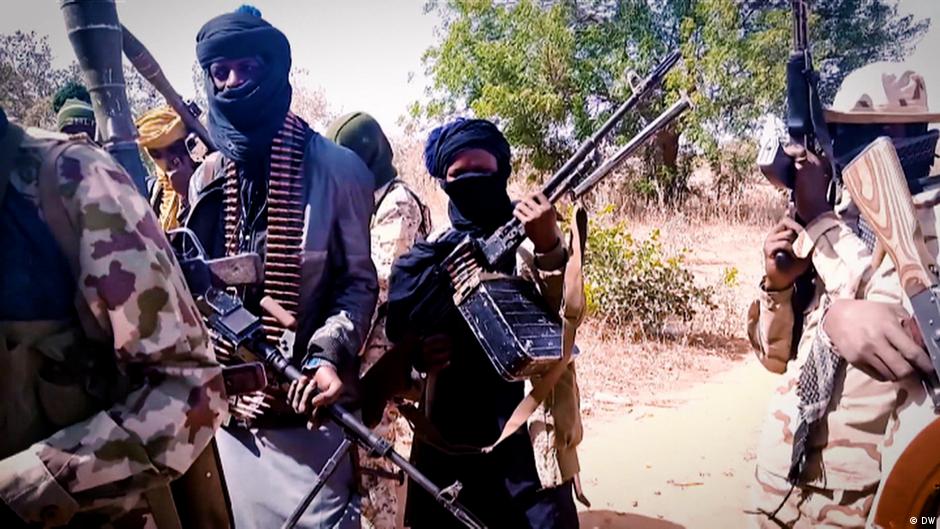
A shadow economy of abductions has become a cornerstone of funding for Boko Haram, transforming hostage-taking into a highly organized industry that stretches across Nigeria, Niger, Cameroon, and Chad. What began as isolated attacks has evolved into a systematic revenue stream, with ransoms and forced recruitment feeding the jihadist group’s expansion.
The human cost: thousands abducted in a single year
In Nigeria—the epicenter of this crisis—over 4,700 people were kidnapped in nearly 1,000 incidents between July 2024 and June 2025 alone, according to security risk assessments. These abductions, often targeting schools and communities, have left hundreds dead and displaced entire regions. While Boko Haram remains the most notorious perpetrator, its rival faction, the Islamic State’s West Africa Province (ISWAP), also operates across the same zones.
The violence is not confined to Nigeria. In Cameroon, Boko Haram claimed responsibility for abducting bus passengers in the Far North. In Niger, seven Chadian nationals were seized near the border, with one killed and the rest still held for ransom demands reaching 50 million CFA francs per hostage—or 500 million for a doctor.
From survival to strategy: how kidnappings serve Boko Haram
Abductions serve a dual purpose for the group. First, they act as a recruitment tool, forcibly enlisting young men, women, and even entire communities as fighters, laborers, or sexual slaves. Second, they generate massive financial returns through ransom payments, which analysts describe as a “structured and lucrative industry.”
Remadji Hoinathy, a researcher at the Institute for Security Studies (ISS), explains: “Ransom payments are a critical funding mechanism. Families, communities, and sometimes governments pay staggering sums—millions of naira or CFA francs—to secure the release of loved ones. These funds directly sustain Boko Haram’s operations.”
Ransom payments: a forbidden but persistent practice
Despite a 2022 Nigerian law criminalizing ransom payments—punishable by up to 15 years in prison—authorities and families continue to negotiate. Reports indicate that over $35 million in ransom demands were issued in Nigeria over the past year, with nearly $1.8 million paid by states or families.
The Nigerian government denies official payments, but accusations persist. In late 2025, claims surfaced that Abuja allegedly paid Boko Haram to free 230 Catholic school students and staff in Niger State. While authorities dismiss these reports as propaganda, sources suggest cash transfers were made via helicopter to a Boko Haram commander in Borno State. The denial, experts argue, may be strategic to prevent legitimizing the group’s tactics.
Why the Lake Chad basin remains Boko Haram’s stronghold
Boko Haram originated in Maiduguri, Borno State, in 2002, under the leadership of Mohammed Yusuf, who sought to establish a radical Islamic state. Rejecting Western influence, the group’s name—meaning “Western education is sin”—reflects its extremist ideology. Over time, it expanded beyond Nigeria into the Lake Chad basin, a strategic cross-border zone linking the Sahel and Libya.
Hoinathy highlights three key advantages of the region: its porous borders, which facilitate arms and fighter movements; its marginalized terrain, where state presence is weak and economic activity thrives; and its dense, inaccessible geography, including islands and marshes, ideal for evading military pressure. These factors make the Lake Chad basin a resilient sanctuary for the group.
The rise of ISWAP: a rival with a different approach
ISWAP emerged in 2016 after breaking away from Boko Haram, rejecting the latter’s indiscriminate violence against civilians. Aligning with the Islamic State, ISWAP adopted a more pragmatic strategy, focusing on community engagement to build legitimacy. However, the rivalry between the two groups has escalated into violent clashes, further destabilizing the region.
Today, Boko Haram and ISWAP compete for territory and resources, perpetuating a cycle of violence that has claimed over 40,000 lives and displaced two million people in Nigeria alone since 2009.
Regional responses: military coordination and lingering challenges
Facing this persistent threat, Nigeria, Niger, Cameroon, and Chad have established the Multinational Joint Task Force, combining military efforts with stabilization programs. Yet, despite these initiatives, Boko Haram has repeatedly demonstrated resilience, adapting to countermeasures and regrouping.
Hoinathy notes that while military responses initially focused on territorial control, the long-term strategy must address root causes—weak governance, economic marginalization, and porous borders. Without sustained developmental and security efforts, the insurgency risks enduring for years to come.
The surge in kidnappings underscores how deeply Boko Haram’s financial networks are embedded in West Africa’s security crisis. As ransom demands soar and rival factions vie for dominance, the humanitarian and economic toll continues to rise—leaving governments and communities grappling with an insurgency that shows no signs of fading.