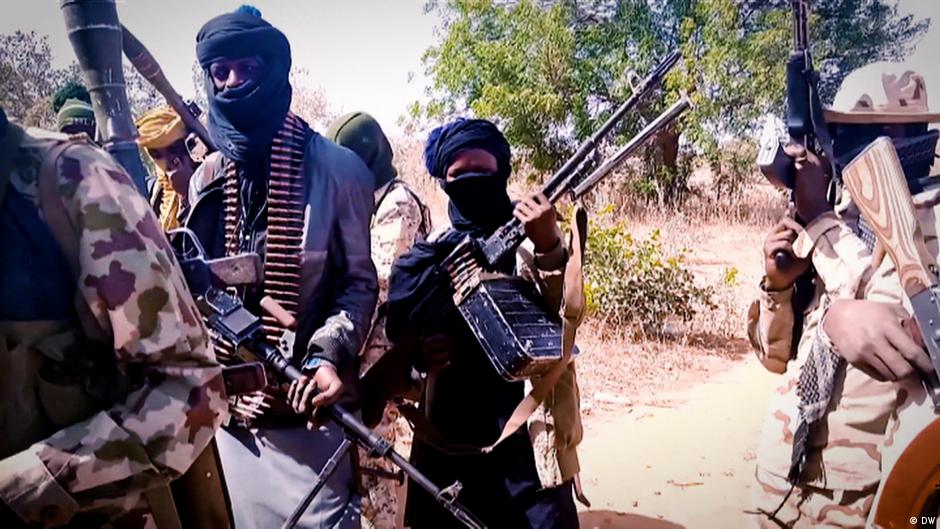
The kidnapping industry has become a major revenue stream for Boko Haram, fueling its violent campaign across West Africa. What began as isolated incidents has evolved into a sophisticated operation generating millions in illicit funds.
An alarming scale of abductions
Recent data from Nigeria—the worst-affected country—paints a grim picture. Between mid-2024 and mid-2025, nearly 5,000 people were kidnapped in roughly 1,000 incidents, according to security risk analysts. Hundreds of victims lost their lives in these attacks, many targeting schools in northern Nigeria. The crisis extends beyond borders, with Boko Haram and its rival faction, ISWAP, operating across Nigeria, Niger, Chad, and Cameroon.
In one high-profile case, seven Chadian nationals were abducted near the Niger-Chad border in March 2025. While one hostage was killed, the remaining six remain captive, with the group demanding a staggering 500 million CFA francs (approximately $800,000) for their release—a ransom that includes a 500 million CFA fee for one of the hostages, a physician.
Why mass kidnappings?
Dr. Remadji Hoinathy, a researcher at the Institute for Security Studies, explains the dual purpose behind these abductions: “They serve both recruitment and economic objectives. Young men are forced into combat roles, while women and entire communities are subjected to exploitation, including sexual slavery. Equally critical is the financial gain from ransom payments, which fund further attacks.”
Governments caught between policy and pragmatism
Nigeria’s official stance prohibits ransom payments to prevent financing terrorism—a stance reinforced by a 2022 law imposing up to 15 years in prison for those who comply. Yet, in practice, authorities and families routinely pay ransoms. In November 2025, accusations surfaced that Abuja secretly paid Boko Haram to secure the release of 230 hostages, including students and staff from a Catholic school. While the government denies these claims, reports suggest payments ranged from €1.3 million to €6 million, delivered in cash via helicopter to a Boko Haram commander in Borno State.
Experts warn that acknowledging such transactions could embolden jihadist propaganda, creating a dilemma for officials who must balance legal posturing with immediate humanitarian concerns.
Boko Haram’s regional stronghold: the Lake Chad basin
Founded in 2002 in Maiduguri, northeastern Nigeria, Boko Haram’s name—meaning “Western education is sin”—reflects its rejection of modern governance and culture. From these origins, the group expanded into a cross-border menace, exploiting the porous borders of the Lake Chad basin—a region shared by Nigeria, Niger, Chad, and Cameroon.
Dr. Hoinathy highlights the area’s strategic value: “It’s a lawless frontier where state authority is weak, ideal for hiding fighters amid swamps, forests, and remote islands. The region’s agricultural and pastoral economy also provides revenue through illicit taxation, while its proximity to the Sahel and Libya facilitates arms trafficking.”
The ISWAP schism and internal strife
In 2016, a faction of Boko Haram split to form the Islamic State’s West Africa Province (ISWAP), rejecting the group’s indiscriminate violence against civilians. Aligning with ISIS, ISWAP adopted a more disciplined approach, seeking community support to consolidate power. Today, the two groups are locked in a brutal rivalry, fighting for control over resources and territory in the Lake Chad region.
Regional responses and ongoing challenges
Since 2009, the insurgency has claimed over 40,000 lives and displaced two million in Nigeria alone. The Multinational Joint Task Force (MNJTF), comprising troops from Benin, Cameroon, Chad, Niger, and Nigeria, has struggled to contain the threat. While military operations continue, analysts argue that sustainable peace requires more than force—including economic development and state presence in vulnerable communities.
Despite international support, including U.S. military advisors deployed to Nigeria, Boko Haram and ISWAP have demonstrated remarkable resilience, adapting tactics and regrouping after setbacks. The crisis remains a defining security challenge for West Africa, demanding both coordinated action and deeper socio-economic interventions.