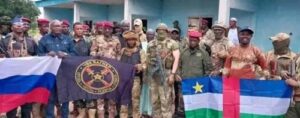
The political landscape in Central African Republic is witnessing a dramatic shift as Russian mercenaries officially take center stage, intensifying divisions within the Mouvement Patriotique pour la Centrafrique (MPC). The move has triggered a chain reaction, compelling key figures including Didot Ali and his successor to relocate to Bossangoa, a strategic stronghold in the northwest.
Russian mercenaries expand influence in conflict zones
Their involvement marks a pivotal moment in the ongoing security crisis, as Moscow-backed operatives solidify control over critical regions. Reports confirm their presence is no longer covert; instead, they are operating overtly, reshaping local power structures and challenging traditional authorities. This development underscores the Kremlin’s growing footprint in Africa’s volatile heartland.
Didot Ali and successor face relocation amid shifting alliances
The relocation of Didot Ali and his successor to Bossangoa highlights the fragmentation within the MPC. Once a unified rebel coalition, the group is now fractured by competing factions, with external actors like the Russian mercenaries tilting the balance. Observers warn that this intervention could exacerbate existing tensions, further destabilizing the region.
The mercenaries’ expanded role raises questions about the future of Central African Republic’s sovereignty. Their actions suggest a long-term strategy to secure strategic assets, including mineral resources and geopolitical influence. As their footprint grows, local leaders are forced to adapt—or risk being sidelined entirely.