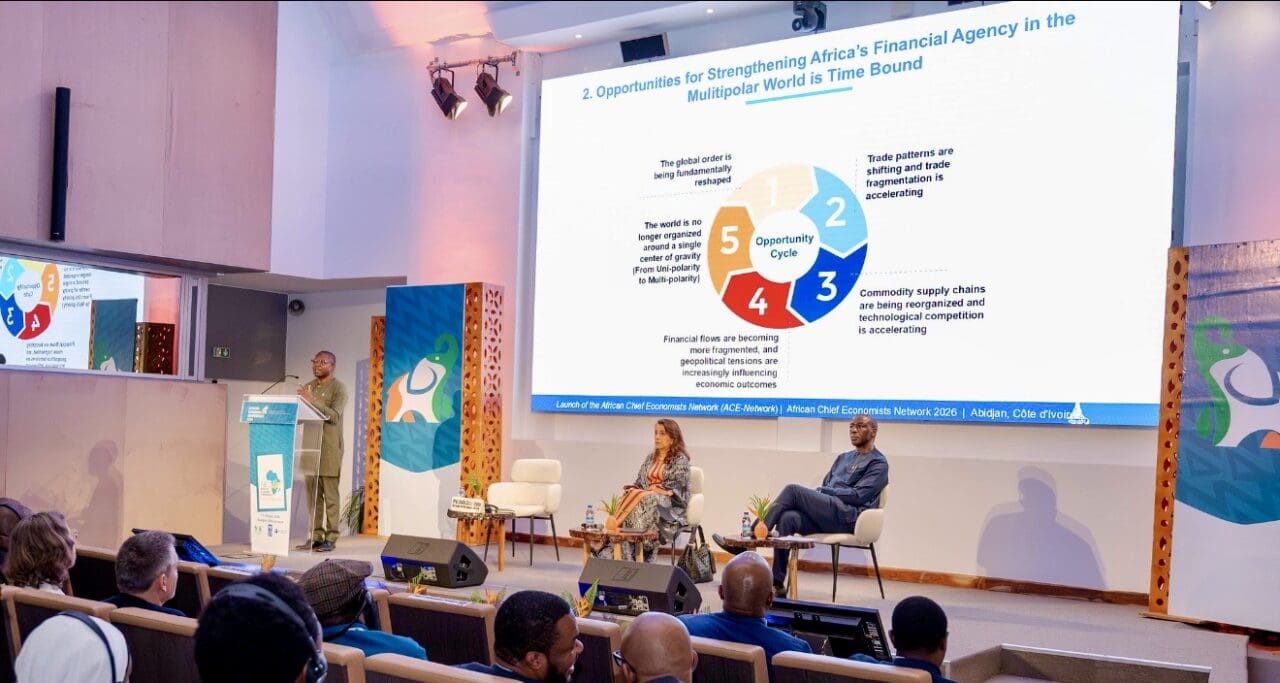
Over three days of intense discussions, the 2026 African Economic Conference in Abidjan delivered more than just an assessment of the continent’s vulnerabilities. It unveiled a bold new strategy: crafting an Africa that not only adapts to global upheavals but actively reshapes them into opportunities through deeper economic integration, innovative financing, and unified action.
The conference’s closing remarks left no doubt about its lasting impact. Leaders from across the continent and international institutions gathered in Côte d’Ivoire to emphasize a critical truth: Africa can no longer afford to be a passive observer in a world where power dynamics are rapidly shifting. Instead, it must carve out its own path forward.
The African Development Bank (BAD), the United Nations Development Programme (PNUD), and the Organisation for Economic Co-operation and Development (OCDE) joined forces to host the event, underscoring a shared vision: positioning Africa as a decisive player in the new global economy, rather than merely reacting to its transformations.
Turning global turbulence into strategic advantage
Raymond Gilpin, Chief Economist for the PNUD’s Africa Regional Bureau, framed the conference’s core challenge. Global economic storms will continue to test Africa’s institutions, he acknowledged, but they cannot erode the continent’s fundamental strengths—its people and their resilience.
« The world’s economic volatility will persist, but it is not an insurmountable threat, » he stated. « What Africa needs now is not just endurance but a proactive strategy to convert these disruptions into lasting gains. » His words echoed throughout the event, reinforcing a call for urgent reforms, stronger partnerships, and collective action to build the resilient, prosperous Africa the continent—and the world—deserves.
The shift in tone was unmistakable. The focus moved from mere survival to strategic transformation, where Africa no longer reacts to global shifts but actively shapes them to its benefit.
Rethinking development through integrated solutions
The discussions also highlighted a fundamental flaw in traditional development approaches: the failure to address interconnected challenges. Ida McDonnell, Senior Advisor at the OCDE, argued that public policies can no longer operate in isolation.
« Trade, debt, investment, climate, fiscal policies, and development financing are no longer siloed issues, » she explained. « They are deeply intertwined, and their interactions demand a more holistic analytical framework. » This integrated perspective, she stressed, is essential for guiding smarter, more effective public decisions in a world where energy, financial, climate, and geopolitical crises are increasingly tangled.
From dialogue to decisive action
As the conference drew to a close, Marie-Laure Akin Olugbade, Senior Vice President of the African Development Bank Group, representing President Sidi Ould Tah, urged participants to move beyond rhetoric. The recommendations emerging from Abidjan, she insisted, must translate into concrete policies and development partnerships.
« The insights from this conference provide a roadmap for the public policies and partnerships Africa needs to strengthen its geopolitical influence and commercial resilience, » she stated. « The real test lies in implementation—a challenge made harder by tight fiscal constraints and intensifying global competition. »
The ultimate goal: building Africa’s economic power
Ahunna Eziakonwa, Assistant Secretary-General of the United Nations and Director of the PNUD’s Africa Regional Bureau, framed the conference as just the beginning. The true work, she argued, lies ahead: dismantling barriers to intra-African trade, accelerating regional value chains, investing in innovation, and empowering a growing youth population to thrive in a rapidly evolving global economy.
Her closing remarks captured the event’s spirit: « In a multipolar world, Africa’s leverage will not come from choosing sides but from forging its own economic strength. » Sovereignty, she emphasized, is not about alignment or isolation—it is about Africa’s ability to generate its own value, finance its growth, and defend its interests on the global stage.
Abidjan as a hub for Africa’s new economic vision
The 2026 African Economic Conference also marked the annual gathering of the Global Network of Chief Economists from Development and Financing Institutions, alongside the launch of the African Chief Economists Network (ACE Network). These initiatives symbolize a broader shift in how Africa views its role in the global economy.
The debates no longer center solely on the continent’s needs but on its potential to redefine the rules of the global economic game. With international balances in flux, organizers believe Africa stands at a historic juncture. The challenge now is to turn collective ambition into tangible policies, investments, and results. Only then can the promises made in Abidjan transcend declarations and help forge a more sovereign, resilient, and influential Africa.