Documentary Indépendance Tey turns Musee des Civilisations Noires into a stage of civic awakening
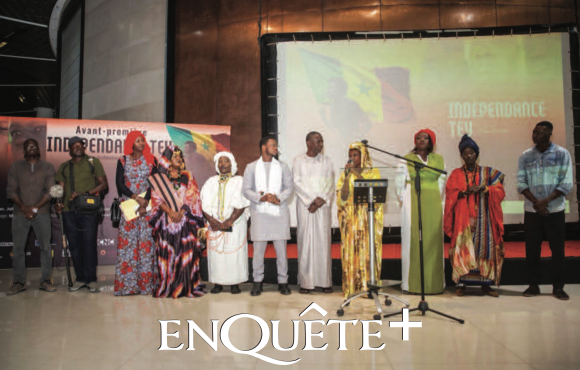
The Musee des Civilisations Noires in Dakar witnessed an extraordinary convergence of art and activism as the city’s cultural elite gathered for the first public screening of Indépendance Tey, the latest cinematic masterpiece by acclaimed Senegalese director Abdou Lahat Fall. The event, organized by Sine Films and Wawkumba Film in collaboration with FRAPP, the Directorate of Cinematography, and the museum itself, transformed a routine film premiere into a living archive of Senegal’s turbulent recent history.
A night of music, memory and political awakening
The evening opened with a powerful performance by Leuz Diwan G, a rapper whose lyrics blend social critique with rhythmic urgency. His stage presence set the emotional tone for what followed: a documentary that refuses to separate politics from humanity. Indépendance Tey is not merely a chronicle of protests and elections—it is a deeply personal exploration of what it means to fight for change when the cost is one’s own future.
Fall’s film arrives at a pivotal moment. After its standout appearance in the Front populaire category at the Cinéma du Réel festival, anticipation had been building across artistic and activist circles in West Africa. The documentary follows four Senegalese activists—Abdoulaye, Bentaleb, Guy Marius Sagna, and Félix—each representing a different generation and relationship to the struggle. Together, they embody the hopes, contradictions, and sacrifices of a nation in motion.
Four voices, one revolution
- Abdoulaye: A young idealist whose fiery speeches at Place de la Nation once electrified crowds. Behind the public persona, however, lies a personal crisis. Torn between familial duty and revolutionary fervor, he ultimately chooses exile in Canada, leaving behind a Senegal he once dreamed of transforming.
- Bentaleb: His journey reveals the harsh reality of state repression. Arrests, detentions, and physical violence mark his path—a testament to the risks taken by those who dare challenge the status quo.
- Guy Marius Sagna: Starting as a radical street activist, he transitions into formal political engagement, raising questions about compromise and institutional change. Does entering the system dilute the movement’s original power?
- Félix: An aging union leader whose wrinkled face and weary eyes hold decades of unfulfilled promises. He serves as a living bridge between Senegal’s independence-era struggles and today’s youth-led uprisings.
The narrative spans 2019 to 2024—a period marked by oil scandals, mass protests, pre-election tensions, and the historic 2024 presidential victory of the opposition. Yet the film resists simplistic triumphalism. Instead, it lingers on quiet moments: a mother’s tears, a student’s abandoned thesis, a militant’s silence after release from prison. These details humanize the struggle and force viewers to confront the personal price of political commitment.
The filmmaker’s delicate balance: art, activism, and honesty
Abdou Lahat Fall’s greatest challenge was capturing a movement he believed in without slipping into propaganda. His solution was radical transparency. Through voice-over narration and unflinching close-ups, he critiques as much as he celebrates. When Guy Marius Sagna enters electoral politics, the director doesn’t shy away from asking: Has the revolution been co-opted?
The film’s aesthetic reinforces this integrity. There are no dramatic reenactments, no manipulative editing—just patient observation. A protest unfolds in real time. A planning meeting stretches into silence. A tear rolls down a face in a dimly lit room. This minimalist approach grants Indépendance Tey its emotional authenticity and universal resonance.
Beyond borders: a story for every generation
Though rooted in Senegal’s 2019–2024 upheavals, the questions raised by the documentary echo globally. Can popular movements truly reshape society? At what point does resistance become self-destruction? What does it mean to be truly independent, sixty years after national liberation?
Fall anchors these dilemmas in the words of Frantz Fanon: “Each generation must, in relative darkness, fulfill its mission—or betray it.” This quote threads through the film like a silent manifesto. Indépendance Tey becomes more than a historical record; it is a mirror held up to a generation forced to confront its own contradictions and forge its own path.
A growing voice in African cinema
The documentary’s journey from script to screen reflects its significance. Supported by residencies at Sentoo (2022), Produire au Sud (2022), and DocA (2023), it also received backing from the CNC, FOPICA, Fonds Image de la Francophonie, Procirep-Angoa, and Tenk. Its selection at the Durban FilmMart 2023 further solidifies Senegal’s rising profile in international documentary filmmaking.
The evening at the Musee des Civilisations Noires concluded not with applause, but with reflection. No single film can capture the full complexity of Senegal’s current chapter, but Indépendance Tey comes closer than most. It is a tribute to those who dared to fight—and a reminder that the fight is never over.