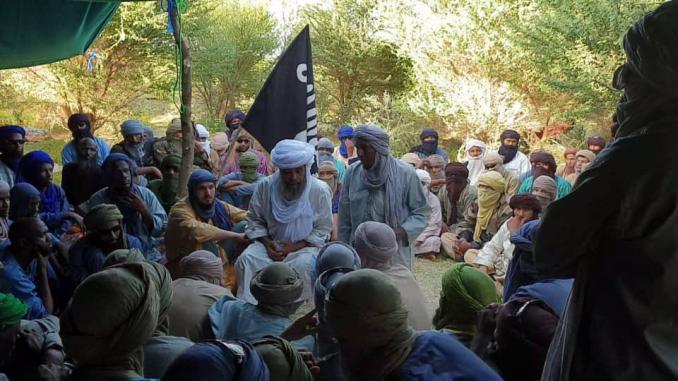
The situation in Mali is rapidly deteriorating as the Group for the Support of Islam and Muslims (JNIM), an Al-Qaeda-affiliated group, intensifies its territorial grip across the country. Despite military operations led by Bamako and its allies, the group continues to execute high-impact attacks, including ambushes on military convoys, assaults on outposts, and strategic blockades along key routes. The escalation is no longer confined to Mali—it now threatens the broader Sahel region, raising alarms among neighboring nations grappling with political instability and economic hardship.
From clandestine operations to territorial dominance
Recent reports from Bandiagara, a central region of Mali, paint a grim picture. On May 21, 2026, five villages in the area fell under attack, claimed by the JNIM. While no casualty figures have been released, the assault underscores a troubling shift: the group is no longer relying solely on guerrilla tactics but is actively embedding itself in local communities. By exploiting ethnic tensions, local grievances, and the absence of state institutions, the JNIM is constructing an alternative governance system in regions where the Malian state has retreated.
This strategy involves imposing parallel taxation, mediating disputes, and enforcing movement restrictions—effectively replacing the authority the government has failed to provide. Military responses alone are proving insufficient; without restoring administrative, judicial, and economic structures, any territorial gains remain temporary.
military sovereignty vs. persistent insecurity
Since the withdrawal of French forces and the increased reliance on Russian military partnerships, Mali’s transitional government has championed a narrative of military self-sufficiency. Officials frame this pivot as a break from Western security dependence. Yet, on the ground, violence persists, and armed factions maintain alarming mobility across the Sahel.
International organizations have also documented allegations of human rights abuses involving Malian troops and allied Russian forces. Bamako consistently rejects these claims, accusing foreign actors of orchestrating destabilization campaigns. This polarization further erodes the prospects for political mediation, leaving communities trapped in a cycle of insecurity.
geopolitical rivalries exacerbate the crisis
The Sahel is no longer just a battleground for extremist groups—it has become a chessboard for global and regional powers. Russia, Turkey, the United Arab Emirates, Western nations, and local actors are all vying for influence, exploiting the fragmentation of states and the collapse of regional cooperation.
The gravest risk is the normalization of chronic instability. Vast areas now exist in a state of limbo, where neither the government nor armed groups exercise full control. A critical question looms: how far will this escalation go? With the Africa Corps mercenaries reportedly scaling back their presence in conflict zones, Mali faces an uncertain future. What happens if their withdrawal becomes complete?