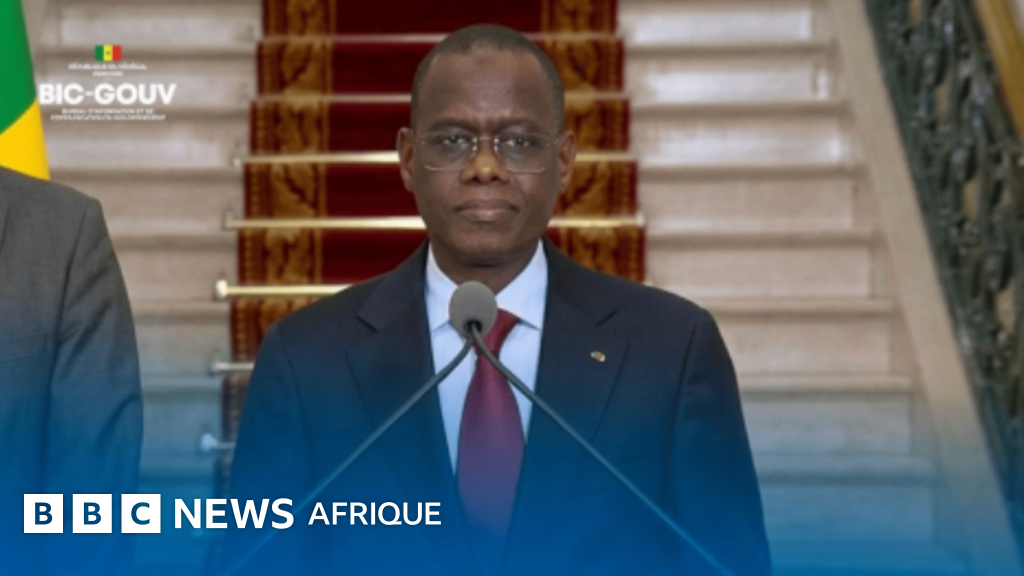
The unveiling of Senegal‘s latest government lineup has sparked intense debate across the nation. President Bassirou Diomaye Faye announced the new ministerial team just days after dismissing former Prime Minister Ousmane Sonko, setting the stage for what promises to be a challenging mandate.
Led by Prime Minister Ahmadou Al Amine Mohamed Lo, the 30-member cabinet comprises 26 ministers and four deputy ministers. Notably, gender representation remains disproportionately low, with only four women appointed—none holding key sovereignty portfolios. The government inherits a daunting economic landscape, burdened by a massive debt that continues to stifle growth despite repeated calls for restructuring.
the opposition’s strategic absence
The PASTEF party, a dominant force in Senegal‘s political arena, made a deliberate choice to boycott the new administration. Their leadership cited fundamental disagreements with the president’s vision, leading to the withdrawal of prominent figures like Birame Souley Diop (Energy), Yacine Fall (Justice), and Amadou Ba (Culture). The move has left the government navigating a delicate balance, especially as Ousmane Sonko now presides over a parliamentary majority that remains firmly opposed to the executive’s policies.
unexpected holdovers and new faces
Despite the boycott, some former PASTEF members retained their positions, including Balla Moussa Fofana (Urban Planning), Yancoba Diémé (Defense), and Ibrahima Sy (Health). Meanwhile, Cheikh Diba, a PASTEF cadre, secured the Finance portfolio—expanded to include Economy and Planning. Newcomers allied with Sonko, such as Cheikh Tidiane Dieye (Sanitation) and Mamadou Lamine Dianté (Civil Service), were also integrated, alongside figures from the Coalition Diomaye, like El Hadj Abdourahmane Diouf (Energy and Petroleum).
a stark gender imbalance
The cabinet’s gender disparity has drawn sharp criticism. With just four women out of 30 members—three as full ministers and one as a deputy minister—activists argue that this lineup fails to reflect Senegal‘s demographic realities. Marie Angélique Mame Selbé Diouf heads Family and Social Affairs, while Djirèye Clotilde Coly oversees Sports and Youth. Women’s rights advocate Dr. Coumba Mar Gadio of the African Women Leaders Network (AWLN) highlighted that this configuration “ignores both the numerical strength and strategic expertise of Senegalese women.”
debt restructuring: a make-or-break challenge
Senegal’s economic woes are compounded by a colossal debt, including a hidden liability exceeding $7 billion. Economist Amath Ndiaye warns that the country’s growth prospects—forecasted between 2.2% and 2.5% for 2026—are critically fragile. He stresses the urgent need for negotiations with the IMF to reprofile or restructure the debt, cautioning that the new government faces the dual pressure of securing financial stability while addressing soaring living costs, unemployment, and public service demands.
“The administration is trapped between two contradictory imperatives,” Ndiaye explains. “On one hand, it must strike a deal with the IMF to ease the debt burden, which could trigger cuts to subsidies. On the other, it must respond to pressing social demands without triggering unrest.”
unprecedented political cohabitation
Political scientist Moussa Diaw describes the current scenario as “unprecedented” for Senegal. The divergence between a majority-controlled parliament—dominated by PASTEF—and a president from the same party has created a rare cohabitation dynamic. Diaw notes that this schism stems from irreconcilable views on accountability, debt resolution, and justice for victims of the 2021–2024 protests.
“The president lacks a parliamentary majority, forcing him to seek alliances, while the National Assembly, led by Sonko, has set conditions for collaboration that remain unmet,” Diaw observes. He warns that this fragile equilibrium risks institutional paralysis unless both sides prioritize national interests over partisan divides.
constitutional constraints and the path forward
Diaw emphasizes that the President and the National Assembly must adhere strictly to their constitutional roles to prevent a crisis. “Each institution has distinct prerogatives, and their exercise must reflect a commitment to Senegal’s stability,” he argues. “Patriotism, not political ambition, should guide their decisions to avert conflicts that could derail the country’s progress.”
As Senegal grapples with these challenges, the new government’s ability to navigate economic turbulence, political fragmentation, and social expectations will define its legacy. The coming months will reveal whether pragmatism can triumph over polarization in a nation at a crossroads.