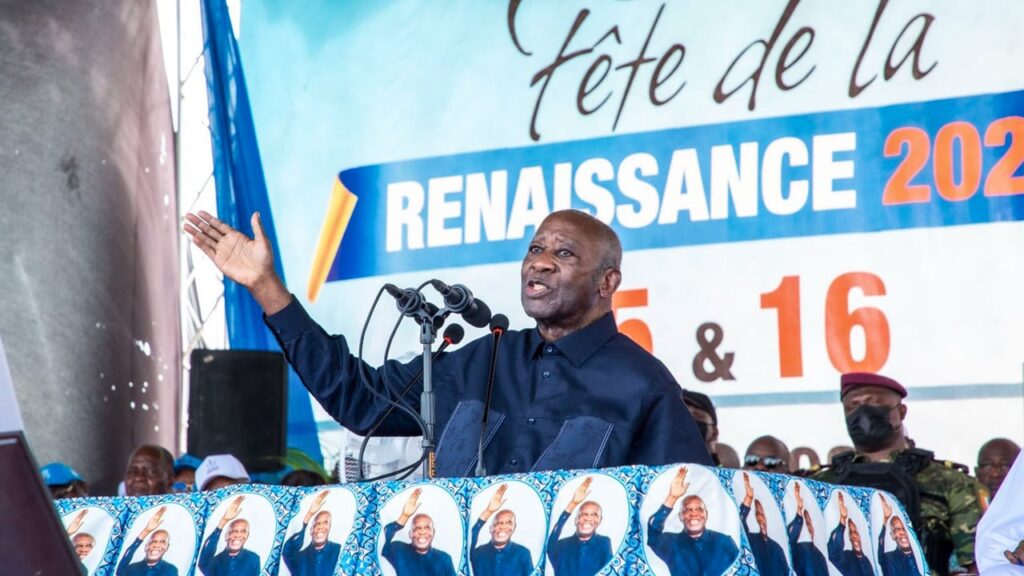
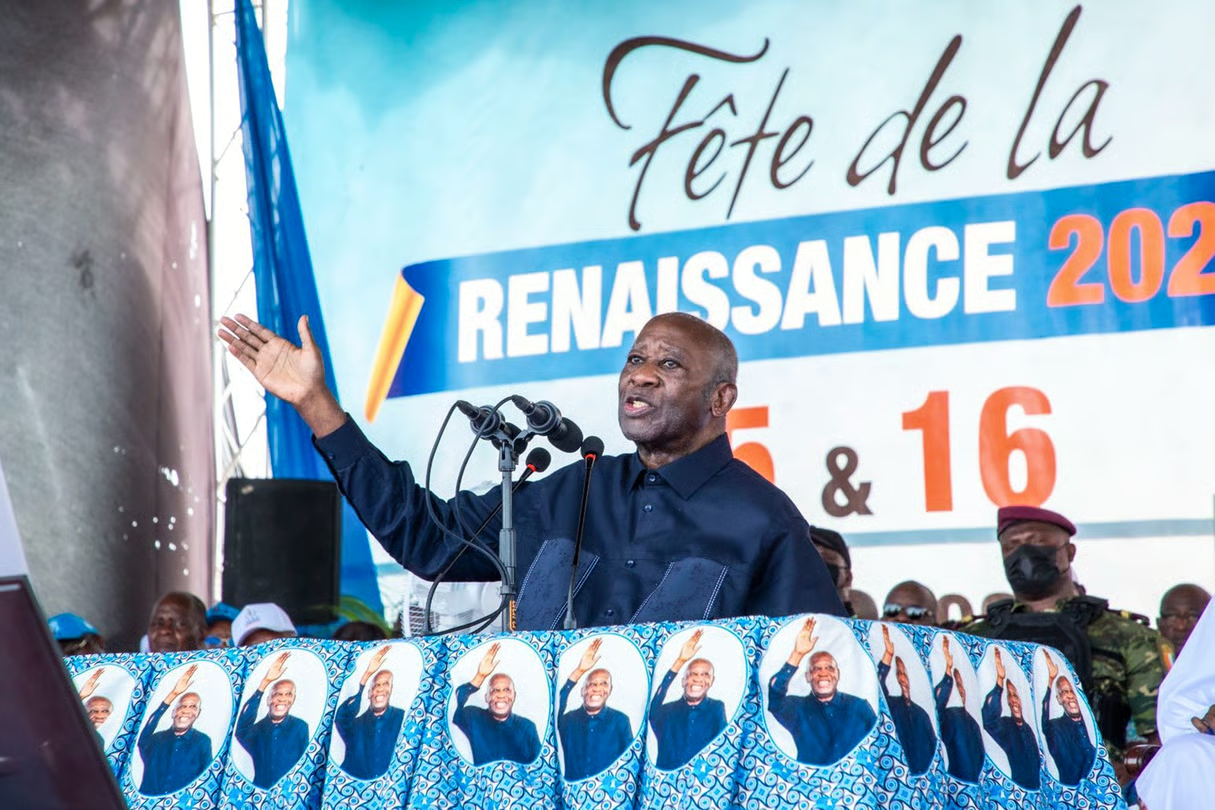
In a move that has reshaped the political landscape of Côte d’Ivoire, Laurent Gbagbo has officially stepped away from the presidency of the Ivorian Popular Front (PPA-CI), yet his influence over the party remains undiminished. The announcement, delivered during a high-profile gathering in Songon, marks a strategic shift rather than a true withdrawal from power.
The decision, which took effect on May 16, 2026, reflects a carefully orchestrated transition designed to secure the party’s future while preserving Gbagbo’s legacy. Observers note that while his name no longer appears in the party’s official leadership roles, his vision continues to guide the PPA-CI’s direction. “This is not a departure, but a reorganization to strengthen our movement,” stated a senior party official, speaking on condition of anonymity.
Under Gbagbo’s leadership, the PPA-CI has played a pivotal role in Côte d’Ivoire’s political arena for decades. His departure from the presidency of the party signals a new phase, but one that appears to keep him at the heart of decision-making processes. Analysts suggest this move could be a prelude to a broader political strategy, potentially positioning Gbagbo for future elections or consolidating influence behind the scenes.
What does Gbagbo’s withdrawal mean for the PPA-CI?
The PPA-CI’s new leadership structure has been put in place, with key figures from the party’s inner circle taking on more prominent roles. While Gbagbo has stepped back from the public-facing presidency, his presence is still felt in every major policy discussion and strategic meeting. This transition is seen as a way to groom the next generation of leaders within the party while ensuring continuity with Gbagbo’s longstanding political principles.
The party has emphasized unity and stability, framing the changes as an opportunity to modernize and adapt to the evolving political climate in Côte d’Ivoire. “Our commitment to the Ivorian people remains unchanged,” declared a party spokesperson. “We are evolving, but our core values endure.”
A calculated political maneuver
Gbagbo’s withdrawal is widely interpreted as a calculated political maneuver rather than a sign of weakening influence. By stepping back, he creates space for new leadership while maintaining a firm grip on the party’s direction. This strategy allows him to avoid the constraints of official roles while continuing to shape the PPA-CI’s agenda.
The move also positions the party favorably for upcoming elections, ensuring that Gbagbo’s legacy remains a central theme in the PPA-CI’s campaign. Political pundits suggest that this transition could bolster the party’s appeal among younger voters, who are increasingly influential in Côte d’Ivoire’s political future.
Reactions from the political sphere
The announcement has sparked discussions across Côte d’Ivoire’s political spectrum. While some praise the move as a step toward renewal, others question the sincerity of Gbagbo’s withdrawal. Opposition figures have raised concerns about the party’s transparency, while allies of Gbagbo argue that this transition is necessary for the party’s long-term success.
Within the PPA-CI, the response has been largely positive. Party members have rallied around the new leadership, expressing confidence in the party’s ability to navigate this transition smoothly. “We are entering a new era, but our mission remains the same,” affirmed a party insider. “Laurent Gbagbo’s guidance will continue to be our compass.”
The coming months will be critical in determining how this transition unfolds. For now, one thing is clear: Laurent Gbagbo’s shadow still looms large over the PPA-CI, even as he takes a step back from the spotlight.