The Malian people find themselves trapped in an impossible dilemma. On one side stands a military junta clinging to power, on the other, jihadist factions promising strict Islamic law. This is the bleak landscape shaping Mali’s current crisis.
The junta’s faltering grip on power
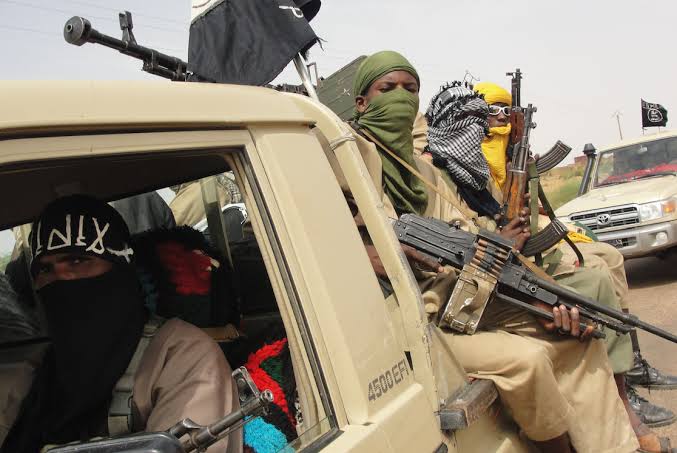
General Assimi Goïta’s brief disappearance following coordinated attacks on April 25 has only deepened public skepticism about his government’s competence. In a May 29 address, the junta leader declared the situation ‘under control,’ despite clear evidence to the contrary. The Front de libération de l’Azawad has re-established control in Kidal, while the Group for the Support of Islam and Muslims (JNIM) – Al-Qaeda’s regional affiliate – has effectively besieged Bamako with roadblocks.
Six years after seizing power, the military government appears increasingly unable to counter these armed groups. Instead of addressing the root causes of this vulnerability, the junta has doubled down on defensive posturing and empty rhetoric about imminent military victories. The military’s inability to regain the initiative has left citizens questioning whether the state can survive without drastic changes.
Jihadist ambitions and the shadow of Sharia law
The JNIM’s recent resurgence has brought a new dimension to the conflict. In their post-attack statement, the group explicitly stated that establishing Sharia law would be their top priority upon taking control. This has sent shockwaves through communities already living under jihadist rule in occupied territories, where strict Islamic codes are already enforced.
Some opposition figures have begun exploring the possibility of striking a deal with the JNIM to remove the junta, hoping for a ‘softer’ version of Sharia. However, the group’s historical actions and stated objectives provide no reassurance that such a compromise would result in a more moderate governance model. Between an unaccountable military regime and an extremist group promising religious rule, Malians face an unenviable choice.
How the junta’s repression fueled the crisis
The current impasse stems directly from the military’s heavy-handed tactics. Since seizing power, the junta has systematically suppressed all forms of political opposition – arresting dissenting voices, forcing others into exile, and dismantling civil society structures. This vacuum of legitimate governance has inadvertently strengthened the most radical elements of the opposition.
The recent abduction of prominent lawyer and political figure Mountaga Tall symbolizes the junta’s descent into authoritarian excess. Reports indicate state security agents were responsible for his disappearance, adding to a growing list of human rights violations that have eroded whatever credibility the government once possessed.
A bleak future under either scenario
Both the junta and the JNIM have presented visions of a ‘new Mali’ – one built on military rule, the other on religious law. Neither offers a path back to constitutional order or democratic governance. The military’s reliance on force over political solutions has only prolonged the crisis, while the jihadists’ maximalist agenda shows no signs of moderation.
With Bamako increasingly isolated by the JNIM’s blockade and the economy teetering on collapse, Mali stands at a crossroads. The international community watches as the country’s institutions crumble under the weight of this existential challenge. For the Malian people, the question remains: Is this the beginning of the end for their nation, or merely another chapter in its long decline?