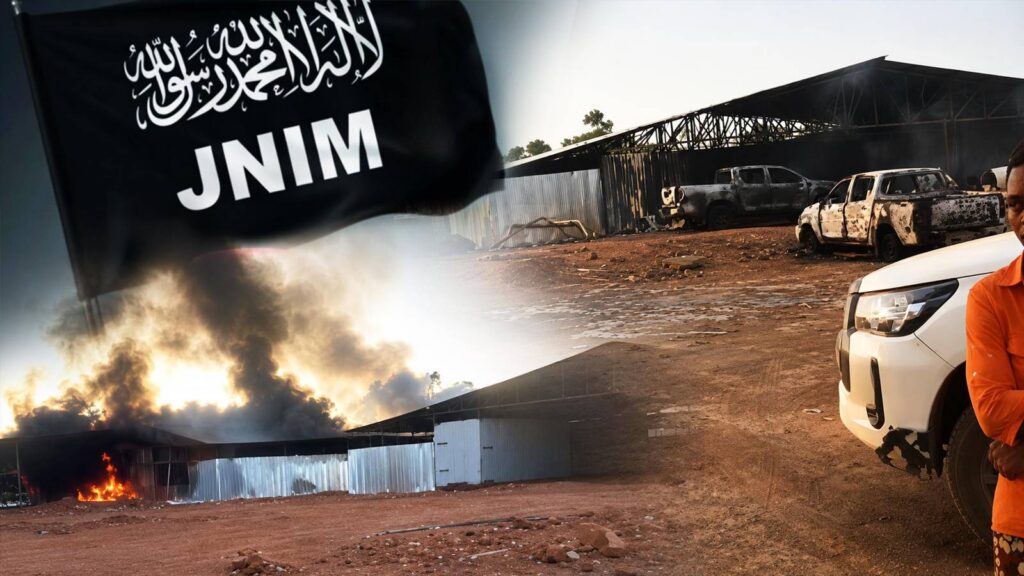
The Group for the Support of Islam and Muslims (JNIM) has once again demonstrated its operational reach in Mali by launching a daring assault on a Chinese-operated mining site in Naréna, near the Guinea border. Beyond the extensive material destruction, the abduction of nine Chinese nationals underscores a stark security reality: Malian forces, backed by Russian contractors, are losing ground in safeguarding key economic and strategic zones.
Precision strike with far-reaching implications
Witnesses report that the attack unfolded under the cover of darkness, with armed assailants arriving on motorcycles and all-terrain vehicles. The remote Naréna site, located in the Kangaba district close to the Guinea frontier, had previously been considered relatively insulated from large-scale jihadist operations.
The attackers methodically targeted production infrastructure, torching heavy machinery, generators, and administrative buildings. However, the human toll proved even more devastating: nine Chinese workers were seized and forcibly relocated, a tactic the JNIM employs to exert political and financial pressure on both Bamako and Beijing. This bold maneuver shifts the conflict into a new phase, where economic leverage becomes as critical as territorial control.
Malian army’s defensive paralysis
The Naréna raid lays bare the Malian Armed Forces’ (FAMa) inability to maintain territorial integrity. Once confined to northern and central regions, the insurgency now encroaches upon the country’s western and southern belts—home to Mali’s economic lifelines. The ease with which militants overran a major industrial site, mere kilometers from an international border, exposes glaring gaps in military intelligence and response capabilities.
On the ground, Malian troops appear confined to static defense, holed up in fortified bases. The failure to intercept the attackers or locate the hostages highlights systemic flaws in the nation’s counterterrorism strategy. Promises of regaining sovereignty under the current transitional leadership are increasingly contradicted by a reality of eroding state control.
Russian mercenaries prove unequal to the task
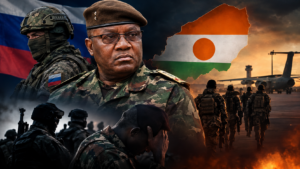
Hoping to fill the security vacuum left by departing Western forces and the departing MINUSMA mission, Malian authorities turned to Moscow for support, including the deployment of the now-rebranded Africa Corps. Yet the results have been underwhelming. Russian mercenaries, trained for heavy-handed counterinsurgency operations that often inflict civilian casualties, lack the precision needed to protect industrial assets or counter high-intensity asymmetric warfare.
Their patrols have failed to deter attacks, and their presence has not stemmed the JNIM‘s territorial expansion. The once-vaunted Russian solution is rapidly losing credibility as militants tighten their grip on regions critical to Mali’s economy and stability.
China’s economic interests become a jihadist target
By striking Chinese assets, the JNIM has delivered a dual blow: crippling Mali’s economy and sending a warning to foreign investors. Beijing remains a pivotal partner for Bamako, particularly in gold mining and infrastructure development. Targeting these interests not only drains financial resources but also pressures the Malian government to secure guarantees it cannot realistically provide.
The attack may force Chinese authorities to reassess their investments in the Sahel, demanding enhanced security measures that the current regime is ill-equipped to deliver. This development signals a dangerous escalation, where economic warfare becomes as central to the conflict as military confrontation.
A turning point with no clear resolution
The Naréna assault marks a critical escalation in Mali’s crisis. The JNIM‘s ability to strike at will—even in regions once considered secure—demonstrates the group’s growing confidence. Meanwhile, the alliance between Malian forces and their Russian allies continues to falter, unable to reverse the tide of insecurity. Without a comprehensive strategy to protect civilians and economic ventures, Mali risks descending further into lawlessness, with devastating consequences for its people and regional stability.