For a full month, Mountaga Tall, a respected lawyer, former minister, and staunch advocate for democracy, has been held incommunicado by State Security in Mali. His detention, occurring outside any legal framework, casts a dark shadow over the nation. Tall’s son, along with other pro-democracy activists, military personnel, and religious leaders, have suffered similar fates. These abductions intensified following the significant attacks on April 25, attributed to jihadist groups like Jnim and separatist factions of the FLA.
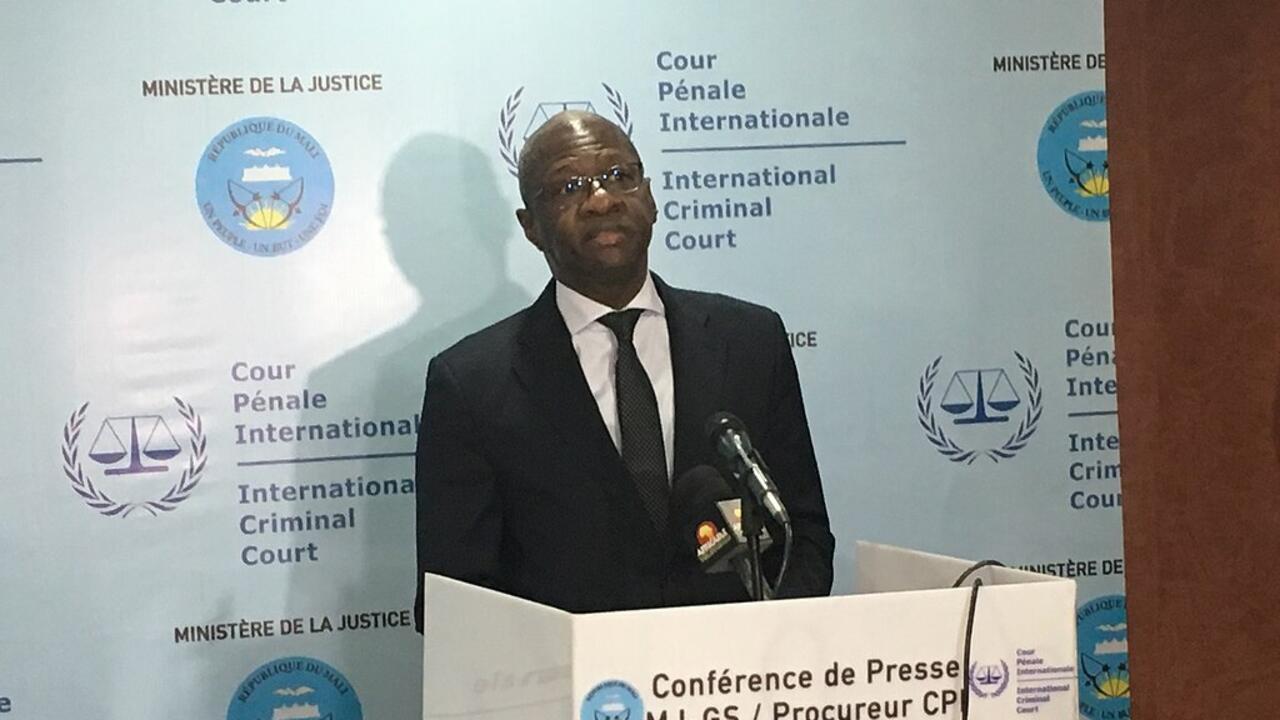
Mamadou Ismaïla Konaté, a prominent lawyer and former Malian Minister of Justice, stands as a vocal opponent of the military authorities who have governed Mali for six years without holding elections. Speaking on the current crisis, Konaté shed light on Mountaga Tall’s plight, the questionable use of counter-terrorism efforts, and the perceived subservience of the Malian judicial system. He firmly reiterated his strong condemnation of jihadist terrorism, underscored the transitional regime’s accountability, and explained his decision not to align with the Coalition for the Republic (CFR), the opposition alliance led by Imam Dicko.
Mountaga Tall’s illegal detention for a month by State Security has prompted strong calls for his release or presentation before a judge, emphasizing adherence to the rule of law. Do the transitional authorities acknowledge these demands?
Maître Konaté: While I remain personally skeptical, these authorities must ultimately heed reason and the law. They need to understand that no individual should be deprived of their freedom outside legal parameters. Even if Mali is not currently operating under a true rule of law, it is crucial to remind these authorities that a state’s commitment to legal principles is often measured by how it treats its political opponents, critics, and legal professionals. It is utterly unacceptable for a citizen, a political figure and a lawyer, to be denied access to doctors, legal counsel, or even the President of the Bar Association. Following a strong statement from the Bar President, the Malian military authorities responded by abducting his son, an escalation that is simply intolerable.
Indeed, after Mountaga Tall, his son and other political opponents, as well as military and religious leaders, have faced similar abductions. Military Justice is reportedly investigating suspicions of complicity with armed groups during the April 25 attacks. While no official link has been established between this inquiry and the detentions, the authorities’ implicit strategy, echoed by their supporters, is to justify these actions as part of the fight against terrorism. This approach appears to resonate with a segment of the Malian population.
It is imperative to explain to these Malians that the battle against terrorism cannot serve as a pretext for legal insecurity. A military camp is not a judicial body. Legitimate detention is verifiable; arbitrary detention, by contrast, is concealed. We are currently witnessing a climate of complete arbitrariness. Today it concerns Mountaga Tall, but tomorrow it could be many others. This is precisely why, even within the context of combating terrorism, it is essential that the legal framework remains intact, and that justice is both the beginning and the end of any process.
Beyond this specific case, Malian justice recently sentenced former Prime Minister Moussa Mara to a year in prison for a tweet expressing hope that “day” would succeed “night.” Meanwhile, supporters of the transitional government openly call for the lynching of pro-democracy activists or the burning of Mauritanian-owned businesses. Does this indicate that Malian justice is either complicit with or subservient to the transitional authorities?
Undoubtedly, this judicial system, which ought to uphold public order and security, unfortunately projects an image of submission and compliance. The judiciary must recognize that its duty is not to serve any particular regime, military or otherwise. It serves the state, the nation, and its people. Judges must never lose sight of this fundamental principle.
But do judges truly have a choice? Are they not also operating under fear?
The law provides judges with the option to recuse themselves. Yet, under the guise of fear, judges today are allowing themselves to play a role that is detrimental to their own integrity and to the very essence of justice. From this perspective, they must simply realize that while today is the present, justice will eventually prevail.
Following the April 25 attacks, the death of Minister Sadio Camara, and the capture of Kidal, some believed the military authorities in Mali were weakened. However, the government’s grip on power does not seem to be faltering significantly.
It is faltering! Clearly, terrorism has no place in society; it fundamentally denies the social contract, legal principles, and civil peace. However, it has become increasingly challenging to overlook the accountability of a government that seized power through force and maintains its authority through coercion and terror. The escalating dangers faced by the country and its citizens cannot be disconnected from the decisions made by those who have been governing for the past six years.
You are an opponent of Mali’s transitional authorities, that much is clear, but you have not joined the CFR (Coalition for the Republic), Imam Dicko’s coalition. What are your reasons?
The simple reason is that today, we find ourselves caught between the ‘kepi’ and the ‘chechia.’ The ‘kepi’ symbolizes the seizure of power by force and its authoritarian exercise. Facing them, we have the ‘chechias,’ and it’s essential to recall that 2012 happened. That year brought about the cutting off of hands and feet in the northern regions of Mali…
During the period of occupation by jihadist groups…
Exactly. Those severed hands and feet remain vivid in people’s minds. While I fully support national unity and dialogue, and the ultimate goal of restoring national cohesion, for me, there are absolute preconditions. We cannot emerge from a battlefield, armed and equipped, only to sit at a negotiating table and simply erase everything that has transpired. Just as I vehemently oppose this military regime, which violates all rights and freedoms, I cannot genuinely endorse acts of terror or terrorists. An absolute prerequisite is that we must address the events of 2012. We must discuss that malevolent convergence between the FLA and the Jnim. There must be foundational principles and absolute values to which everyone adheres, values that, for me, constitute the very bedrock of the Republic, democracy, and justice.
The AES regimes in Mali, Niger, and Burkina Faso consistently assert that opposing them is tantamount to opposing the sovereignty of these three nations, siding with national enemies, terrorists, external interference, and engaging in media warfare. As a Malian, what is your perspective and your response to these claims?
No one can strip me of my identity as a Malian, a patriot, and a committed citizen. What truly troubles these regimes, which themselves originated from illegality and fraud, is their inability to tolerate reminders of the law or their own past statements and commitments. The true anti-patriots are those who starve their citizens, corrupt fundamental liberties, and dismantle the rule of law.
Related posts
Algeria’s parliament session sparks debate over Sahel military shift and regional fallout
The urgent summoning of Algeria’s parliament on 25 October has reignited discussions about the nation’s evolving...
Gabon’s decentralisation: uncovering the hidden barriers to local empowerment
Libreville — President Brice Clotaire Oligui Nguema’s recent meeting with Senate President Huguette Nyana Ekoume Awori...
Bénin’s Démocrates party: fallout grows as appeal verdict looms and Atchadé tightens grip
The protracted leadership battle within Bénin’s main opposition party, Les Démocrates, has entered a new phase...