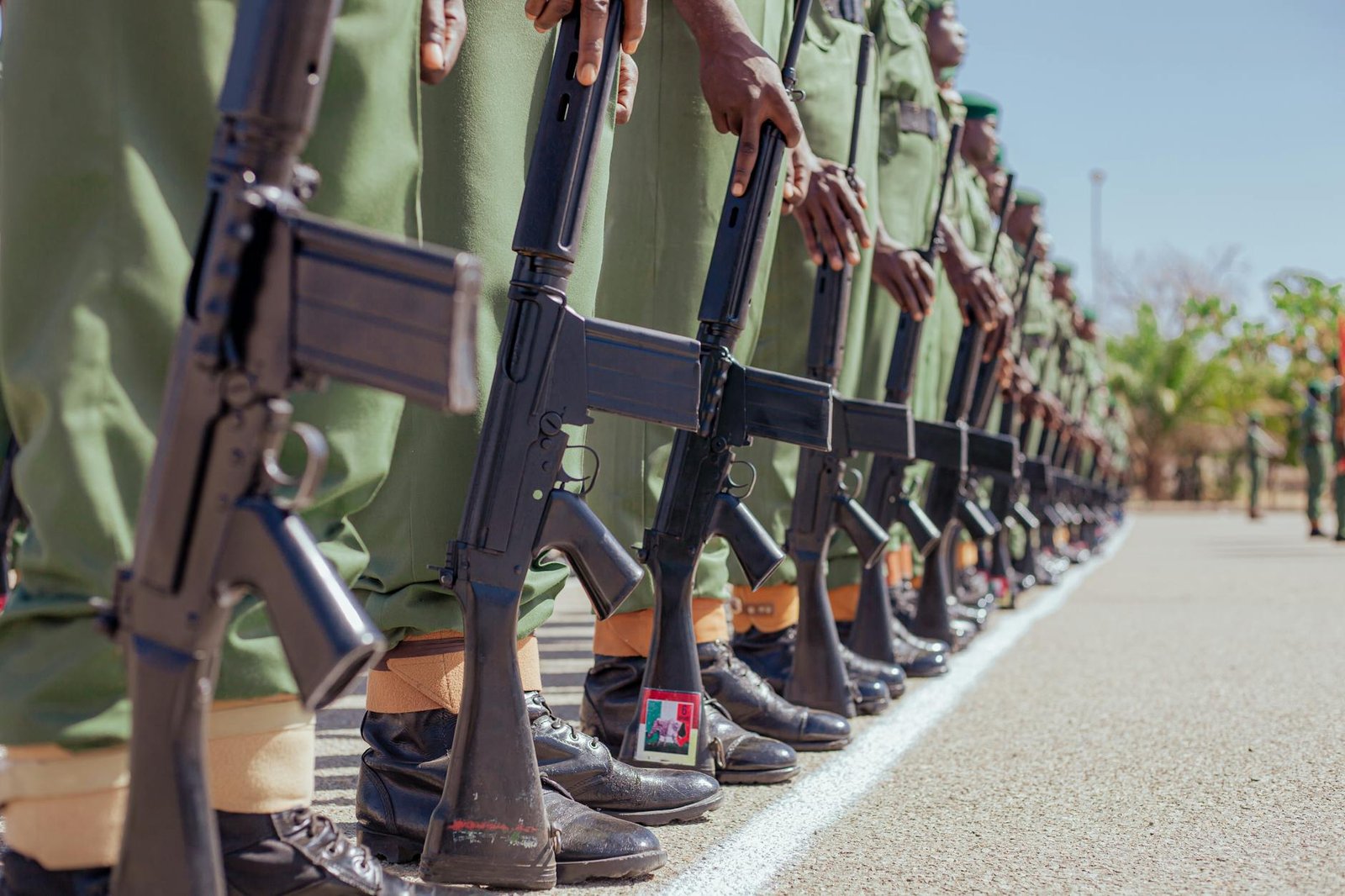
The Malian authorities have escalated their control over the nation’s territory by formally barring civilian access to thirty-nine high-priority military zones scattered across the country. This sweeping measure, framed as a shield for ongoing operations, arrives as the Malian Armed Forces (FAMa) escalate deployments against active terrorist factions in the central and northern regions. The initiative reflects a broader strategy to safeguard strategic sites integral to asymmetric warfare tactics.
Military mapping takes new shape across Mali
The designation of thirty-nine military zones represents a landmark administrative decision with far-reaching implications. Beyond traditional military installations such as barracks, airfields, and supply depots, the restriction likely encompasses operational corridors, forward operating bases, and locations hosting newly acquired air and ground assets. Since 2022, Mali has significantly bolstered its defense capabilities, integrating aircraft and drones to regain tactical momentum. Securing these high-value assets has now become a cornerstone of military planning.
This move also signals a deliberate effort to tighten operational secrecy. In a conflict where human intelligence and battlefield observation are pivotal for adversaries, limiting civilian movement around critical sites serves a counter-intelligence purpose. Authorities aim to plug potential leaks that could enable sophisticated attacks on military positions, echoing recent assaults on multiple garrisons.
Political message aims at citizens and international allies
The announcement coincides with a period of consolidation for the military-led transition, which has tightened its grip on the security apparatus. Following the withdrawal of the United Nations Multidimensional Integrated Stabilization Mission in Mali (MINUSMA) at the end of 2023 and the end of France’s Barkhane operation, Bamako has asserted full operational sovereignty. Mali now relies on its own enhanced capabilities, bolstered by partnerships with Russia and collaboration within the Alliance of Sahel States (AES), which includes Burkina Faso and Niger.
For local communities, the restrictions carry tangible consequences. Limited access to certain areas may disrupt trade networks, pastoral migrations, and farming activities—especially in regions where military installations intersect with inhabited lands. Humanitarian organizations, already navigating a deteriorating security landscape, must now operate under even tighter constraints. Questions linger about how precisely these zones will be marked and how affected populations will be informed.
Sahel’s prolonged instability fuels regional alignment
Bamako’s decision aligns with a broader regional trend. Burkina Faso and Niger, fellow AES members, have also implemented measures to protect military infrastructure and regulate movement in sensitive zones. The convergence of these security doctrines underscores a shared threat perception and a push toward operational standardization. This coordination is gradually expanding to include joint military exercises and the development of a proposed regional rapid-reaction force.
Yet the strategy of militarized containment raises mid-term concerns. As the number of restricted zones grows, large sections of the country may become locked in a perpetual state of exception, hindering the restoration of civilian administration and economic recovery. Striking a balance between security imperatives and national cohesion remains a delicate challenge—particularly in a nation where insecurity has gripped nearly two-thirds of its territory since 2012.
The rollout and enforcement of these restrictions will be closely monitored by regional diplomats and international donors, who are keenly attuned to humanitarian access conditions and civilian rights protections. How Bamako defines the exact boundaries of these zones—and what penalties apply to violations—will shape perceptions of the policy both at home and across the continent.