On June 22, Morocco and India concluded a pivotal two-day meeting in New Delhi, broadening their counter-terrorism alliance to tackle clandestine financial networks, criminal exploitation of technology, and the dangerous convergence between transnational crime syndicates and armed extremist groups. The second session of the Morocco-India Joint Working Group on Counter-Terrorism set a roadmap for shared action, emphasizing real-time intelligence sharing, institutional capacity building, and aligned strategies within key global forums.
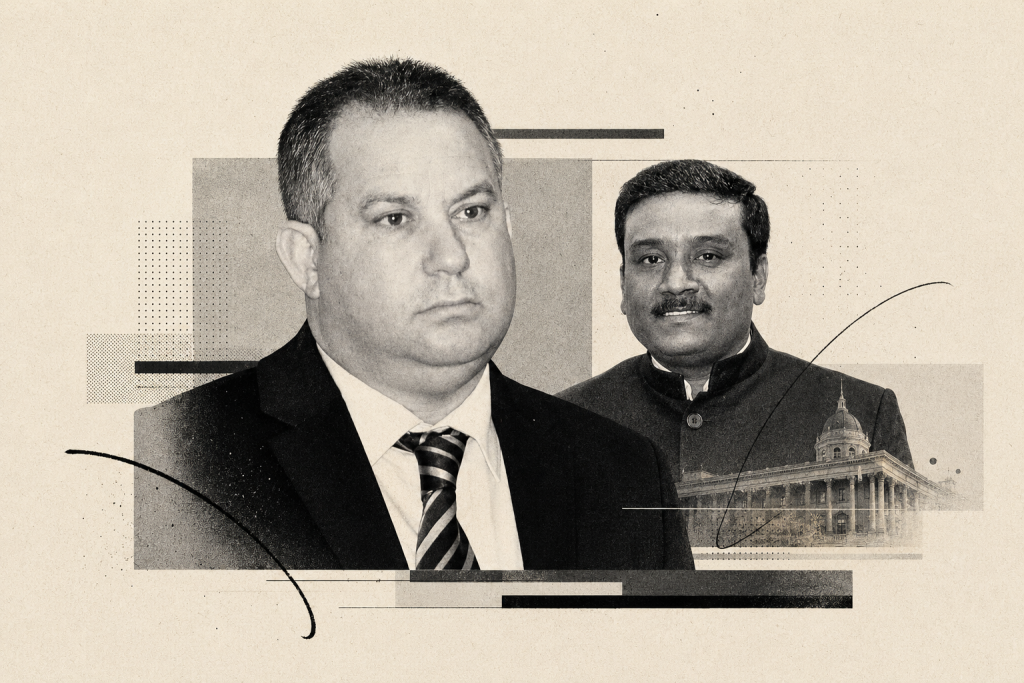
The high-level delegation, led by Vinod Bahade, Joint Secretary for Counter-Terrorism at India’s Ministry of External Affairs, and Hicham Baali, Head of the National Brigade of Judicial Police (BNPJ) under the Directorate General of National Security (DGSN), addressed both regional threats and the global spread of extremist ideologies, illicit funds, technical tools, and terrorist operatives.
The joint statement issued after the talks «unequivocally condemns terrorism in all its forms and manifestations, including cross-border terrorism». Both sides explicitly condemned the April 22, 2025 attack in Pahalgam, Jammu and Kashmir, and the November 10, 2025 incident near New Delhi’s Red Fort.
Tracking terror financing, radicalization, and digital threats
Discussions covered violent extremism, radicalization pathways, terror financing, and the weaponization of technology for criminal purposes. The communiqué describes the exchange as a joint assessment of «current and emerging challenges in counter-terrorism», requiring deep insight into recruitment tactics, funding sources, communication channels, and the digital infrastructure exploited by clandestine networks.
A major focus was placed on «the use of technology for terrorist ends»—encompassing encrypted messaging, online propaganda, digital payments, and logistical tools that enable attack planning. While no specific tools were named, the agenda aligns with wider cooperation on operational intelligence, prevention, and judicial response.
Morocco and India also analyzed the «nexus between transnational organized crime and terrorism». This intersection spans illicit financing, logistics networks, forged documents, smuggling routes, and border-crossing mechanisms that allow armed groups to move people, funds, and materiel across borders.
Another priority was the «global movement of terrorists»—a term referring to foreign fighter flows, returnees from conflict zones, and the risks posed by clandestine travel corridors. Both capitals pledged to align their threat assessments to better detect these movements and streamline information exchange between their security agencies.
Strengthening bilateral intelligence and global frameworks
The delegations explored ways to «enhance bilateral cooperation against terrorism through deeper intelligence sharing, institutional capacity-building, and exchange of best practices». This includes leveraging police expertise, threat analysis, specialized training, and comparative policy evaluation between the two nations.
Both sides reaffirmed their commitment to multilateral coordination within the United Nations (UN), the Financial Action Task Force (FATF), and the Global Counter-Terrorism Forum (GCTF). These platforms were highlighted as central to aligning financial standards, preventing violent extremism, facilitating judicial cooperation, and sharing state-level experiences.
Finally, Morocco and India agreed to hold the next meeting of the Joint Working Group in Rabat, with dates to be set by mutual consent. This third session will continue examining regional and global threats and translate the New Delhi consensus into tighter bilateral mechanisms.