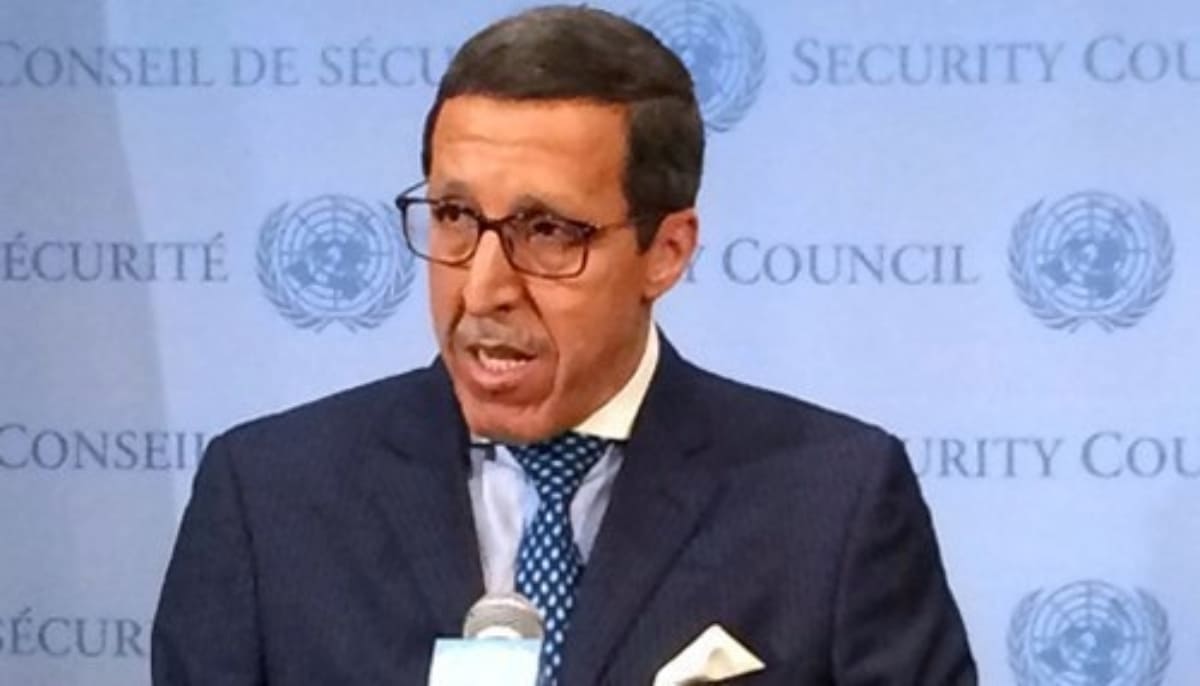
Morocco’s Permanent Mission to the United Nations in New York organized an international seminar on July 1, 2026, focusing on the implementation guarantees of territorial autonomy agreements. The event brought together scholars and experts from diverse global autonomy models to discuss their relevance in the context of UN Security Council Resolution 2797.
Omar Hilale, Morocco’s Permanent Representative to the UN, opened the discussions by emphasizing the “exceptional context” of the seminar. He highlighted recent diplomatic progress on the Sahara issue, particularly the adoption of Resolution 2797 in October, which he described as a “historic turning point.” The resolution unequivocally supports Morocco’s autonomy plan under Moroccan sovereignty as the sole foundation for a mutually acceptable political solution.
Hilale noted that over 130 UN member states, including three permanent Security Council members—the United States, France, and the United Kingdom—now support Morocco’s autonomy initiative. He linked this diplomatic momentum to tangible developments in the southern provinces, citing infrastructure projects, renewable energy investments, higher education expansion, healthcare improvements, and initiatives like a major data center in Dakhla and a deep-water port on the Atlantic coast. For him, these achievements demonstrate that the autonomy plan is not merely a political slogan but a concrete governance project backed by constitutional, institutional, and democratic guarantees.
The seminar’s central theme centered on a critical question: “In a negotiated autonomy, what value does it hold if it lacks implementation guarantees?” Hilale reiterated that Morocco’s proposal empowers local populations in the Sahara to manage their affairs through legislative, executive, and judicial bodies with exclusive competencies.
Comparative academic insights into autonomy models
Marc Finaud, Senior Advisor and Associate Researcher at the Geneva Centre for Security Policy, moderated the event. He clarified that the seminar aimed to complement, not replace, UN-led negotiations by providing comparative international perspectives. Key aspects discussed included local representation, referendum consultations, subsidiarity principles, national institutional integration, and constitutional guarantees for human rights.
Diego Muñoz, a researcher, presented the case of Rapa Nui (Easter Island), an autonomous territory of Chile. He described its decades-long, incomplete autonomy process, emphasizing the importance of local consultations. While highlighting contextual differences, he underscored how Morocco’s initiative stands out by integrating local representation, institutional guarantees, and cultural recognition as core pillars of its autonomy framework.
Administrative vs. political autonomy
Sémir Al Wardi, a political science professor at the University of French Polynesia, distinguished between administrative and political autonomy. He contrasted the predominantly administrative autonomy of French Polynesia with the legislative powers granted to New Caledonia. Al Wardi praised Morocco’s initiative as “more generous” than the French model, as it grants legislative authority to the Sahara region—comparable to autonomy models in Spain or the United Kingdom. He also stressed the necessity of financial resources for regions to exercise their competencies effectively, framing autonomy as a means for regions to assert their identity while remaining part of a larger state.
Heikki Mattila, a professor at the School for International Training in Geneva, discussed the autonomous Åland Islands in Finland—a Swedish-speaking territory with a unique status rooted in a historical dispute between Finland and Sweden. The Åland Islands’ model features robust protections, including language preservation, restrictions on non-resident property acquisition, fiscal autonomy, and a demilitarized status. Mattila highlighted the need for clear competence-sharing mechanisms and institutional flexibility, noting that Åland’s autonomy laws enjoy quasi-constitutional protection and can only be amended through a reinforced procedure involving the regional government.
Beyond legal texts: Ensuring autonomy works in practice
Dagikhudo Dagiev, a senior researcher at the Institute of Ismaili Studies in London, examined the case of the Gorno-Badakhshan Autonomous Region in Tajikistan. While the region’s autonomy is constitutionally recognized, Dagiev pointed out its practical limitations due to centralized governance, direct appointments of regional leaders by the central government, and the lack of effective exclusive competencies. He argued that autonomy must extend beyond legal frameworks to be meaningful. Comparing this to Morocco’s initiative, he praised its constitutional anchoring, fiscal resources, dispute-resolution mechanisms, protection against unilateral revocation, and potential international oversight as foundational guarantees for sustainable autonomy.
In closing, Marc Finaud synthesized key takeaways from the comparative analysis: constitutional enshrinement of autonomy status, international agreement, precise competence definitions, resource allocation, dispute-resolution mechanisms, and protections against unilateral changes. These elements, he noted, enhance the credibility of Morocco’s autonomy plan, positioning it as a durable solution responsive to the evolving needs of the local population.