Morocco’s global influence under King Mohammed VI’s leadership
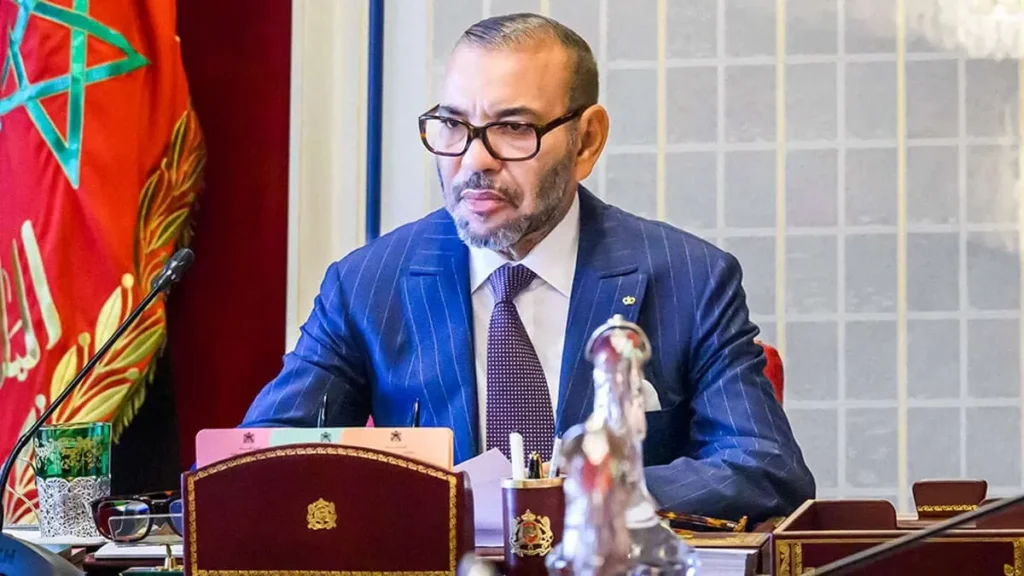
Morocco has firmly established itself as a leading political, economic, and social force, not only across Africa and the Arab world but also throughout the Mediterranean basin and on the global stage, declared Anissa Saysay, a German-Moroccan politician and member of Germany’s Christian Democratic Union (CDU), the party led by Chancellor Friedrich Merz.
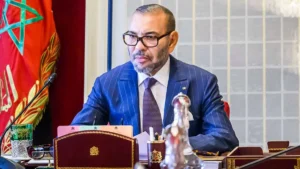
In a recent interview marking the Throne Day celebrations, she highlighted how strategic modernization initiatives have positioned the Kingdom—under the visionary leadership of His Majesty King Mohammed VI—as a modern, stable nation and a respected global player.
Infrastructure and economic independence drive Morocco’s rise
Saysay emphasized that Morocco’s transformation stems from long-term planning, substantial infrastructure investments, and a commitment to economic sovereignty. The country’s ports, high-speed rail network, airports, industrial and technology hubs, and thriving automotive and aerospace sectors reflect the meticulous approach to nation-building that defines its future trajectory.
Geopolitical advantage: bridging continents and cultures
Positioned at the crossroads of Europe, Africa, and the Arab world, Morocco leverages its geographic and cultural position to enhance its political and economic leverage. The Kingdom’s leadership in renewable energy further solidifies its role as a trailblazer in Africa and a key partner for Europe in sustainable development.
Social progress: healthcare, education, and women’s rights
On the social front, she praised Morocco’s strides in expanding access to healthcare, education, and women’s rights, reinforcing its reputation as a nation committed to inclusive progress.
Strengthening German-Moroccan ties
Saysay underscored the growing strength of German-Moroccan relations, describing Morocco as a trusted and dynamic partner for Germany in North Africa. Germany, in turn, serves as a major collaborator in technology transfer, industrial development, vocational training, research, climate protection, and sustainable growth.
At the heart of this partnership lies a commitment to equality, mutual respect, and shared interests, fostering an environment of sincere political dialogue.
Binationals as catalysts for collaboration
Binationals play a pivotal role in deepening ties, she noted, by facilitating investments, knowledge exchange, partnerships, scientific cooperation, and social dialogue. Their dual perspectives combine German institutional expertise and technological prowess with Moroccan creativity, dynamism, and regional networks.
The Throne Day celebrations, she added, transcend mere tradition—they symbolize a lifelong bond between Moroccans abroad and their homeland, celebrating its heritage and progress.