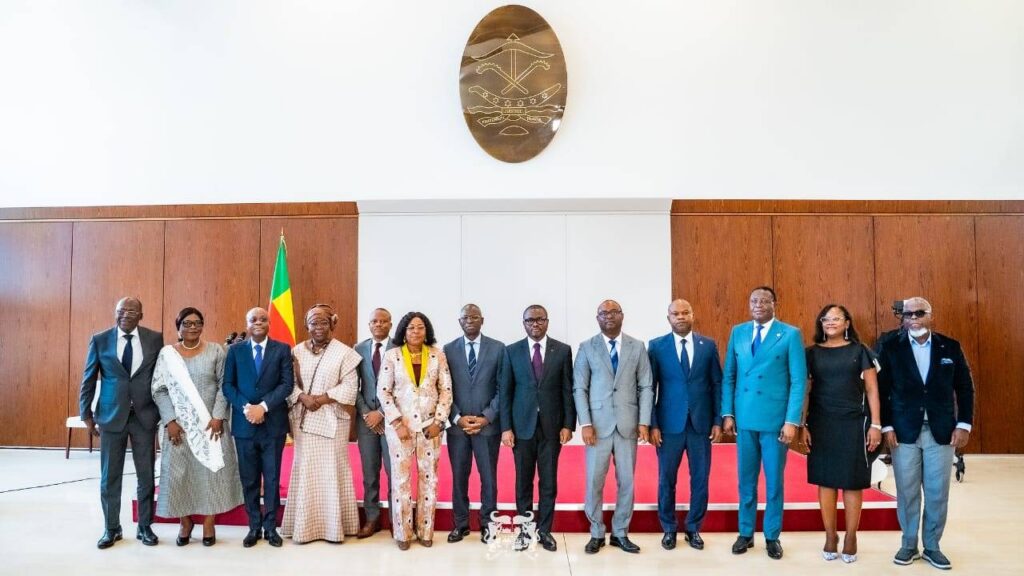
The Republic of Bénin has taken a decisive step toward institutional modernization with the official launch of the permanent committee for the National Commission on Legal Reform. This groundbreaking initiative, led by President Romuald Wadagni, aims to revitalize the nation’s legal framework, positioning it as a catalyst for socio-economic growth and enhanced global competitiveness.
Institutional milestone set at the Palais de la Marina
On July 28, 2026, in the distinguished surroundings of the Ambassadors’ Hall at the Palais de la Marina, President Wadagni presided over the formal installation of the committee. The event brought together key state figures, including the Vice-President, heads of major institutions, and the Minister of Justice and Legislation. This gathering marked the beginning of an ambitious legislative overhaul designed to align Bénin’s legal system with contemporary demands and future-oriented governance.
A committee rooted in strategic foresight
The creation of the National Commission on Legal Reform was ratified by the Council of Ministers on October 15, 2025, following months of preparatory work. To spearhead this initiative, a permanent committee of distinguished experts was appointed on July 1, 2026. Led by President Noël Gbaguidi, Vice-President Djidjouè Gboyou, and Rapporteur Igor Guedegbe, the committee is tasked with overseeing legislative vigilance, conducting forward-looking legal studies, and ensuring the seamless integration of regional directives into national law.
Revitalizing the legal system: a national priority
In his opening address, President Wadagni outlined the committee’s primary objectives. The first priority is an unvarnished assessment of Bénin’s existing legal framework, identifying and eliminating outdated statutes that no longer reflect societal or economic realities. The President emphasized the urgency of closing legal gaps on emerging issues while resolving internal contradictions that undermine judicial integrity. A clear, coherent, and accessible legal system, he argued, is the cornerstone of public trust and institutional credibility.
From legal order to economic accelerator
President Wadagni’s vision extends beyond traditional notions of justice. He framed the legal system not merely as a tool for maintaining order but as a dynamic force for national development. “The law must evolve from a passive regulator to an active enabler of progress,” he stated, urging the committee to adopt a forward-thinking approach. This strategy encompasses climate resilience, sustainable agriculture, urban planning, and digital innovation, ensuring Bénin’s regulatory environment remains at the forefront of global best practices.
The benefits of such reforms are multifaceted. A modernized legal system enhances economic attractiveness by reducing uncertainty for investors, streamlines administrative processes, and safeguards environmental and social protections. By eliminating bureaucratic hurdles, these changes will accelerate critical infrastructure projects and foster inclusive growth.
Collaboration as the cornerstone of success
President Wadagni underscored that the success of this reform hinges on inclusivity. The committee is encouraged to engage a broad spectrum of stakeholders—legal scholars, judges, attorneys, civil society representatives, and sector-specific experts—to ensure the resulting laws are both legitimate and practical. The government has pledged full logistical, technical, and financial support to facilitate the committee’s mission.
A new chapter for Bénin’s legal landscape
With the committee now formally installed, President Wadagni has called for bold, rigorous, and consensus-driven reforms. If executed as envisioned, Bénin’s legal system will transition from a reactive framework to a proactive engine of transformation, driving economic prosperity and social equity across the nation.