Why Cameroon’s capital hosted Monaco’s sovereign for a strategic engagement
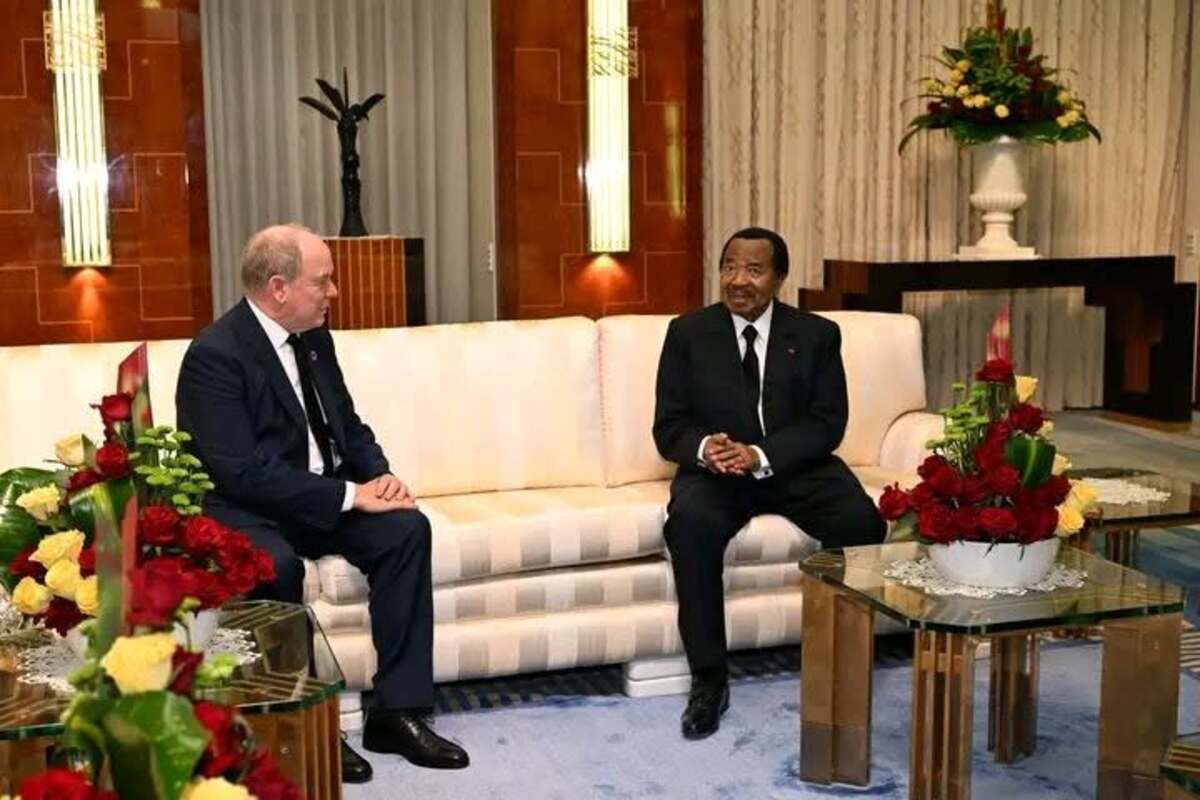
At the heart of a two-day state visit, Cameroon’s President Paul Biya welcomed Prince Albert II of Monaco to the Palais de l’Unité in Yaoundé. Behind the formal courtesies and diplomatic smiles lay a deeper exploration of the historical ties and practical cooperation that have sustained relations between the two nations for decades—a dynamic rarely unpacked in public.
Key moments in a 90-minute exchange
The meeting lasted one and a half hours, culminating in a rare public echo from Cameroon’s leadership. President Biya, sharing a reflection on the encounter on social media, described the visit as “a pleasure to host His Serene Highness Prince Albert II, with whom we revisited the long-standing friendship binding Cameroon and the Principality of Monaco.”
While the official agenda included healthcare cooperation, cultural exchange, and infrastructure development, the prince’s itinerary also featured a visit to the Edimar Princess Grace Center in Elig-Essono, a facility emblematic of Monaco’s decades-long involvement in Cameroon’s healthcare sector. This stop underscored how decades of collaboration have woven public health into the fabric of bilateral relations.
From heir to sovereign: tracing three years of continuity in relations
This was not Prince Albert’s first visit to Cameroon—but it marked the first time as reigning monarch. In 2023, as heir apparent, he traveled to the country to lay the groundwork for future engagement. His transition from prince to sovereign has not disrupted the trajectory of Cameroon-Monaco relations; if anything, it has reinforced them, reflecting a shared commitment to deepening ties beyond symbolic gestures.
The continuity is intentional. Both nations have maintained a steady, low-profile cooperation—one that prioritizes long-term impact over fleeting publicity. The centre in Yaoundé stands as a tangible reminder of that strategy: built with support from Monaco’s public and private sectors, it symbolizes more than aid; it represents a long-haul investment in Cameroon’s development.
What the visit signals for Cameroon’s international partnerships
The visit reflects a deeper pattern in Cameroon’s foreign policy: leveraging small but influential partners like Monaco to advance national priorities such as healthcare access, cultural presence, and infrastructure. Unlike larger donors, Monaco offers targeted, high-visibility collaboration—ideal for projects where efficiency and visibility matter as much as financial scale.
For Yaoundé, this engagement is not merely diplomatic protocol. It is a strategic choice to diversify partnerships, especially at a time when traditional development allies are recalibrating their commitments. The presence of Prince Albert II sends a clear message: Cameroon remains open to new forms of cooperation, even from unexpected quarters.
Peering behind the curtain of Cameroon-monaco relations
The Cameroon-Monaco relationship is built not on grand treaties or high-profile summits, but on sustained, quiet collaboration in sectors where both nations see mutual benefit. Healthcare, education, and sustainable development have formed the pillars of this partnership, with institutions like the Edimar Princess Grace Center serving as anchors.
Monaco’s model—lean governance, strategic investment, and long-term planning—mirrors the approach Yaoundé seeks in external partnerships: results over rhetoric. This has allowed the relationship to flourish even when macroeconomic or geopolitical shifts might otherwise disrupt it.
The prince’s visit is thus more than a courtesy call. It’s an acknowledgment of a partnership that has quietly shaped decades of cooperation—one built on trust, continuity, and a shared belief in subtle but meaningful diplomacy.