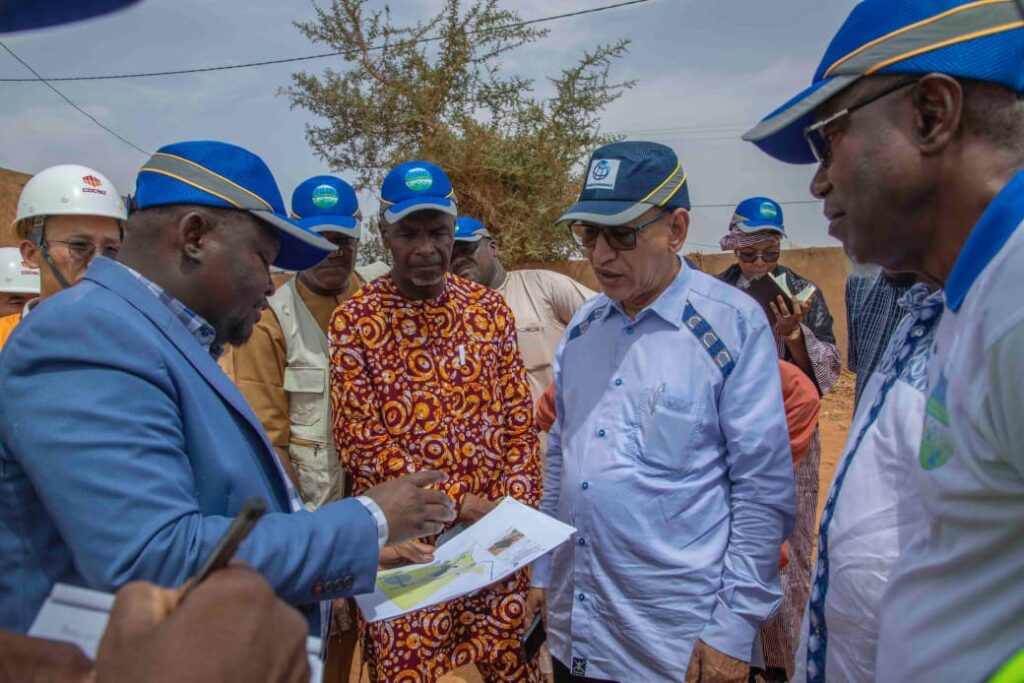
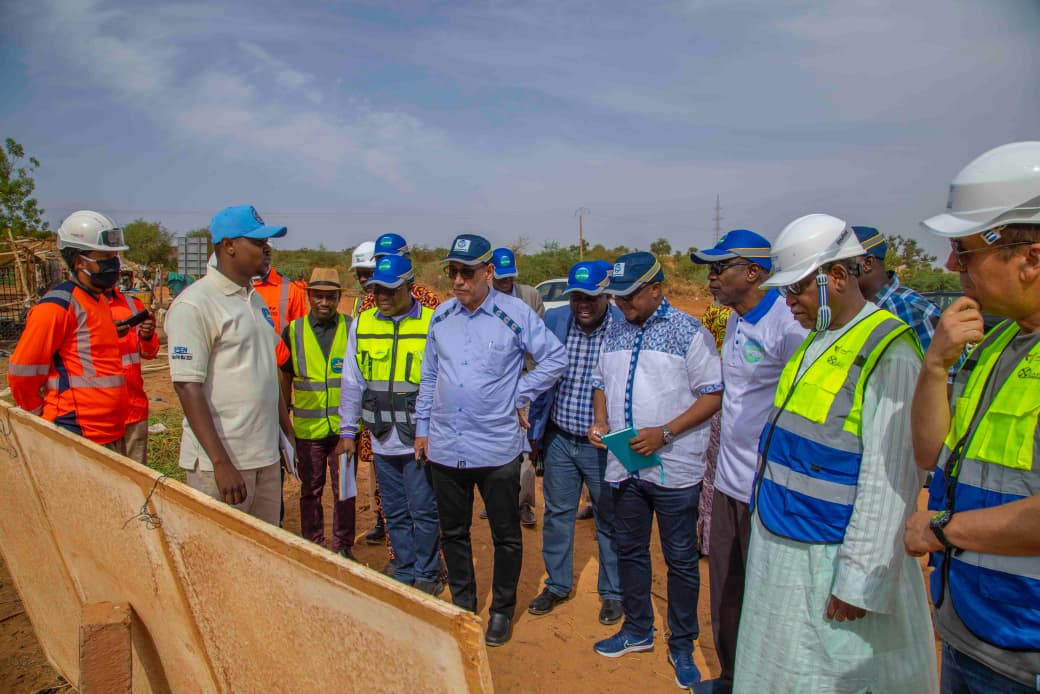
The capital of Niger, Niamey, is witnessing a major leap forward in its urban water supply infrastructure with the ongoing construction of its third water treatment and production plant. A high-level delegation, led by Zibo Zakara, National Coordinator of the Integrated Platform for Water Security in Niger (PISEN), Mohamed Nanzoul, World Bank Project Manager, and representatives from the Niger Water Assets Company (SPEN), toured key construction sites on June 2, 2026. The inspection covered critical locations including the water intake site, the plant itself, and the reservoir installation area.
a strategic project to transform Niamey’s water supply
In 2017, SPEN adopted an urban and semi-urban water infrastructure master plan, which included the construction of a new potable water treatment facility in Niamey. This third plant is designed to deliver up to 250,000 cubic meters of clean water daily, phased into three stages: an initial capacity of 100,000 m³/day, followed by two additional phases of 75,000 m³/day each. The primary goal is to significantly improve access to safe drinking water across Niamey’s urban and peripheral neighborhoods. PISEN oversees project coordination, with technical and financial support from the World Bank, while SPEN serves as the project owner.
breaking ground: water intake and reservoir network
Engineers overseeing the water intake site explained that raw water will be channeled to a treatment facility already under construction on the Yawari plateau. From there, the processed water will be distributed to two massive reservoirs, each with a capacity of 2,500 cubic meters. These reservoirs are strategically positioned to supply water to Niamey’s outlying districts, ensuring broader coverage across the capital.
Zibo Zakara, PISEN’s National Coordinator, emphasized that the first phase—delivering 100,000 m³/day—will secure Niamey’s water supply up to 2035. The project encompasses ten distinct work packages, with provisions for future expansions of the river-based treatment infrastructure. While acknowledging delays in earlier stages, Zakara noted that progress has accelerated, particularly in excavation work at the intake site and Yawaré plateau. He highlighted the mobilization of heavy machinery and local labor, with significant subcontracting initiatives benefiting national workers.
Mohamed Nanzoul, World Bank Project Manager, praised the project’s momentum and reaffirmed the institution’s commitment to supporting Niger’s government in enhancing public welfare through sustainable water infrastructure.
The construction project’s lead engineer, Haladou Laouali Amani, confirmed that preparatory phases—including site mobilization, data collection, and geotechnical studies—are complete. He described the initiative as a transformative project, one of the largest of its kind in Niger, designed to deliver clean water to approximately 45,000 social connections, fundamentally improving lives in Niamey.