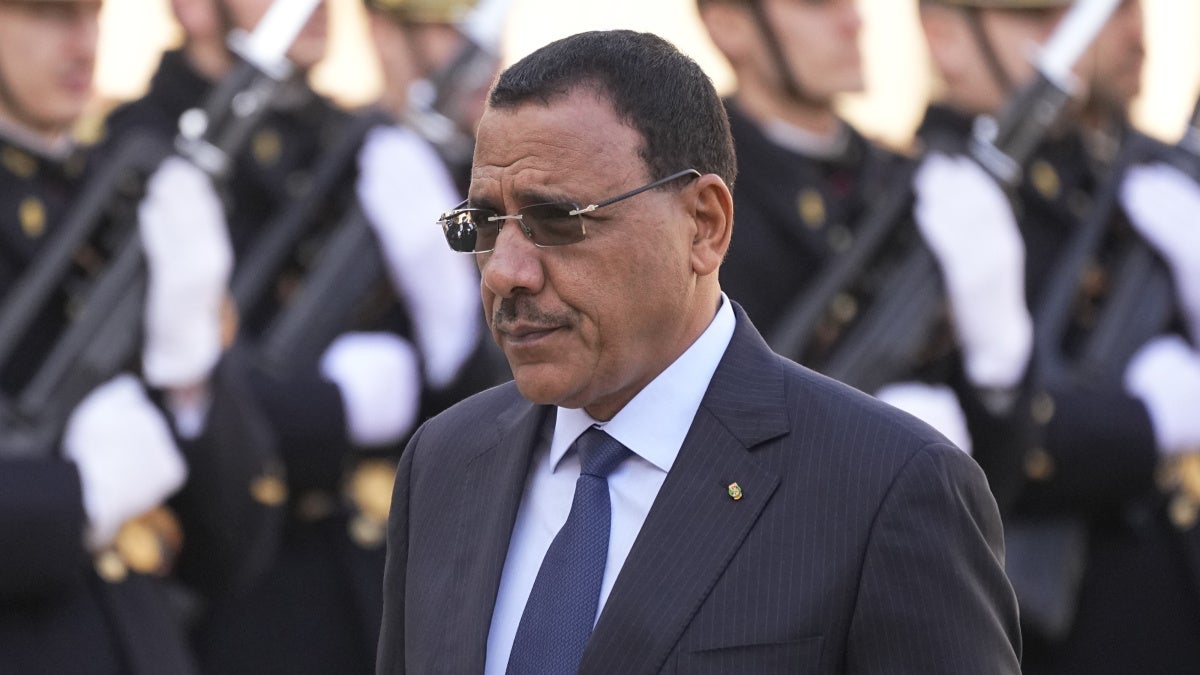
Human Rights Watch has called on the authorities in Niger to grant immediate freedom to the deposed leader Mohamed Bazoum, who continues to be held in unlawful confinement two years after a military uprising removed him from office.
On July 26, 2023, members of the Niger military, forming the National Council for the Safeguard of the Homeland (CNSP) under General Abdourahamane Tiani, seized power and took Mohamed Bazoum and his wife, Hadiza Bazoum, into custody. The couple remains confined within the presidential residence in the capital, Niamey, restricted from contacting legal counsel or their relatives. Following the removal of his presidential immunity by the junta in 2024, Mohamed Bazoum is now facing an impending trial.
“The military administration in Niger demonstrates a blatant disregard for legal principles every day that Mohamed Bazoum and his spouse remain imprisoned,” stated Ilaria Allegrozzi, a senior researcher specializing in the Sahel region. “The politically motivated prosecution and continued incarceration of the former president undermine any claims the junta makes regarding a transition to a more democratic Niger.”
Although the military rulers declared their intent in August 2023 to charge Mohamed Bazoum with high treason and compromising Niger‘s internal and external security, he has yet to be brought before a magistrate for preliminary proceedings.
In September, Mohamed Bazoum filed a legal challenge with the Community Court of Justice of the Economic Community of West African States (ECOWAS), citing human rights violations against him and his family. By December, the ECOWAS court determined his detention was arbitrary and mandated his release. However, in January 2025, Niger, Mali, and Burkina Faso officially ended their membership in ECOWAS.
By April 2024, legal efforts were initiated to strip Mohamed Bazoum of his immunity to facilitate prosecution for alleged offenses during his tenure. In June, the State Court of Niger issued a ruling against him in a process that observers say failed to meet international standards for due process. With his immunity revoked, the junta confirmed plans to try him for high treason, though a specific date has not been announced.
In February 2025, the United Nations Working Group on Arbitrary Detention, a panel of independent specialists, concluded that the imprisonment of Mohamed Bazoum and his wife violated international law and called for their urgent release.
“For two years, Mohamed Bazoum has been subjected to a cruel and illegal isolation, held without formal charges or a trial, and denied communication with his legal team, supporters, and children,” remarked Reed Brody, a member of the legal defense team. “Despite explicit rulings from international tribunals and UN bodies, Mohamed Bazoum remains a captive of the military junta.”
The treatment of Mohamed Bazoum is indicative of the military council’s broader strategy to suppress political opposition, silence peaceful activists, and restrict the media. Human Rights Watch noted that these actions suggest an effort to maintain control while delaying a return to civilian governance and the organization of transparent elections.
“Every day of Mohamed Bazoum‘s continued detention moves Niger further away from democratic stability,” Ilaria Allegrozzi concluded. “The leadership in Niger should consider the international and regional implications of holding Mohamed Bazoum captive for two years.”