The political landscape of Democratic Republic of the Congo (DRC) is once again dominated by fierce debates over security challenges in the eastern provinces. In a recent television appearance, prominent opposition figure and former Vice Prime Minister José Makila launched a scathing critique against President Félix Tshisekedi, attributing the resurgence of the M23 rebel group in Kinshasa to his administration.
a direct challenge to presidential authority
Speaking during a live broadcast on Thursday, Mr. Makila categorically denied any connection between the former head of state, Joseph Kabila, and the presence of M23 rebels in the capital. His statements came in response to growing public accusations that Kabila’s government had facilitated the movement’s expansion.
“No member of the M23 has ever provided protection to Joseph Kabila,” Makila asserted. “The population living under M23 control in North and South Kivu is subject to the same local authorities as everyone else. Kabila’s role was merely to defend national sovereignty when he was in office, without harboring personal conflicts with rebel leaders like Makenga or Nanga.”
He went further, placing responsibility for the crisis squarely on the current administration: “It is not Kabila who brought the M23 to Kinshasa—it is President Tshisekedi.” Makila argued that the current government’s decision to engage with the group had only emboldened its activities, rendering previous critiques of Kabila’s leadership baseless.
distinguishing rebellion from interstate war
The opposition leader also sought to clarify the nature of the conflict, dismissing comparisons to the war between Russia and Ukraine. “We possess Sukhoi fighter jets and drones. Why aren’t these being used to strike targets in Rwanda?” he questioned, implying that Kinshasa’s reluctance to launch direct strikes suggested the absence of a formal interstate war.
Makila emphasized his strictly political perspective, stating, “I am a political actor—one hundred percent. I speak only from a political standpoint.” He refused to engage in military or strategic discussions, positioning himself as a voice focused solely on governance and diplomacy.
public reaction and ongoing tensions
Makila’s remarks have ignited fresh debate across DRC’s political spectrum. Supporters of Tshisekedi argue that the president inherited a fragile security situation exacerbated by regional instability, while critics accuse his administration of failing to curb rebel influence effectively.
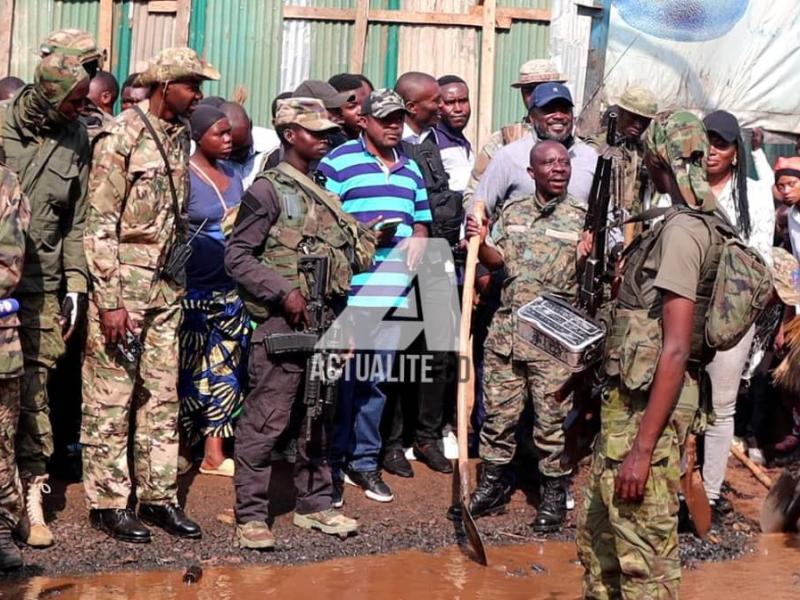
The M23, designated as a terrorist organization by DRC authorities, has been a persistent threat in the eastern regions since its resurgence in 2022. The group’s recent activities have displaced thousands and strained relations with neighboring countries, particularly Rwanda, which Kinshasa has repeatedly accused of supporting the rebels.
As the nation grapples with these security challenges, Makila’s accusations underscore the deep divisions within Congolese politics and the urgent need for cohesive leadership to address the crisis.