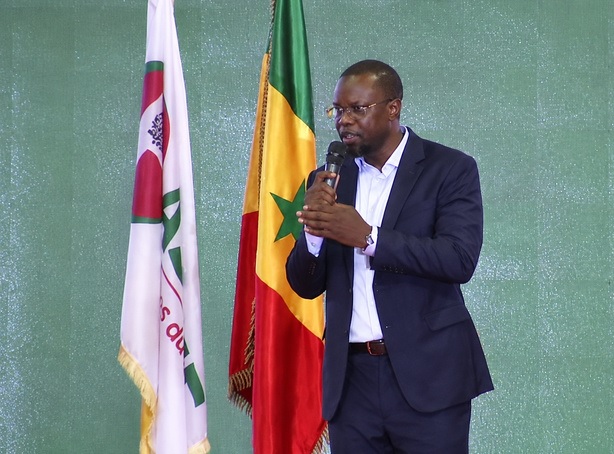
The Pastef-Les Patriotes, the parliamentary majority party, convened its first national congress over the weekend of 6–7 June at Dakar Arena since its founding in 2014. The gathering aimed to give the party fresh momentum amid a reshaping political landscape, outline new directives under party president Ousmane Sonko, and recalibrate Senegal’s political governance.
The weekend’s mass rally concluded the first ordinary congress of Pastef-Les Patriotes. Ousmane Sonko, confirmed as president and leader of the majority party, addressed a crowd of loyal supporters, unveiling a three-part political roadmap: ideological consolidation of the party, direct challenges to the executive, and securing the electoral calendar. Sonko first reflected on what he called “the first phase of clarification” initiated since the large gathering on 8 November. “On the political front, Pastef has remained Pastef and emerges from this clarification stronger,” he noted. While acknowledging that the period brought “surprises and disappointments,” he claimed no personal disillusionment. He then credited his movement with leading major battles: fighting corruption, pursuing justice, renegotiating contracts, and most importantly, retaining the parliamentary majority.
On governance, Sonko launched direct attacks on the head of state. “This country has suffered enough from plots and schemes,” he declared, urging every institution to stay within its constitutional role without being used for personal ambitions. The criticism was explicit: “Even if the president wants to satisfy political ambitions, he must not be allowed to weaken institutions.” Addressing those who warn of an institutional crisis, he countered with a sovereign interpretation of election results: “There is no institutional crisis in Senegal. The people chose to give the presidency to one person and the National Assembly to another.”
Parliamentary lock on local elections
Ousmane Sonko firmly ruled out any postponement of local elections, wielding both political and procedural arguments. “Pastef will never agree to a delay of local elections,” he stated bluntly, reminding the executive of constitutional constraints: “To do so, you must go through the Assembly and pass an enabling law.” After the investiture rally of Pastef’s president, the course seemed set for a new reconfiguration of the political scene and a fresh approach to political governance.