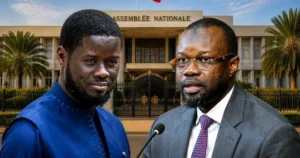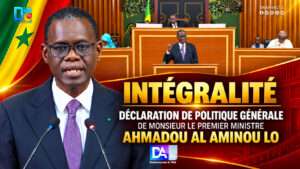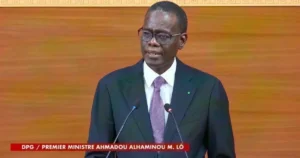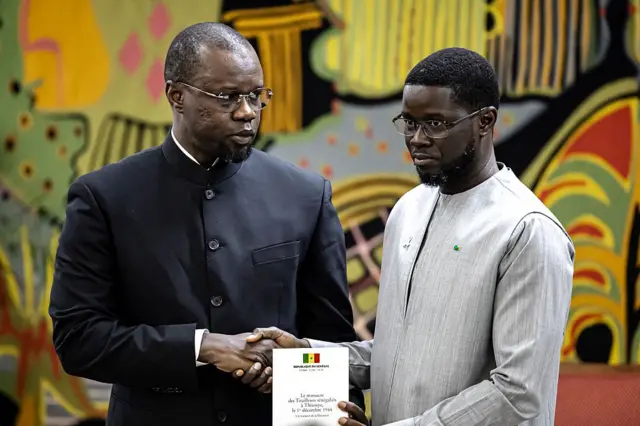
The political rift between Ousmane Sonko and President Bassirou Diomaye Faye has now become impossible to ignore. During a press conference held in Dakar, the former Prime Minister detailed the reasons behind his party, Pastef-Les Patriotes, declining to join the new government led by Ahmadou Alamine Mohamed Lô.
Major disagreements on national priorities
Sonko highlighted significant differences with the administration over key national policies. The most pressing disagreements revolve around judicial reform, financial accountability, and the renegotiation of economic contracts that many believe unfairly burden Senegal. Public debt management has also emerged as a contentious issue, with the former leader questioning the government’s approach to long-term fiscal stability.
Financial guarantees and international partnerships in question
The Pastef leader stressed that his party did not receive sufficient assurances regarding the government’s financial commitments or its future dealings with international lenders. He also voiced concerns about the administration’s subsidy policies and its approach to judicial governance, suggesting these areas require more transparent and inclusive decision-making.
Government composition fuels further division
Beyond policy disputes, the structure of the new cabinet has intensified tensions. Sonko argued that his party, which holds a dominant position in Senegal’s political landscape, deserved a substantial share of ministerial positions. He insisted that Pastef should not participate in the government unless it controlled at least half of the key portfolios, reflecting a demand for proportional representation.
The former Prime Minister also raised doubts about the new administration’s legitimacy, despite the inclusion of several figures aligned with his movement. However, he clarified that Pastef has no immediate plans to challenge the government through a vote of no confidence, signaling a temporary restraint in escalating the confrontation.
This public stance underscores the deepening divisions at the highest levels of government and signals a new phase of uncertainty in the relationship between the presidency and the political force that spearheaded Senegal’s 2024 political shift.