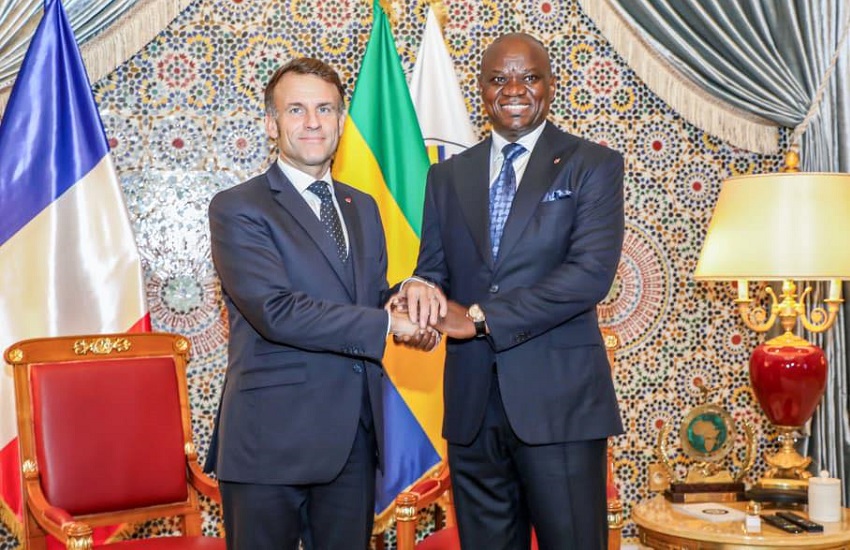
France–Gabon: rebuilding a strategic partnership
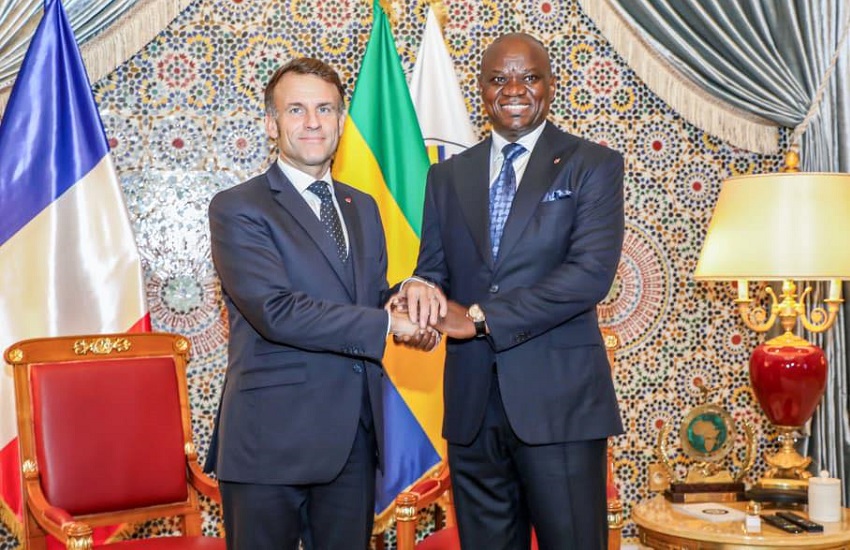
Libreville, June 4, 2026 – The state visit President Brice Clotaire Oligui Nguema will undertake to France on July 20 represents far more than a routine diplomatic engagement.
During his recent interview with a major international broadcaster, he framed this trip as a defining moment in reshaping Gabon’s ties with Paris amid shifting geopolitical tides across Central Africa and the continent.
While neighboring nations reassess their relationships with former colonial powers, Gabon is charting a distinct course. President Oligui Nguema has repeatedly emphasized that Gabon’s policy prioritizes a renewed, balanced partnership rooted in mutual strategic interests. In his words, relations with France remain “in excellent shape,” signaling continuity despite global realignments.
This visit may well emerge as one of the most consequential diplomatic milestones of Gabon’s current administration.
From historical ties to a modern alliance
Since gaining independence in 1960, Gabon and France have maintained a relationship unlike many others on the continent. Under leaders such as Léon Mba, Omar Bongo Ondimba, and Ali Bongo Ondimba, cooperation spanned defense, infrastructure, education, and economic development, with France’s military presence playing a pivotal role.
For decades, Gabon stood out as one of France’s most reliable allies in Africa. But the global landscape has evolved dramatically.
The rise of new international players—China, the United Arab Emirates, Turkey, and India—has redefined power dynamics. African nations now demand greater sovereignty over their resources and foreign policy choices. Gabon is no exception.
The relationship with France is no longer governed by historical inertia. Instead, it is transitioning toward a model based on economic complementarity, skills transfer, and local value creation.
Defense cooperation: sovereignty without rupture
Security cooperation will be a focal point of the visit. President Oligui Nguema has dismissed speculation about tensions over the withdrawal of French troops from Camp de Gaulle in Libreville, clarifying that the reorganization was a French initiative, not a point of contention between the two governments.
“We did not expel them,” he stated firmly—a statement that carries weight across Africa, where other nations have abruptly ended French military presence.
Gabon’s approach contrasts sharply with recent developments in the Sahel. Rather than severing ties, Libreville is adopting a pragmatic stance: maintaining a reduced French contingent focused on training Gabonese forces, reinforcing operational gains while gradually building national defense autonomy.
The planned transformation of Camp de Gaulle into a national training center—with a Gabonese name replacing the historic reference to General de Gaulle—sends a powerful message. It underscores a commitment to sovereignty that does not reject cooperation but reframes it on equal terms.
Economic ties: moving beyond investment to shared value
Beyond historical narratives and security arrangements, the future of the partnership hinges on economics. France remains one of Gabon’s top foreign investors, with French firms holding key positions in strategic sectors. Yet Libreville now seeks deeper local integration: processing raw materials, creating jobs, and fostering industrial development at home.
The upcoming meeting between President Emmanuel Macron and President Oligui Nguema offers a chance to redefine economic collaboration. The goal is no longer simply to attract capital but to build a partnership that supports Gabon’s economic diversification while providing French enterprises with a stable, attractive investment climate.
Toward a balanced and forward-looking partnership
The July 20 state visit comes at a pivotal juncture. Gabon is asserting its sovereignty while retaining partnerships critical to its growth. Meanwhile, France is recalibrating its African strategy amid waning influence and shifting alliances.
The old asymmetrical patterns are giving way to a new framework—one of mutual respect, shared interests, and pragmatic cooperation. By scheduling this visit and publicly affirming the strength of Gabon-France relations, President Oligui Nguema is laying the groundwork for a modern, strategic alliance.
Success will not be measured solely by official statements or ceremonial images. It will hinge on the ability of both nations to transform a long-standing partnership into a model of balanced cooperation for the 21st century—one built on respect, sovereignty, and mutual benefit.