The state of media independence in Niger is deteriorating as the current transition government uses intimidation and arbitrary detentions against reporters covering security matters and national conflicts, according to Amnesty International.
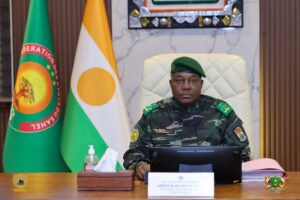
Since the military takeover on July 26, 2023—led by Abdourahamane Tchiani, who detained President Mohamed Bazoum—media professionals have faced increasing restrictions. Fear of retaliation has led many to practice self-censorship to avoid being targeted by the authorities.
“This suppression of the right to free expression and the work of the media comes at a time when the public desperately needs reliable information regarding the conflict and the government’s actions. We urge the authorities in Niger to release all journalists held for exercising their rights or reporting on public interest matters. It is essential that reporters can operate without the threat of harassment or detention,” stated Samira Daoud, Regional Director for Amnesty International in West and Central Africa.
On April 24, 2024, Soumana Maiga, the editor of L’Enquêteur, was taken into custody following an article detailing the alleged installation of Russian surveillance technology in state facilities. He is currently being held on charges of “endangering national defense” and could face a ten-year prison sentence if convicted.
The transition leadership must fulfill their legal duties to uphold and protect the human rights of everyone within the nation.
Samira Daoud, Regional Director for Amnesty International in West and Central Africa
Earlier that month, on April 13, 2024, Ousmane Toudou, a journalist and former advisor to the deposed president, was also arrested. Following the 2023 coup, Ousmane Toudou had publicly called for democratic resistance on social media. Despite the legal four-day limit for police custody having passed, he has not yet been brought before a judge. Furthermore, he is set to be tried by a military court, which contradicts international standards requiring that such tribunals only handle military offenses.
“We are more cautious with our writing to stay safe”
Tchima Illa Issoufou, a correspondent for the BBC Hausa service, faced serious threats and accusations of “destabilizing Niger” after reporting on the security crisis in the Tillabéri region. Targeted by government supporters online and pursued by security forces, she was forced to flee the country. Additionally, Ali Tera, a civil society figure who was interviewed for her report, was arrested on April 26, 2024, and sent to Niamey civil prison shortly after.
An anonymous media director in Niger shared with Amnesty International that the professional climate has become incredibly difficult. He noted that the principles of press freedom are under fire, forcing many colleagues to be extremely careful with their reporting to avoid repercussions.
The institutional crackdown continued in January 2024 when the Maison de la Presse, an organization representing both public and private media outlets, was suspended. It was subsequently replaced by a committee managed by the Ministry of the Interior.
“The rights to information and a free press are enshrined in both national law and international agreements, such as the African Charter on Human and Peoples’ Rights, which Niger is a party to. The current administration must honor these obligations and ensure the protection of human rights for all citizens,” Samira Daoud concluded.