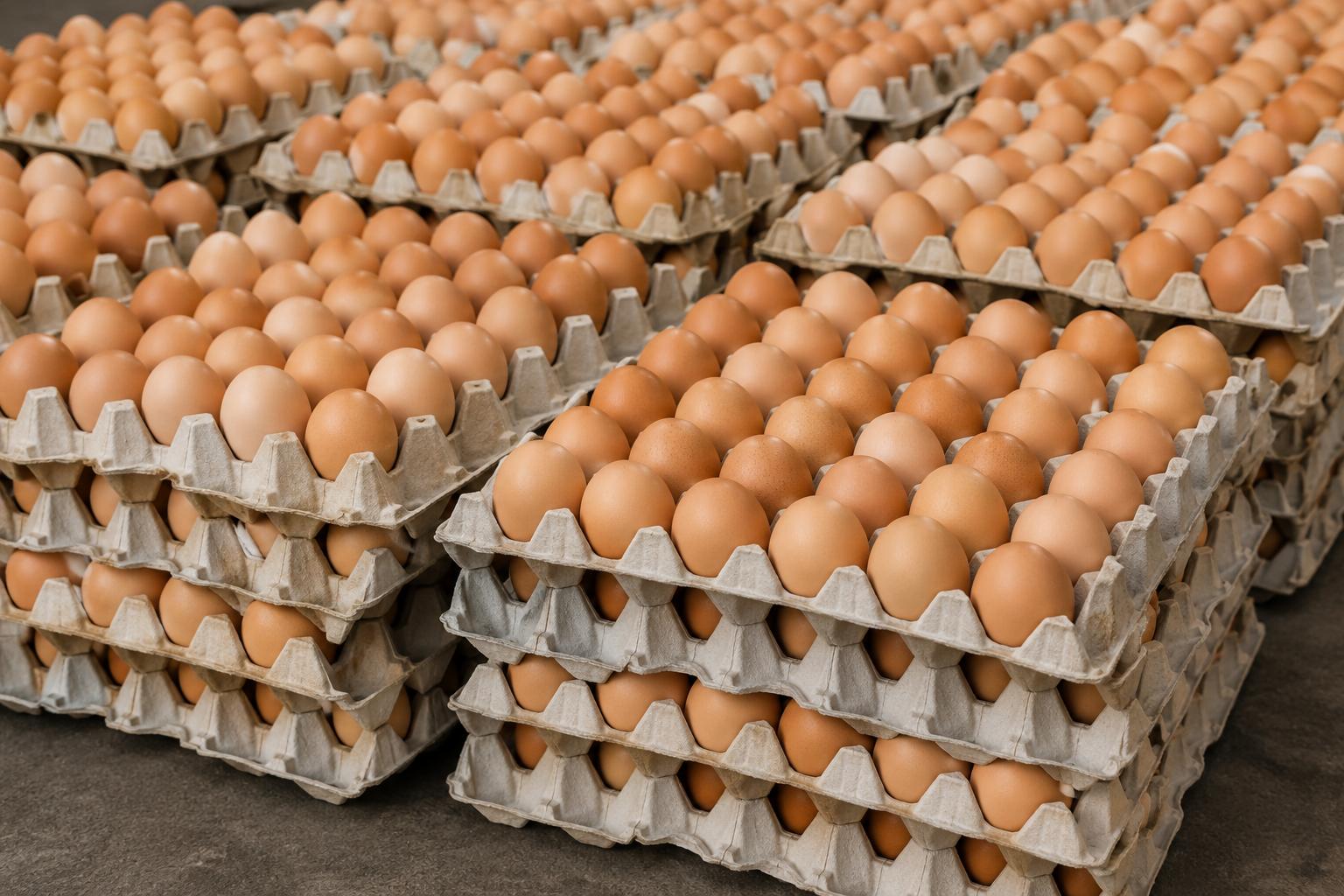
In a decision that has sent shockwaves through Burkina Faso’s poultry industry, the government recently imposed a price ceiling of 100 F CFA per egg for consumers, setting the wholesale price at 2,600 F CFA per tray and 2,750 F CFA for retailers. While framed as a move to safeguard household purchasing power, the measure risks crippling small and medium-sized poultry farmers already struggling to stay afloat.
Why capping egg prices ignores economic reality
The government’s price freeze fails to account for the soaring costs of feed, the lifeblood of poultry farming. Ingredients like maize, soybean meal, cottonseed cakes, and vitamin supplements have seen their prices surge due to inflation, rising fuel costs, and supply chain disruptions. By setting a fixed retail price without addressing the rising cost of production, authorities are effectively pushing farmers toward financial ruin.
A direct attack on free enterprise
The principle of free enterprise hinges on the ability of businesses to set prices based on their costs and market demand. When the state arbitrarily dictates prices, it doesn’t regulate—it suffocates. Entrepreneurs who have invested heavily in poultry infrastructure, borrowed capital, and hired local workers now face a bleak outlook: selling at a loss or shutting down entirely. Why would anyone take such risks if the government reserves the right to cap profits while ignoring expenses?
Unintended consequences: shortages and black markets
History shows that price controls often backfire spectacularly. Without a sustainable profit margin, the poultry sector in Burkina Faso could face severe setbacks:
- Collapse of small farms: Vulnerable to financial shocks, small-scale poultry farmers may be forced to close, eliminating thousands of jobs in rural communities.
- Reduced output: To minimize losses, farmers may cut back on production, leading to a sharp decline in egg supply.
- Rise of the black market: As official supplies dwindle, eggs could reappear at inflated, unregulated prices—ironically making them even less affordable for ordinary citizens.
A smarter way to protect consumers
If the goal is to make eggs more accessible, the solution lies not in price controls but in supporting farmers. Subsidizing feed production, exempting poultry inputs from taxes, or easing access to low-interest loans could stabilize the sector without distorting the market. A thriving poultry industry benefits everyone—from farmers to consumers—whereas price caps only breed inefficiency and scarcity.
By clamping down on prices without addressing production costs, Burkina Faso’s government risks undermining its own economic stability. For the sake of food security and entrepreneurial freedom, it’s time to abandon this flawed policy and invest in sustainable solutions.