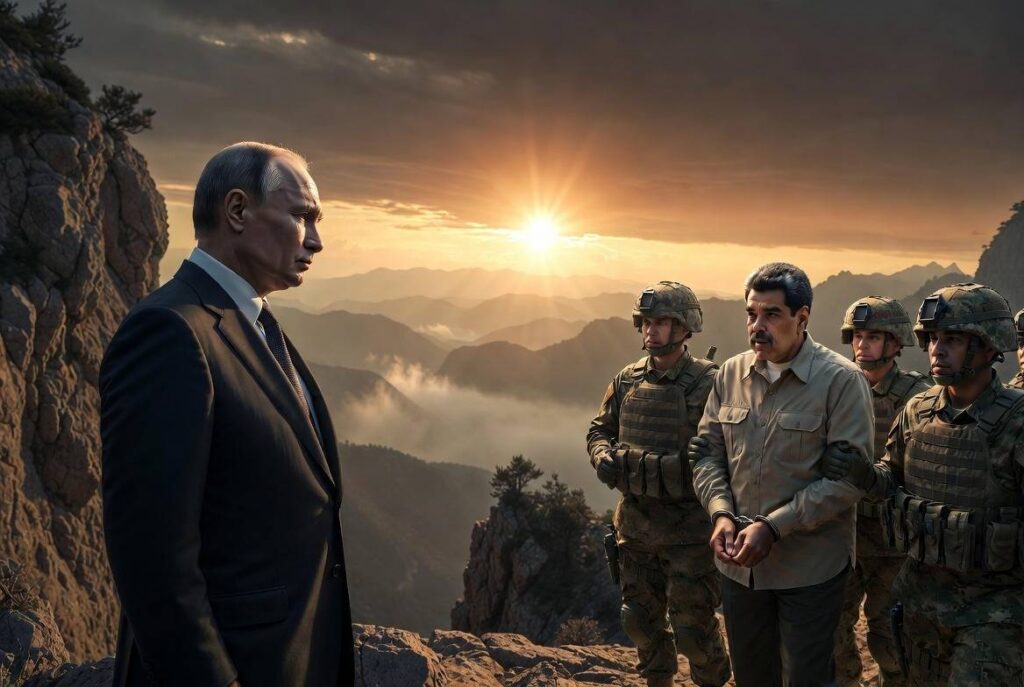
In the world of geopolitics, silence often speaks louder than words, and diplomatic condemnations can sometimes mask deeper strategic withdrawals. When Caracas faced unprecedented turmoil in early 2026—marked by large-scale US military intervention and the dramatic detention of Nicolás Maduro—the Russian Federation’s response was nothing short of perplexing inertia. For a nation that had positioned itself as Venezuela’s steadfast guardian against alleged American imperialism, Moscow’s retreat into mere diplomatic statements amounted to a stunning admission of operational impotence.
From alliance to abandonment: the hollow echoes of Russian rhetoric
The contrast between past rhetoric and present reality could not be more glaring. Just months earlier, Russia had showcased binding strategic partnerships with Venezuela, parading treaties and alliances before the world’s cameras. Yet when the crisis escalated, Moscow’s only visible actions were a handful of delayed naval maneuvers and a belated submarine escort for a sanctioned oil tanker. Official condemnations of the “armed aggression” and calls for Maduro’s release rang hollow when no tangible support materialized. Even Foreign Minister Sergey Lavrov’s references to bilateral agreements felt like empty gestures in the face of Washington’s decisive moves.
This was not a calculated tactical pause—it was an outright strategic surrender. By failing to mount a coordinated diplomatic counteroffensive in international forums such as the United Nations Security Council, Russia effectively allowed its closest Latin American ally to be flown to New York prisons without resistance. Russian intelligence, long reputed for its predictive prowess, appeared blind and deaf to unfolding events in Caracas, leaving the Venezuelan capital defenseless against the resurgence of a modernized Monroe Doctrine.
The weight of strategic exhaustion
The roots of this failure run deeper than poor judgment or indecision. Russia’s strategic retreat in Venezuela reflects a harsh truth: Moscow is running on empty. Years of sustained conflict, compounded by a self-destructive “economy of war,” have drained both financial reserves and human capital. Under such constraints, grand global ambitions have shrunk into survival mode, forcing the Kremlin to prioritize domestic over international commitments.
In this context, Venezuela served as an unintended bargaining chip—a casualty of Russia’s own geopolitical fatigue. By reducing its response to perfunctory diplomatic protests, Moscow sent a clear message to allies worldwide: its protective shield retracts when its own strategic depth is compromised. Commitments made in grand ceremonies now read like empty promises, and the veneer of Russian reliability has cracked under pressure.
A betrayal of geopolitical trust
The consequences of this inaction extend far beyond Venezuela’s borders. By standing idle as a transitional administration took shape under heavy external pressure, Russia not only abandoned its partner but also validated the American fait accompli. The Venezuelan people now face a future of renewed foreign tutelage without having witnessed any credible alternative from Moscow.
This is not a case of diplomatic restraint—it is a confession of strategic bankruptcy. In choosing silence over action, the Russian leadership didn’t just lose a key ally in Latin America; it forfeited its claim to global influence. At the moment of truth in Caracas, the once-vaunted Russian protector was nowhere to be found. The curtain fell, and the silent retreat was complete.