The government of Sénégal has voiced a fierce objection to the recent ruling by the Confédération Africaine de Football (CAF) Appeal Jury. This controversial decision nullified Sénégal‘s victory in the TotalEnergies CAF Africa Cup of Nations Maroc 2025 final, officially declaring Maroc as the tournament winner despite the on-field result from January 18.
In an official statement released this Wednesday, the Senegalese authorities described the move as an unprecedented and exceptionally grave act. They argued that the ruling directly contradicts the fundamental ethics of sport, specifically the principles of fairness, integrity, and the physical reality of the match results.
Firmly dismissing what they term an “unjustified attempt at dispossession,” the government is now calling for an independent international probe. This demand stems from deep-seated suspicions of corruption within the upper echelons of CAF management, a topic of growing concern in West Africa news circles.
Beyond the legal battle for the trophy, the administration remains focused on the welfare of Senegalese fans currently held in Maroc following disturbances at the final. While seeking a peaceful resolution for the supporters, the government of Sénégal remains resolute in its mission to protect the national team’s rights and uphold the dignity of African politics in sport.
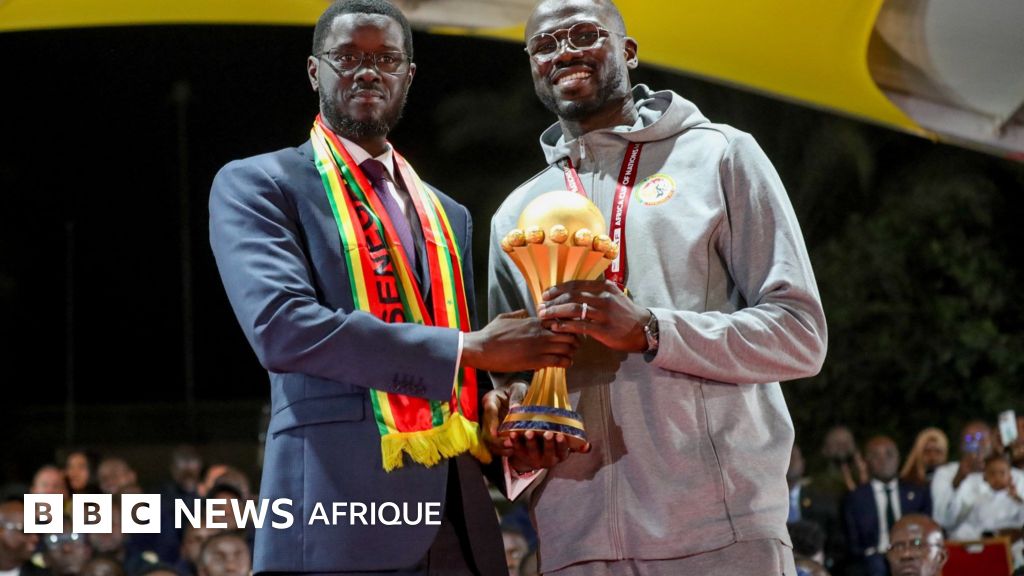
Crédit photo, Président de la République du Sénégal/Facebook
The administrative ruling by CAF
In a shocking twist for pan-African news, Maroc was crowned champion of the 2025 Africa Cup of Nations after CAF overturned the final’s outcome. The decision follows a highly disputed incident where the Senegalese squad briefly walked off the pitch.
On the day of the final, Sénégal had actually secured a 1-0 victory. The match was interrupted when the Senegalese players refused to continue after a penalty was awarded to Maroc in stoppage time with the score tied at 0-0. After a 17-minute delay, play resumed; Brahim Diaz failed to convert the penalty, and Pape Gueye eventually netted the winner during extra time.
However, the governing body’s appeal committee has since invalidated that victory. CAF stated that Sénégal technically forfeited the match, resulting in an official 3-0 scoreline for Maroc. The Senegalese Football Federation has already signaled its intent to take the case to the Court of Arbitration for Sport (CAS), calling the ruling an unacceptable stain on the reputation of the game in Africa.
The appeal by the Royal Moroccan Football Federation (FRMF) was deemed valid by CAF, which cited violations of competition regulations. Specifically, CAF applied Article 82, which dictates that any team refusing to play or abandoning the field without the referee’s consent is disqualified and loses the match.
The FRMF maintained that its appeal was not meant to disparage the athletic efforts of the players but to ensure the strict application of the tournament’s rules. They emphasized their commitment to the stability and transparency of African football competitions while congratulating all participants of this landmark edition.
Prior to this legal reversal, Sénégal had celebrated their perceived victory with a trophy parade, as seen in social media footage. However, the legal fallout has cast a shadow over those celebrations. Sports journalist Maher Mezahi noted that while the official records might change, the raw emotions of the fans and players who witnessed the 1-0 victory on the field cannot be easily erased.
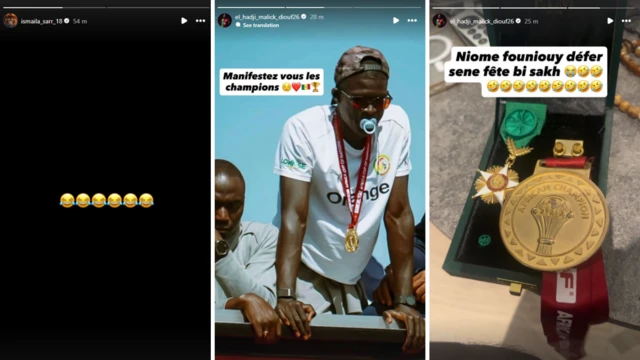
Crédit photo, Instagram
Chronology of the final’s chaos
The tension began in the eighth minute of injury time with the score deadlocked. Referee Jean-Jacques Ndala awarded a penalty to Maroc after being prompted by the Video Assistant Referee (VAR) to review a challenge by El Hadji Malick Diouf on Diaz.
Already frustrated by a previously disallowed goal from Ismaïla Sarr, the Senegalese manager, Pape Thiaw, instructed his team to leave the pitch in protest. While star player Sadio Mané stayed on the grass to plead with his teammates to return, the standoff lasted over a quarter of an hour.
When play finally resumed, Édouard Mendy easily saved a weak “panenka” attempt from Diaz. Shortly after, the match moved into extra time, where Gueye scored the decisive goal, initially appearing to hand Sénégal their second continental title in five years.
The aftermath was equally chaotic. Moroccan coach Walid Regragui condemned the walk-off as a disgrace to the continent, and FIFA President Gianni Infantino criticized the scenes as deplorable. Although Pape Thiaw later apologized for the walk-out during post-match interviews, the damage to the tournament’s standing was done. Interestingly, Maroc parted ways with Regragui just months later, ahead of the World Cup.
This ongoing dispute remains a major headline in Africa news English outlets, as the football world awaits the final verdict from the CAS regarding the African economy today and the integrity of its sporting institutions.