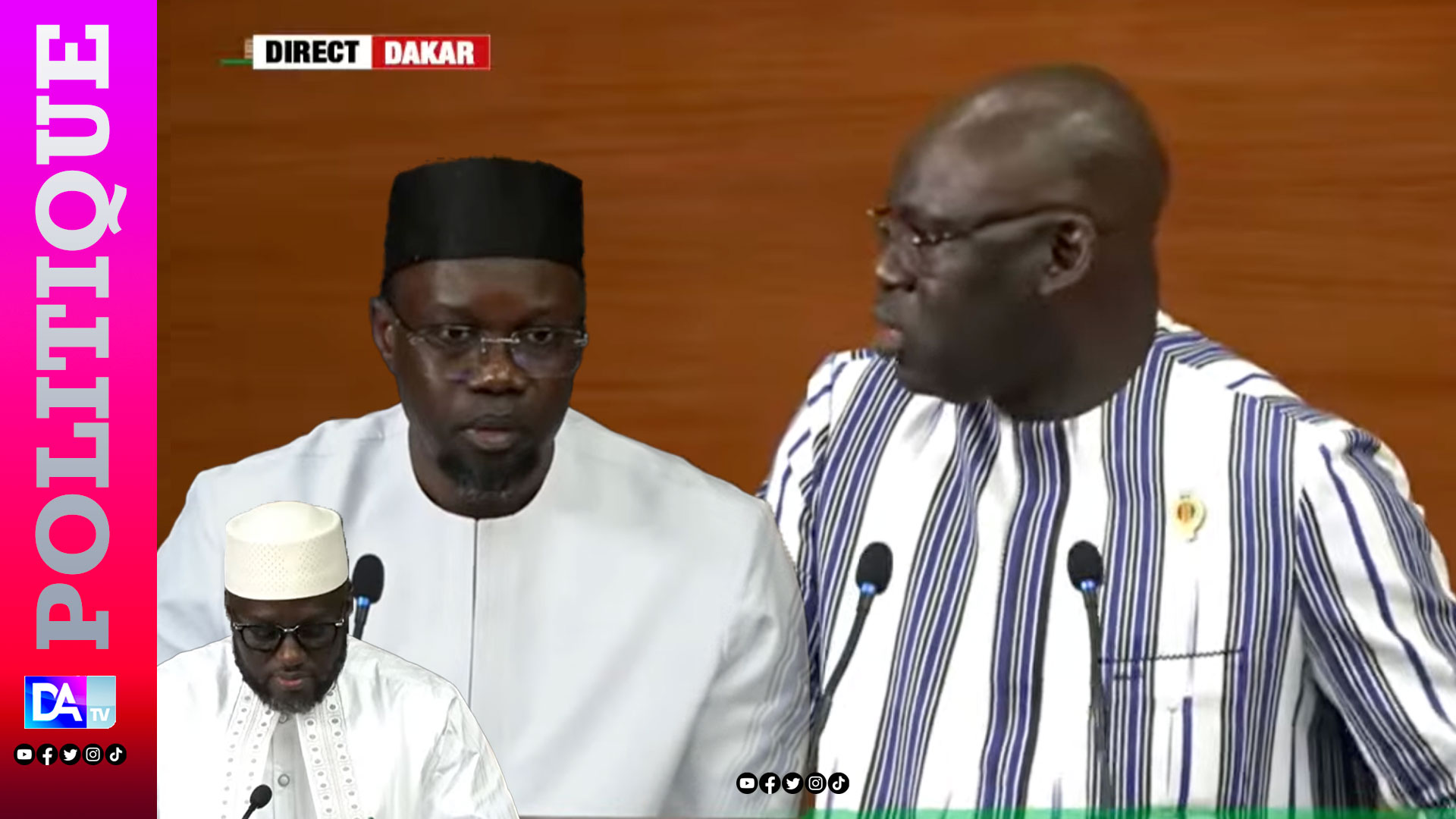
In a bold address delivered from the floor of the National Assembly, Mbaye Dione delivered a message that resonated far beyond the usual economic debates surrounding IMF agreements, national debt, and local governance funding.
The latter portion of his speech took a decisive turn toward the broader political landscape of Senegal, particularly the evolving relationship between the ruling majority and the opposition. Addressing the Assembly’s President, he requested that a formal message be conveyed to Ousmane Sonko, emphasizing the gravity of the moment and the unusual political climate gripping the nation.
Opposition does not equal enmity
The most striking line of his intervention was a clear declaration: « We are not his enemies; we are his opponents. »
With this statement, Mbaye Dione sought to draw a firm boundary between political opposition and personal hostility. He stressed that opposing government policies, legislative agendas, or executive decisions does not equate to disloyalty to the nation or animosity toward those in power. Instead, he framed opposition as a legitimate and necessary pillar of democratic governance.
The deputy underscored that the Senegalese opposition operates within a republican framework, committed to constructive engagement when appropriate but equally prepared to challenge policies it deems detrimental to the national interest. His words reflected a call for political maturity and mutual respect within the Assembly’s walls.
Respect for democratic principles
In a pointed historical reference, Mbaye Dione reminded the chamber of Ousmane Sonko’s own background as a long-standing opposition figure. He argued that if Sonko once used parliamentary platforms to voice dissent, he must now accept that others—including those in the Assembly—may hold differing views.
« Those who have opposed in the past must accept opposition today, » he asserted. This appeal to consistency underscored his belief that democratic rule requires all actors, regardless of past roles, to honor the principle that constructive criticism is not an act of sabotage but a civic duty.
Preserving the Assembly’s dignity
Mbaye Dione also issued a stern warning against allowing the National Assembly to devolve into a theater of personal vendettas or political score-settling. He reminded the body of its constitutional role: to serve as a forum for debate, oversight, and accountability—not a battleground for partisan clashes.
His concern extended beyond immediate disputes, touching on the need to uphold the dignity of the institution and the quality of democratic discourse. He emphasized that the Assembly’s legitimacy depends on its ability to rise above confrontation and maintain a serious, solutions-oriented environment.
A responsible opposition in action
Far from portraying the opposition as obstructionist, Mbaye Dione described it as vigilant and responsible. He declared that opposition deputies are not driven by systematic resistance but by a commitment to the public good.
« We will act as responsible republicans and courageous opponents, » he stated. This stance, he explained, means supporting policies that serve the national interest while firmly opposing those that fail to meet the same standard.
An urgent call for political calm
The message to Ousmane Sonko was not merely a formality—it was a plea for restraint and mutual recognition. Mbaye Dione urged the new leadership to acknowledge the legitimacy of political dissent, framing it as essential to democratic governance.
His core message was unmistakable: governing is not silencing dissent, and opposing is not betraying the country. By reaffirming that opponents are not enemies, he sought to refocus the political conversation on institutional integrity and republican values.