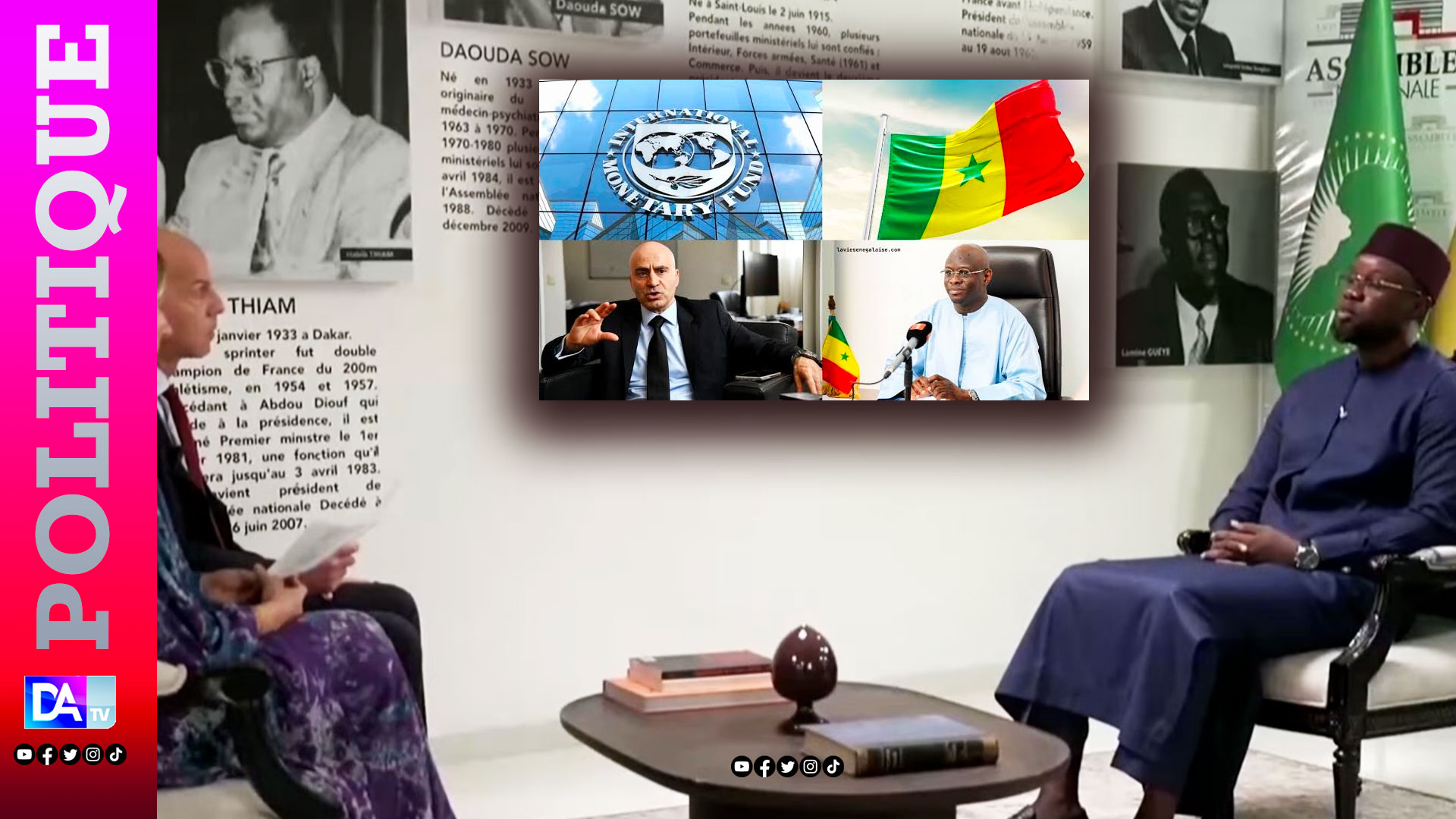
In a candid assessment of Senegal’s economic trajectory and the looming International Monetary Fund (IMF) mission to Dakar, National Assembly President Ousmane Sonko outlined his government’s debt management philosophy during his tenure as Prime Minister. Addressing sharp criticism over a potential debt restructuring, Sonko dismissed rigid ideological stances, emphasizing a pragmatic, case-by-case evaluation.
Sonko’s remarks came as he reflected on his two-year stint at the helm of Senegal’s government, while drawing clear red lines for the current administration led by President Al Aminou Lo. On the question of a possible debt restructuring, he firmly rejected any dogmatic approach. « We are not bound by absolute positions. We assess the situation with clarity and realism, » he stated. However, he underscored that as Prime Minister, he had vehemently opposed reckless restructuring, arguing that « the conditions simply weren’t met—our country wasn’t in default and was meeting its obligations. » This stance, he affirmed, remains non-negotiable from his new role in the National Assembly.
Sonko’s warning to the government was unequivocal: « If a decision is made that sacrifices our long-term systemic change for short-term financial ratios, we will not accept it. » He vowed to leverage the Assembly’s powers to block such moves, signaling a firm commitment to preserving Senegal’s development priorities over fiscal expediency.
Responding to accusations of hypocrisy—given his past calls for economic sovereignty yet continued reliance on international lenders—Sonko defended his administration’s transparency. « We chose to lay a solid foundation by being transparent with the numbers, because concealing them would have caught up with us sooner or later, » he explained, drawing parallels to the Greek debt crisis. « Debt refinancing and renewal are universal practices; we managed our obligations responsibly, » he added, rejecting any suggestion of fiscal mismanagement.
On the contentious issue of odious debt, Sonko’s candor revealed institutional constraints. When pressed on why he hadn’t pushed for the outright cancellation of debt he had previously labeled « odious, » he acknowledged the limitations of his role. « I didn’t have all the levers. The Prime Minister’s powers are highly constrained in this country, » he admitted, differentiating between his advocacy as a party leader and his practical authority in government. He also reassured that he and President Diomaye Faye were aligned on the issue, noting that their latest discussion confirmed « no change in the established line. »
Looking ahead, Sonko urged the current administration to show political courage in addressing Senegal’s debt burden. « It takes courage to confront this debate, » he asserted, expressing hope that the government would « take responsibility and discuss the cancellation of part of this debt. » His words serve as both a challenge and a test of consistency for a leadership he once helped shape.