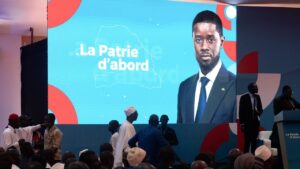
Senegal’s President Bassirou Diomaye Faye marked a pivotal moment in the nation’s political landscape by inaugurating his own political party, KIIRAAY – Les Patriotes Républicains, in Dakar on July 25. The landmark event unfolded during a founding general assembly held at a capital city hotel, signaling a definitive break from the Parti africain pour l’indépendance, le travail, l’éthique et la fraternité (PASTEF), which had propelled him to victory in the March 2024 presidential election. The new party adopts the motto « La Patrie d’abord », placing national sovereignty and institutional resilience at the core of its mission.
a decisive split from ousmane sonko
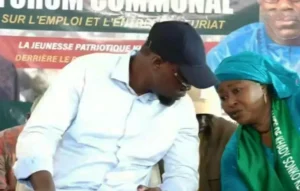
The emergence of KIIRAAY follows months of public rifts between President Faye and his former mentor, Ousmane Sonko, who remains both Prime Minister and leader of PASTEF. Once seen as the dynamic duo behind a shared wave of political transformation, their paths have diverged sharply, culminating in this organizational separation. For the President, establishing an independent party represents more than a strategic move—it’s a necessary step to free himself from political constraints and align his party with his executive vision.
The choice of name carries deep significance. In Wolof, *kiiraay* conveys protection and guardianship, a stark contrast to the confrontational tone historically associated with PASTEF. While the former party championed sovereignty through confrontation, KIIRAAY positions itself as a defender of constitutional order, national unity, and institutional stability. This semantic shift reflects Faye’s pivot toward a more governance-centered approach as his presidency solidifies.
patriotism meets institutional strength
KIIRAAY’s agenda prioritizes the defense of national interests, the reinforcement of republican institutions, and the strengthening of the rule of law. These priorities, outlined during the founding assembly, signal a transition from protest politics to governance-focused leadership. The name « Les Patriotes Républicains » bridges two key ideas: unwavering commitment to sovereignty—long a hallmark of the Faye-Sonko movement since the 2022 legislative elections—and loyalty to democratic norms, a message aimed at reassuring economic, diplomatic, and administrative elites.
This strategic framing holds particular weight in Senegal’s international relations. Since assuming office, President Faye has signaled openness to global investors and development partners while renegotiating key contracts in the hydrocarbons and mining sectors. By launching a party explicitly rooted in institutional governance, he seeks to bolster investor confidence and maintain Senegal’s access to international financial markets, including its relationship with the International Monetary Fund.
reshaping Senegal’s political map
The launch of KIIRAAY immediately alters the balance of power. PASTEF, now without presidential backing, retains strong grassroots support but loses its most powerful symbolic asset: the presidency itself. Traditional opposition groups, from the Senegalese Democratic Party to factions of the former Benno Bokk Yaakaar coalition, must recalibrate their strategies in response to a ruling majority now fortified with its own party structure. The critical question remains: how many of the PASTEF parliamentarians elected in November 2024 will shift allegiance to the new party?
The political calendar intensifies the stakes. Local elections and preparations for the 2029 presidential race will serve as early tests for KIIRAAY. The party must quickly prove its ability to build a robust local presence, articulate a distinct policy platform, and mobilize beyond the core activist base inherited from the 2024 campaign. The battle will also hinge on control over party resources, administrative networks, and regional economic ties.
For President Faye, the political equation is evolving from one of personal loyalty to the institutional construction of a presidential force. This move signals a new chapter in Senegal’s political evolution, one where governance and national unity take precedence over oppositional politics.