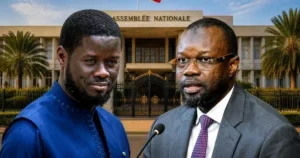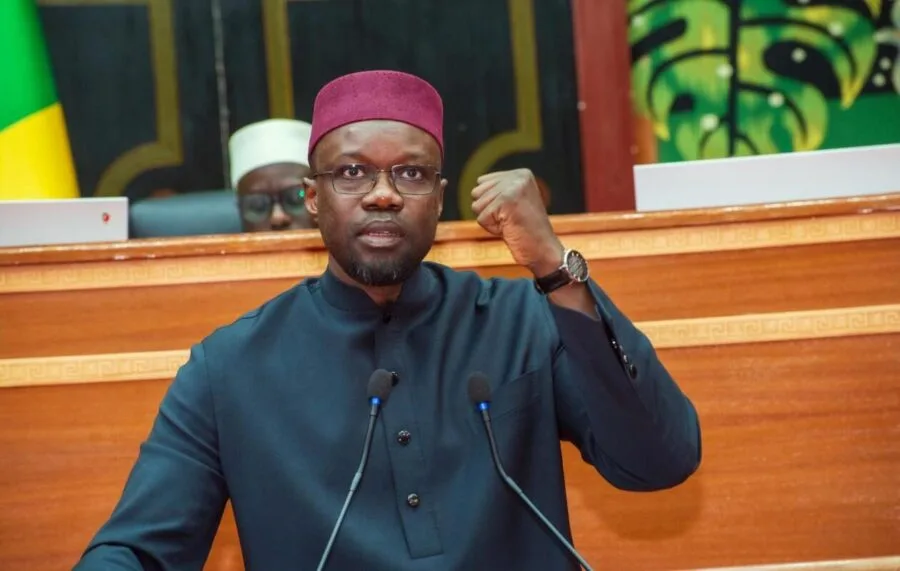
The Prime Minister of Senegal, Ousmane Sonko, is set to face a critical session of parliamentary questions this Friday, May 22, 2026, where he will confront pressing national issues that extend far beyond routine government scrutiny. The session, confirmed by the President of the National Assembly, El Malick Ndiaye, marks a pivotal moment in Senegal’s political landscape.
While the formal purpose of the event is to allow deputies to question the Executive on public policies and urgent national matters, the current political climate transforms this into a high-stakes political arena. Ousmane Sonko’s appearance will be scrutinized closely as he prepares to address a range of contentious topics that have dominated recent national discourse.
Key political challenges awaiting Sonko
The most contentious issue on the agenda is the electoral code reform, which the opposition has vehemently criticized as a legislative maneuver designed to favor the ruling party. Accusations of a “tailored” law that would benefit the ruling Pastef party and its leader, Ousmane Sonko, have intensified debates across the political spectrum. The Prime Minister will need to clarify his government’s position on this matter and possibly defend the reform’s objectives before the deputies.
The session will also provide an opportunity for Sonko to address institutional reforms announced by the government, which aim to modernize public governance and strengthen democratic mechanisms. However, the opposition has called for greater consultation, warning against reforms that could be perceived as unbalanced or exclusionary. Sonko’s responses could either ease tensions or further polarize the political climate.
Social and economic priorities in the spotlight
Beyond political disputes, the Prime Minister will be pressed on pressing socioeconomic issues that directly impact Senegalese citizens. The rising cost of living, widespread youth unemployment, and challenges in agriculture and infrastructure development remain top concerns for many families. Deputies are expected to demand concrete explanations on how the government plans to address these pressing issues, particularly in a context of persistent economic uncertainty both domestically and regionally.
The session will also touch on budgetary perspectives and public investment priorities, as lawmakers seek to assess the government’s ability to deliver on its promises. With the next local elections looming and the 2029 presidential race on the horizon, the stakes for Sonko’s performance are exceptionally high.
Clarifying leadership and future directions
Ousmane Sonko’s appearance in the National Assembly comes at a critical juncture, as he prepares to address rumors of a potential resignation and clarify his relationship with President Bassirou Diomaye Faye. Recent statements by the President have sparked speculation about internal party dynamics, with some interpreting them as a call for greater discipline within the ruling party. Sonko’s ability to address these concerns publicly could help solidify his leadership or fuel further uncertainty.
The session will also serve as a platform for Sonko to outline the government’s vision for political dialogue, a process convened by the President to engage all stakeholders in national discussions. Additionally, the Prime Minister may be asked to provide updates on key government initiatives, including institutional changes and efforts to rationalize state functions.
As Senegal navigates a complex political and socioeconomic environment, Friday’s session will be more than just a routine parliamentary exercise. It will be a defining moment for Ousmane Sonko, offering him the chance to reinforce his leadership, address criticisms, and outline a path forward for a government that has promised transformative change. For the deputies, it will be an opportunity to hold the Executive accountable and shape the narrative ahead of the upcoming electoral cycle.