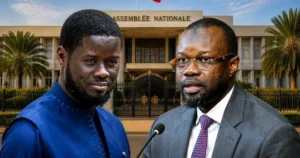
After months of simmering tensions, Senegal’s political landscape has undergone a dramatic shift. President Bassirou Diomaye Faye has relieved Ousmane Sonko of his duties as Prime Minister, bringing an end to a once-promising executive partnership. Sonko, the founder of the Pastef party and a key political figure, has responded by shifting his focus to the National Assembly, where his party holds a commanding majority following recent elections.
An unworkable executive cohabitation
The Diomaye-Sonko duo had been hailed as a political innovation in West Africa after their victory in the March 2024 presidential election. Diomaye, who stepped in as a substitute candidate following his mentor’s ineligibility, had pledged to govern collaboratively. However, the arrangement was built on shaky foundations from the start. While Diomaye brought institutional legitimacy, Sonko commanded party loyalty and a strong grassroots base. As the months passed, disagreements over reform implementation, economic policy, and the pace of campaign promises deepened, leaving little room for compromise in a system where the president holds ultimate constitutional authority.
Sonko’s strategic pivot to parliamentary opposition
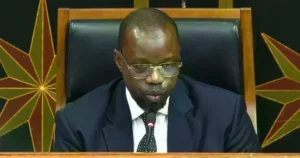
Though removed from the Prime Minister’s office, Ousmane Sonko remains a formidable force in Senegalese politics. His control over the parliamentary majority—secured in the legislative elections—gives him a powerful platform to challenge the president’s agenda. By positioning himself within the National Assembly, he has transformed the legislative body into a bastion of political resistance, mirroring the tactics of other African leaders who shifted from executive roles to parliamentary influence.
This new dynamic presents a significant challenge for President Diomaye Faye. With Sonko’s loyalists dominating the legislature, the president’s ability to push through key legislation—including budgets, government reshuffles, and promised reforms—has been severely constrained. The political landscape is now defined by an unprecedented internal power struggle within the ruling party itself.
What this means for Senegal’s future
The rift between Diomaye and Sonko extends beyond personal rivalry. It raises serious questions about the future of the Pastef party’s sovereignist agenda, which includes renegotiating oil and gas contracts, revisiting the CFA franc arrangement, auditing public finances, and redefining migration policies. International partners, from the IMF to investors in projects like the Sangomar and Grand Tortue Ahmeyim fields, will be closely monitoring the country’s political stability, especially as Senegal has long been seen as a democratic model in the region.
Regionally, this development comes at a critical juncture. The Economic Community of West African States (ECOWAS) is still grappling with the fallout from the withdrawal of Sahelian states into the Alliance of Sahel States. Senegal, which had positioned itself as a mediator under Diomaye Faye’s leadership, may now see its diplomatic influence weakened by domestic turmoil. The coming weeks will reveal whether the president can assemble a new government capable of restoring stability—or if Sonko’s loyal supporters will take to the streets to voice their discontent.
As Senegal navigates this period of uncertainty, the outcome will shape the trajectory of the country’s second democratic transition. The decisions made in the coming months will determine whether the nation’s democratic reputation endures or if political divisions deepen.