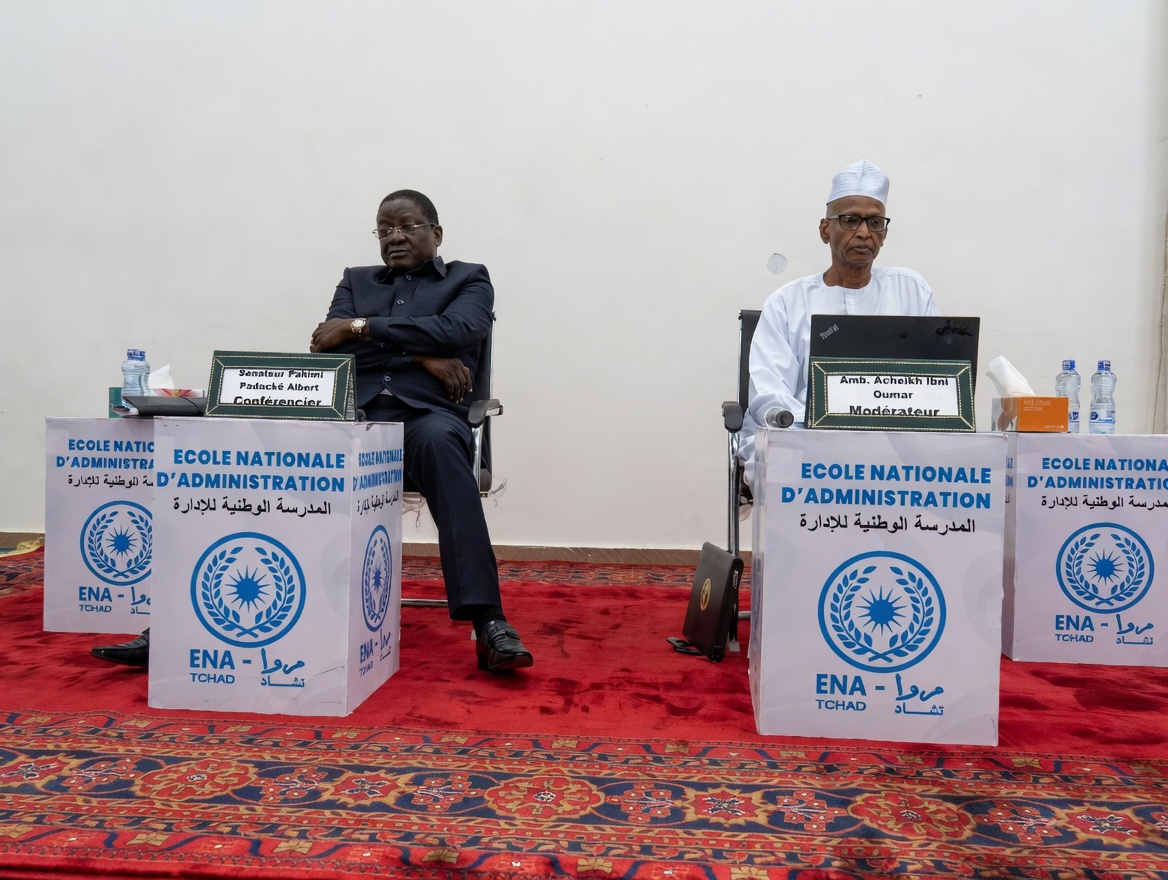
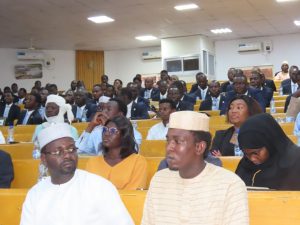
N’Djamena witnessed a high-level exchange on Friday afternoon as the École Nationale d’Administration (ENA) hosted a pivotal debate centered on decentralization and the evolving role of provincial councils. The event, part of the institution’s « Grands rendez-vous de l’ENA » series, drew a diverse audience including students, civil servants, administrators, and political figures. At the heart of the discussion was a pressing question: how can provincial councils drive local development?
The panel featured Albert Pahimi Padacké, a seasoned politician, two-time former Prime Minister, senator, and trained civil administrator. His presentation captivated the room, blending historical context with practical insights to address the challenges and opportunities surrounding decentralization in Chad.
Pahimi Padacké traced the origins of Chad’s decentralization journey, linking it to the nation’s 1993 Sovereign National Conference. This landmark event set the stage for a unitary state with strong decentralized governance—a vision later enshrined in the 1996 Constitution and reaffirmed in subsequent legal frameworks, including the December 29, 2023 Constitution of the Fifth Republic.
The discussion unfolded across three critical dimensions:
1. Political and legal foundations of decentralization
Pahimi Padacké emphasized the constitutional and normative pillars supporting decentralization, particularly the principle of subsidiarity (Article 271 of the Constitution), which mandates decision-making at the closest level to citizens. Key legislative milestones, such as Organic Law No. 14 (2024) on the statutes of autonomous local governments and Organic Law No. 28 (2024) on the division of competencies between central and local authorities, were highlighted as transformative steps.
2. Persistent barriers to effective governance
The former Prime Minister candidly assessed the hurdles impeding provincial councils from fulfilling their potential. Delays in transferring financial and human resources, technical and administrative capacity gaps, local governance inefficiencies, and coordination challenges between deconcentrated administrations and elected local bodies were identified as major obstacles.
3. Pathways to transformative local development
To unlock the potential of provincial councils, Pahimi Padacké proposed actionable strategies. These included accelerating the transfer of oil and tax revenue shares, strengthening the skills of elected officials and administrative staff, establishing robust monitoring and evaluation mechanisms, and fostering greater collaboration with civil society and development partners. The goal? A decentralization that is not just on paper but a lived reality for every citizen.
Concluding his remarks, Pahimi Padacké urged the next generation of administrators to embrace these challenges. He framed decentralization as a cornerstone for balanced national development and a means to bridge the gap between citizens and the state. The success of this process, he stressed, lies in its ability to bring governance closer to the people it serves.