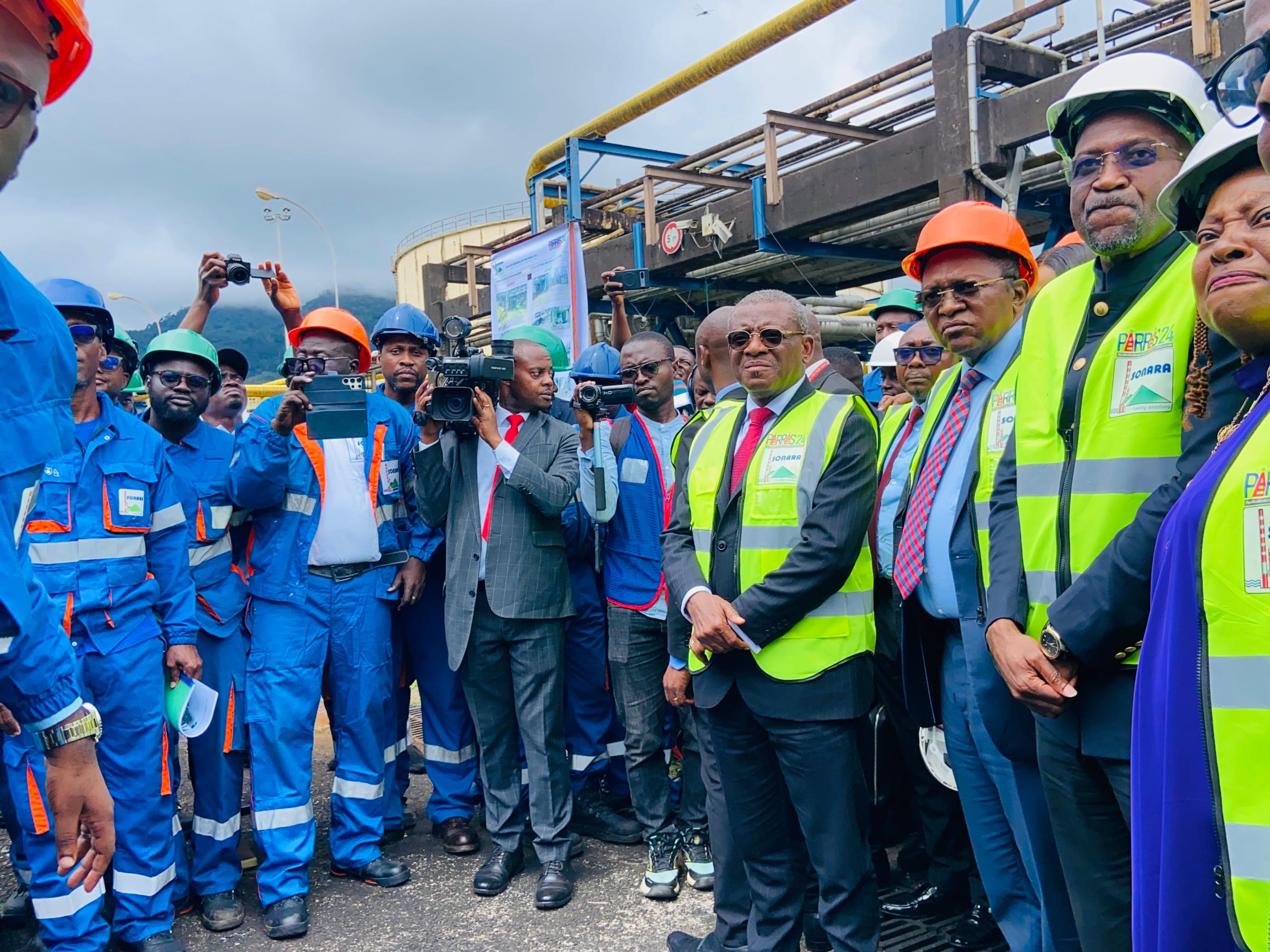
Seven years after the fire that ravaged Sonara, its general manager steps up to the microphone and solemnly declares to the world’s media that the company is reborn this Monday, June 29, 2026. One would have expected at least a memorandum of understanding with a financial partner. But no — it was a statement made after a meeting organised by a quartet of ministers to assess the cost of reconstruction and its financing model, even before approaching the market to find partners.
Here is the analysis:
The chosen financing model is Design-Build-Finance-Maintain (DBFM), which covers design, construction, financing and maintenance of the relevant infrastructure.
If seven years after the Sonara fire we are only at this stage, how long will it take to find a partner who, through classic Cameroonian methods, will sign an agreement before turning to banks for the money? This is already observable with mining partners, unlike what happens elsewhere.
The shadow of SNH and Nathalie Moudiki
Looking at the timing, this announcement comes just days after the Cameroonian employers’ association, through its president Célestin Tawamba, congratulated SNH on the new Kribi refinery under construction — a project steered brilliantly by Nathalie Moudiki. The Gecam president spoke in an international media outlet.
Appointment stakes are therefore green
In reality, what happened yesterday is a simple communication designed to bluff the President of the Republic, at the very moment he is in Switzerland reassessing the performance of those he appointed to accompany him and serve the people.
In its announcement, Sonara includes a phrase meant to appeal to Cameroonians: it mentions a hydrocracker unit that will refine Cameroonian oil. Yet this project was already underway before the fire and is already accounted for in the Kribi refinery.
The sabotage of the Kribi refinery
“When you see whistleblowers lurking in the shadows targeting certain individuals involved in projects, think twice.
Since yesterday, Boris Bertolt has been posting inflammatory content against the SNH refinery project, with baseless claims aimed at tarnishing Nathalie Moudiki’s image. Why sabotage the Kribi refinery project on the very day Sonara makes its comeback? Yet at SNH, they applaud the work of this historic company, Sonara.
Speaking of Sonara’s rehabilitation, in 2020 a strong delegation from the Russian giant Lukoil was received in Yaoundé to propose a reconstruction plan and the installation of more modern equipment. The government gave no favourable follow-up.
Those in the regime who favour imports through traders cite sovereignty reasons to justify rejecting potential partners. Yet the largest oil refinery in Africa, located in the second-largest African oil producer, is private. The Dangote refinery does not belong to the Nigerian state, yet it refines more than 60% of the oil from the country’s wells.
Why is the SNH model (for gas) not applied to Sonara (for oil)?
The large Lobito refinery in Angola is built by China, the Copperbelt refinery in Zambia is built by China. Uganda’s first oil refinery is built by Russians, and another is planned in Congo.
Cameroonians, let us pray.