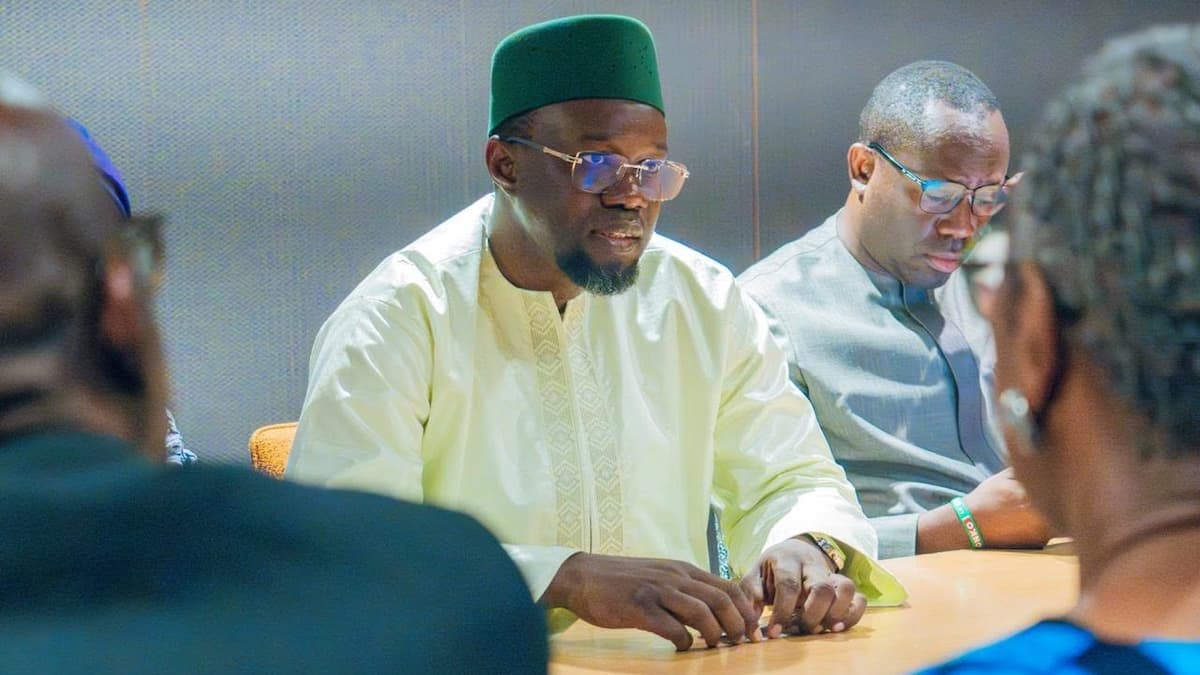
In a decisive turn of events, the investigating judge of Senegal’s Supreme Court has declared itself incompetent to rule on an urgent matter concerning Ousmane Sonko’s seating as a deputy. The judge cited the case as falling under the internal affairs of the parliamentary institution, a domain the high court has no intention of interfering with. This decision follows a legal challenge filed by the Union nationale des indépendants du Sénégal, which contested the validity of the procedure that allowed the Pastef leader to reclaim his deputy seat before being elected president of the National Assembly.
No jurisdiction on parliamentary matters
The Supreme Court’s stance mirrors that of the Constitutional Council, which, in June, also declined to rule on a similar petition submitted by eighteen opposition deputies. The Council argued that the contested act did not directly relate to the electoral process, thereby placing it outside its jurisdiction regarding the validity of national elections. With two separate high courts—both the Supreme Court and the Constitutional Council—now abstaining from ruling on the merits of the case, the legal uncertainty surrounding Ousmane Sonko’s return to Parliament persists.
Criticism mounts over legal void
Legal experts and opposition leaders have sharply criticized the Supreme Court’s decision, with attorney Amadou Guèye condemning it as an act of defiance and a source of legal disorder. These reactions add to the growing chorus of voices expressing concern over the perceived judicial vacuum surrounding this case. Ousmane Sonko himself has framed the repeated legal challenges as part of a political conspiracy orchestrated by his adversaries, dismissing them as politically motivated rather than grounded in legal arguments. Despite the mounting pressure, the judiciary has yet to deliver a final ruling on the merits, leaving the outcome of this prolonged legal saga unresolved.
The impasse has intensified the divide between the parliamentary majority, which supports Ousmane Sonko, and a faction of the opposition, which continues to pursue legal avenues without success. For now, the uncertainty surrounding the case remains unresolved, casting a shadow over Senegal’s political and legal landscape.