Sonko exposes the deeper reasons behind his split with President Faye
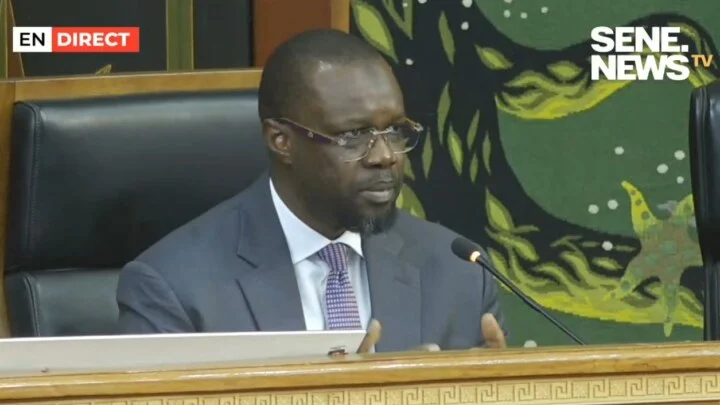
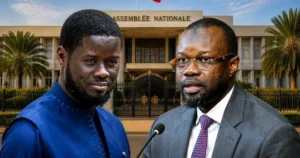
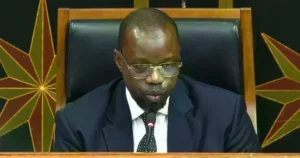
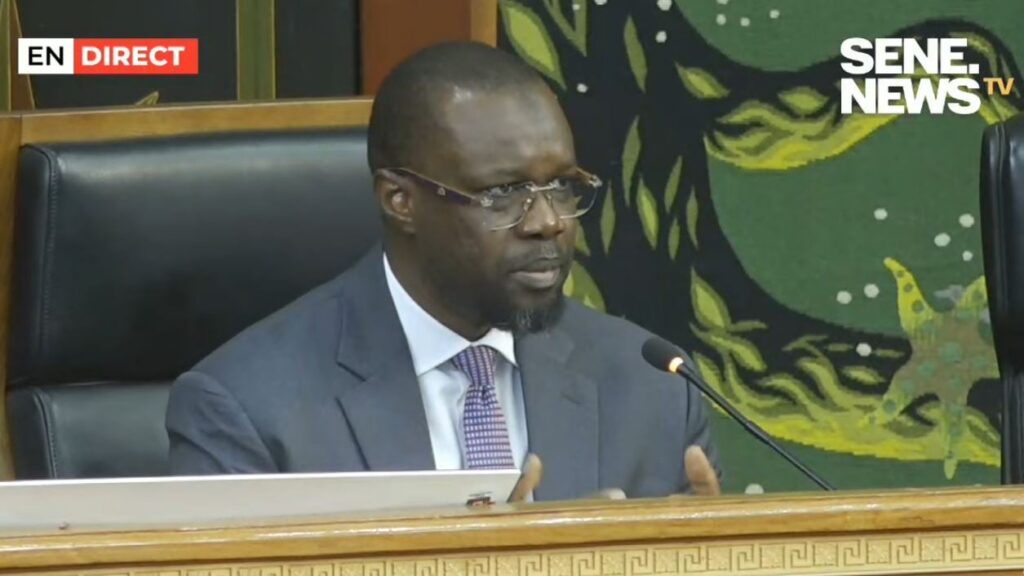
Newly elected President of Senegal’s National Assembly, Ousmane Sonko, has broken his silence on the political rift that has shaken the nation’s highest institutions. In a philosophical address, he framed the separation from President Bassirou Diomaye Faye not as a personal conflict, but as a fundamental clash over the very essence of governance.
When power loses its moral compass
Fresh from his removal as Prime Minister and his swift rise to the helm of the National Assembly, Ousmane Sonko delivered a speech that transcended political convenience. He framed the split with President Faye not as a dispute over policy or strategy, but as a confrontation between two visions of leadership—one rooted in the pursuit of the common good, the other drifting toward personal ambition.
« The crisis we face is not about individuals, but about the soul of our Republic, » Sonko declared, invoking the philosophy of Aristotle to underscore his point. He argued that true leadership must serve a higher purpose: the moral and collective well-being of the nation. « Politics, » he asserted, « is the highest art when it elevates society, not when it serves as a tool for self-enrichment. »
The weight of history and the dangers of ethical erosion
To reinforce his stance, Sonko revisited Senegal’s political heritage, drawing a parallel with Mamadou Dia, the country’s first Prime Minister after independence. He recalled Dia’s warnings about the dangers of conflating state power with private interests—a lesson Sonko believes remains tragically relevant today.
« A nation may fly its flag and sing its anthem, yet still be shackled by corruption and moral decay, » he warned. He cautioned that the greatest threat to African states is not external pressure, but internal erosion—when institutions, meant to serve the people, become instruments of control and privilege.
A nation’s decline begins in the soul
In his address, Sonko expanded the debate beyond Senegal’s borders, describing a continent where political fatigue is as dangerous as material poverty. He argued that when governance prioritizes personal comfort over public service, the very idea of the Republic weakens. While stopping short of naming names, his message was clear: the rift with President Faye was not a matter of strategy, but of principle.
Sonko’s words carry weight as he steps into his new role, signaling that his leadership will be guided by more than just political expediency. His call for a return to ethical governance resonates at a time when public trust in institutions is increasingly fragile.