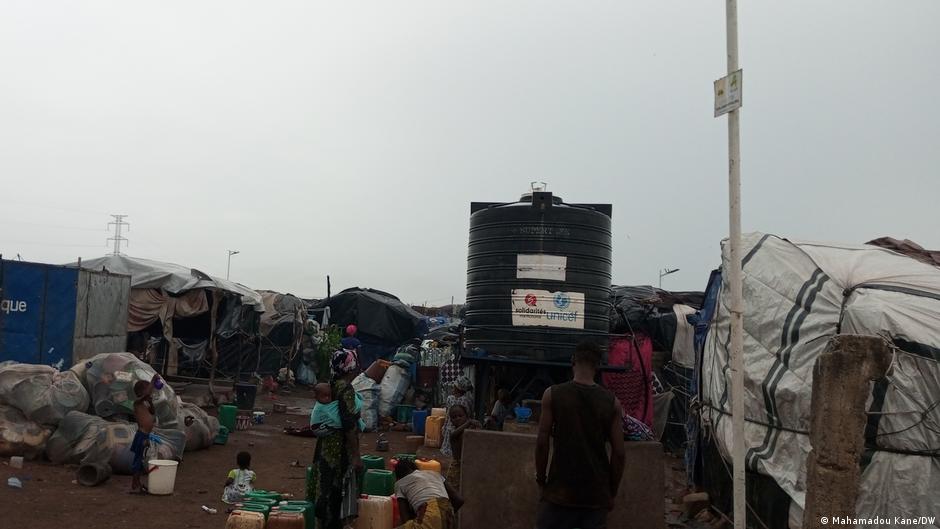
As the Tabaski celebrations approach, displaced families in Bamako face harsh realities in makeshift shelters following the eviction of the Faladiè informal camp. Once a bustling marketplace, the site now hosts vulnerable households who fled conflict in central Mali, struggling to prepare for the holiday under dire conditions.
Relocation delays leave families in limbo
The eviction of the Faladiè camp in April left hundreds of internally displaced persons (IDPs) without a designated relocation site. Among them is Aminata, a mother of four who fled violence in Bankass (Bandiagara region) in 2019. She now resides in a temporary educational center repurposed for shelter—one lacking proper living conditions.
Aminata voices the community’s urgent needs:
“The absence of a suitable relocation site is affecting us environmentally. Beyond healthcare, we urgently require food rations—rice, oil—and even festive clothing for our children.”
Youthful vendors grapple with lost livelihoods
Near the eviction site, two teenage herders, Fousseyni (14) and Oumar (15), watch as a butcher processes a sheep for Tabaski. Their usual income—selling livestock or assisting in livestock transport—has vanished since the camp’s closure. Fousseyni reflects on the contrast with past celebrations:
“Last year at this time, we sold sheep and transported cattle for buyers, earning decent money. Now, we stand idle. It’s unbearable, but we still come hoping for small earnings.”
Local and international aid groups, including the National Directorate of Social Development, Samu Social Mali, and UNICEF, continue monitoring the 300 displaced families and the children’s educational center. However, no alternative site has been assigned for their relocation.