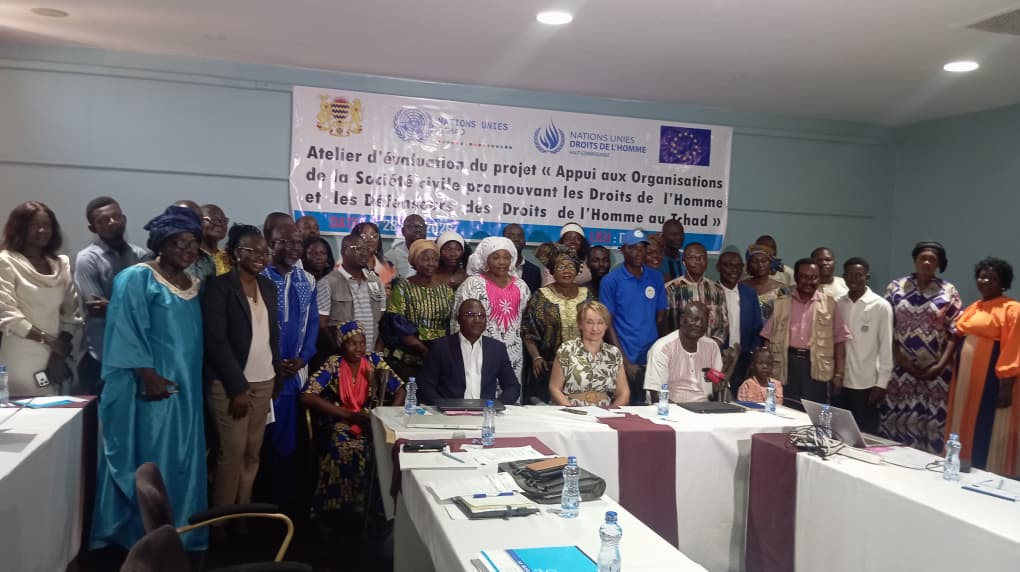
On May 28, the United Nations Human Rights Office in Chad hosted a landmark evaluation workshop in N’Djamena to assess the progress of a three-year initiative designed to empower local civil society organizations in human rights advocacy. The program, funded by the European Union and launched in May 2023, has provided critical support to 13 grassroots organizations dedicated to promoting and safeguarding human rights across the country.
Key achievements highlighted during the assessment
Félix Ahouansou, the UN Human Rights Representative and head of the Chad office, alongside Agnès Kovacs, Governance Section Head at the European Union Delegation, commended the dedication of all stakeholders involved in the project. Both emphasized the urgent need to bolster the operational capabilities of civil society actors, particularly in light of escalating challenges such as shrinking civic space and heightened security risks.
Ahouansou extended his gratitude to the European Union for its unwavering commitment to human rights initiatives in Chad. He reiterated that the project, which runs from May 17, 2023, to June 30, 2026, aims to strengthen civil society organizations and human rights defenders—recognized as pivotal players in fostering a lawful and rights-respecting state.
The project has already delivered tangible results. Thirteen local organizations received grants to advance their human rights missions. To date, 58 survivors of gender-based violence and human rights abuses have received legal and judicial assistance, with 25 cases handled through the Chad Bar Association. Additionally, 61 individuals, including nine men, benefited from material, psychosocial, and medical support through partner organizations.
Evaluating impact and shaping future strategies
Agnès Kovacs underscored the significance of the closing workshop, which served as a platform to review project execution and measure direct impact on beneficiaries. She also expressed appreciation for the UN Human Rights Office and the grantee organizations for their collaborative efforts.
The event brought together dozens of participants, including civil society representatives, technical partners, and direct beneficiaries. Discussions centered on evaluating completed actions, sharing successful approaches, and proposing actionable recommendations to guide future initiatives.