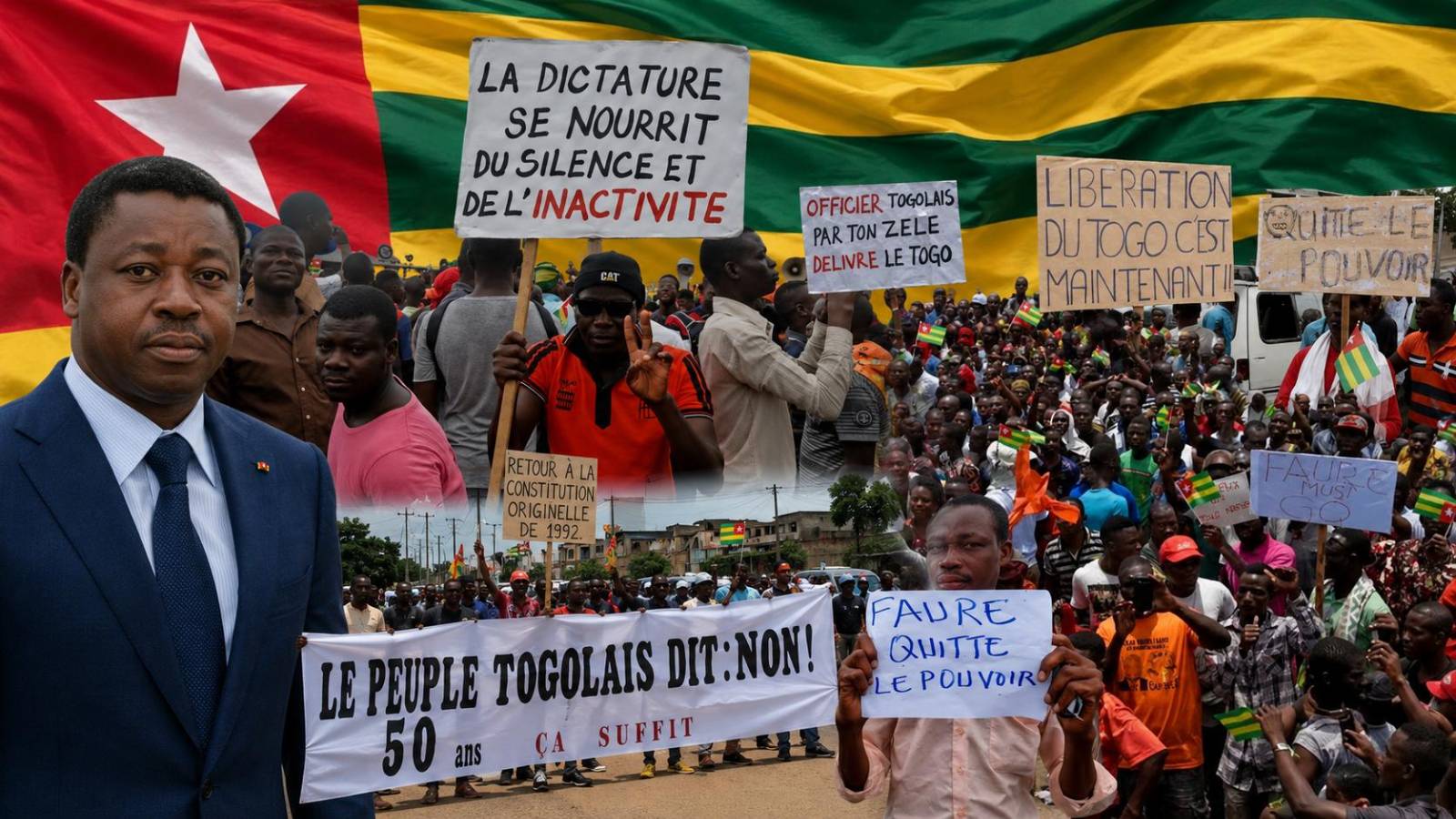
The Republic of Togo stands at a pivotal juncture in its political trajectory. With the Faure Gnassingbé regime having consolidated its transition into a parliamentary Fifth Republic, an undercurrent of exhaustion permeates the corridors of authority. Amidst a shifting regional diplomatic landscape and a disenfranchised youth demographic, societal fissures have never been more pronounced. This moment of transformation may well be defined by the Economic Community of West African States’ (ECOWAS) conspicuous silence—a silence that could signal the catalyst many have awaited.
A regime adapting to the brink of irrelevance
Since ascending to power in 2005, the incumbent administration has relied on a strategy of perpetual avoidance. Positioning itself alternately as a mediator in regional crises (Mali, Niger) and a bulwark of security against terrorist incursions in the Sahel, Faure Gnassingbé has cultivated an image as an indispensable statesman on the international stage.
Yet, beneath this veneer of regional diplomacy lies a stark domestic reality:
- Institutional entrenchment: The transition to a parliamentary system, finalized in 2024-2025, has rendered the presidency a ceremonial role while vesting executive authority in an ad infinitum tenured Prime Minister.
- Economic precarity: Despite macroeconomic growth figures paraded in Lomé II, household purchasing power has plummeted. Youth unemployment and underemployment persist as ticking time bombs, immune to rhetorical appeals for entrepreneurial initiative.
The illusion of ECOWAS intervention evaporates
For decades, a recurring refrain has echoed: ‘If the regime collapses, ECOWAS will intervene to restore constitutional order.’ By 2026, this deterrent has been exposed as hollow.
The post-coup ECOWAS—wearied by its interventions in Mali, Burkina Faso, and Niger—now grapples with a crisis of legitimacy. It has learned, often painfully, that blind opposition to popular aspirations in member states risks accelerating its own dissolution.
The implication is unambiguous: should the Togolese people, in a unified and sovereign act, reclaim control of their nation’s destiny, ECOWAS—already under scrutiny for its inconsistent enforcement of democratic norms—would likely remain a passive observer. Its response would likely default to calls for a ‘peaceful transition,’ leaving the regime’s diplomatic impunity hanging by a thread.
The youth’s historic mandate: now or never
This moment presents an unprecedented opportunity, as the regime’s capacity to indefinitely suppress a populace in which 70% are under 30 has waned. However, seizing this responsibility demands more than resistance—it requires a paradigm shift:
- Rejecting complicity: Young professionals within the civil service, security forces, and ruling party must recognize that the system they uphold is the very one eroding the future of their own children.
- Demanding accountability: Change will not emanate from a providential leader but from organized civic engagement. Youth must demand transparency in the management of national assets, from phosphate revenues to the Port of Lomé’s operations.
- Overcoming fear: The regime exploits historical trauma to paralyze dissent. History, however, reveals that rigid systems are most vulnerable when their social contract collapses.
A rendezvous with destiny
Faure Gnassingbé has reshaped institutions to secure an indefinite tenure. Yet no constitutional sleight of hand can withstand the will of a people who have cast off fear. Togo is not a private estate—it is a shared inheritance.
Passivity is no longer an option for survival; it is complicity in decline. Togolese youth, the world’s respect will not be earned in a decade. It begins now, in your collective voice: The era of change has arrived.