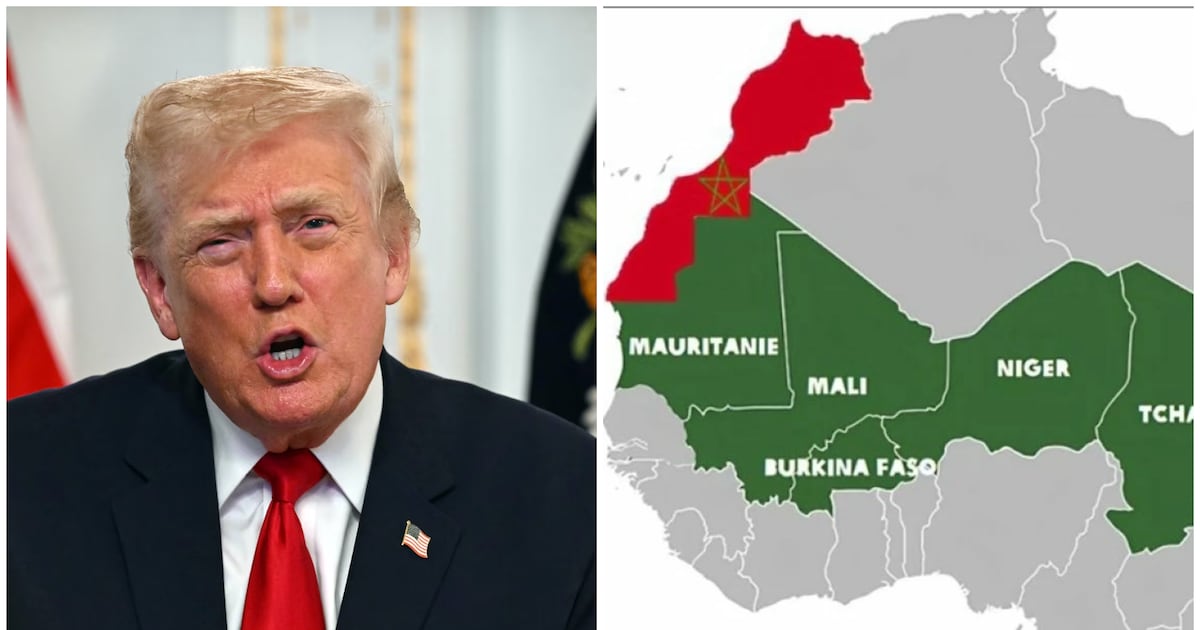
The geopolitical landscape of the Sahel is quietly undergoing a transformation. As European forces scale back their presence in Mali, Burkina Faso, and Niger, and Russia’s influence grows through para-state structures, the United States appears to be regaining momentum in the region. However, this shift is less about a dramatic return and more about a recalibration of Washington’s strategic positioning, according to Emmanuel Dupuy, president of the Institute for Prospective and Security in Europe (IPSE).
Dupuy emphasizes that the U.S. never fully disengaged from the Sahel; instead, it adopted a patient approach, allowing internal dynamics to evolve and other actors’ influence to wane before repositioning itself strategically.
pragmatic american strategy in the Sahel
This strategy aligns with a long-standing American tradition of pragmatic diplomacy. Dupuy notes, “Americans prioritize negotiation with interlocutors, even when their positions diverge. Ideology takes a backseat to security and economic interests.” In this transactional framework, the U.S. does not view Russia as a direct threat but rather as a complementary actor in a region where European influence has diminished.
The U.S. approach involves structured dialogue with current authorities, regardless of how they came to power. Dupuy draws a parallel: “This is the same method used in Mali as in Afghanistan—ultimately negotiating with groups like the Taliban.”
Several factors are creating an opportune moment for Washington. “The U.N. is losing credibility, and Russia has struggled to counter armed terrorist groups effectively,” Dupuy explains. The erosion of the U.N.’s legitimacy and Russia’s operational limitations are opening indirect avenues for American engagement.
security outsourcing and russian-american coexistence
The U.S. strategy relies heavily on indirect engagement, often through private military contractors rather than direct military deployments. Dupuy clarifies: “The Americans will leverage private firms like Blackwater, as seen in deals such as the facilitation between the DRC and Rwanda.”
This outsourcing model allows the U.S. to maintain a presence without deploying regular troops, blending seamlessly into the Sahel’s complex security environment. Dupuy adds: “The real game-changer is that neither the U.S. nor Russia will engage directly. Instead, private military companies and state-linked defense firms will operate, creating a de facto coexistence.”
convergence with regional partners
The American strategy extends beyond bilateral engagements. Dupuy highlights growing convergence with partners like Turkey and the limited presence of China in Sahelian security sectors as additional opportunities for Washington. Economically, the revival of the African Growth and Opportunity Act (AGOA)—which grants tariff-free access to U.S. markets for 30 African nations—serves as a complementary anchor to U.S. security interests in the region.
The U.S. approach is also marked by its willingness to engage with Sahelian military regimes, a stark contrast to Europe’s refusal to recognize these governments. “Americans are pragmatic. They work with whoever is in power,” Dupuy states. This adaptability is a defining feature of U.S. strategy in the region.
Morocco as the hidden pivot of american influence
In this evolving landscape, Morocco occupies a unique position. Bilateral cooperation between Rabat and Washington has intensified across military, economic, and diplomatic spheres. Dupuy describes Morocco as “the ideal partner the U.S. needs.”
He elaborates: “Officially, the U.S. cannot intervene frontally, but Morocco’s positive image allows it to maintain dialogue with Sahelian military governments in Mali, Niger, and Burkina Faso.” This diplomatic flexibility is unmatched by other regional players.
Dupuy also notes that Algeria’s influence in the Sahel has waned, particularly due to its strained relations with Bamako. “Algiers lost its quasi-organic link with Mali after supporting religious actors deemed unacceptable by Malian authorities,” he explains. Meanwhile, Morocco’s religious diplomacy—through institutions like the Mohammed VI Institute for the Training of Imams—promotes a moderate, Maliki-Sufi Islam, serving as a soft-power tool for regional stabilization.
Beyond security, Morocco offers economic opportunities, including trade corridors linking the Sahel to the Atlantic via Mauritania and investments in southern Morocco. “These are long-term projects, but they lay the groundwork for future integration,” Dupuy observes. The kingdom’s investments in banking, telecommunications, and industry further solidify its role as a key regional player.
Dupuy underscores the depth of the U.S.-Morocco relationship, rooted in a non-NATO ally status granted to Rabat in 2016. This status reflects a broader triangular strategy linking Africa, the Atlantic, and the Mediterranean. “Morocco’s consistency in advocating for Euro-Mediterranean integration since 1995 has reinforced its credibility as a stable partner,” he notes.
Algeria’s shrinking influence in the Sahel
Algeria’s strategic options in the Sahel appear increasingly constrained. Dupuy dismisses claims of Algerian leverage: “Honestly, I don’t see where it lies.” He argues that Algeria’s diplomatic maneuvers—particularly on the Western Sahara issue—are ineffective in altering power dynamics. “The U.S. has reiterated that the only framework for discussion remains the autonomy plan,” he states. Algeria’s attempts to shape the narrative have failed to gain traction.
Dupuy points to the Madrid meeting as a turning point in the Western Sahara dossier, shifting the focus from ideological debates to practical implementation. Discussions now center on local governance, economic development, maritime zones, agriculture, and exclusive economic zones.
The Sahel is no longer just a battleground for security rivalries but a space for strategic realignment, where extractive interests, military outsourcing, religious diplomacy, and logistical corridors intersect. In this evolving chessboard, the U.S. is recalibrating its posture, and Morocco is emerging as the pivotal regional actor at the crossroads of the Atlantic, Mediterranean, and African continent.