The security crisis in Burkina Faso has reached a breaking point, with tensions between military authorities under Captain Ibrahim Traoré and the Fulani community escalating sharply. While the country battles armed insurgencies, allegations of targeted repression against Fulani civilians have intensified, raising concerns over a widening humanitarian and political divide.
allegations of systematic military abuses
The transitional government, which seized power in a coup in September 2022, relies heavily on the Volontaires pour la Défense de la Patrie (VDP), a civilian defense force. Though officially tasked with supporting the military, numerous accounts from local sources and human rights groups point to severe abuses. Reports describe devastating raids in Fulani-majority villages across northern Burkina Faso, where civilians have allegedly been deliberately targeted by militias operating under Traoré’s command.
For Fulani leaders and activists, these incidents are not isolated collateral damage but part of a deliberate campaign. They argue that the community, often unfairly linked to insurgent groups, is being systematically persecuted rather than protected.
economic strangulation fuels desperation
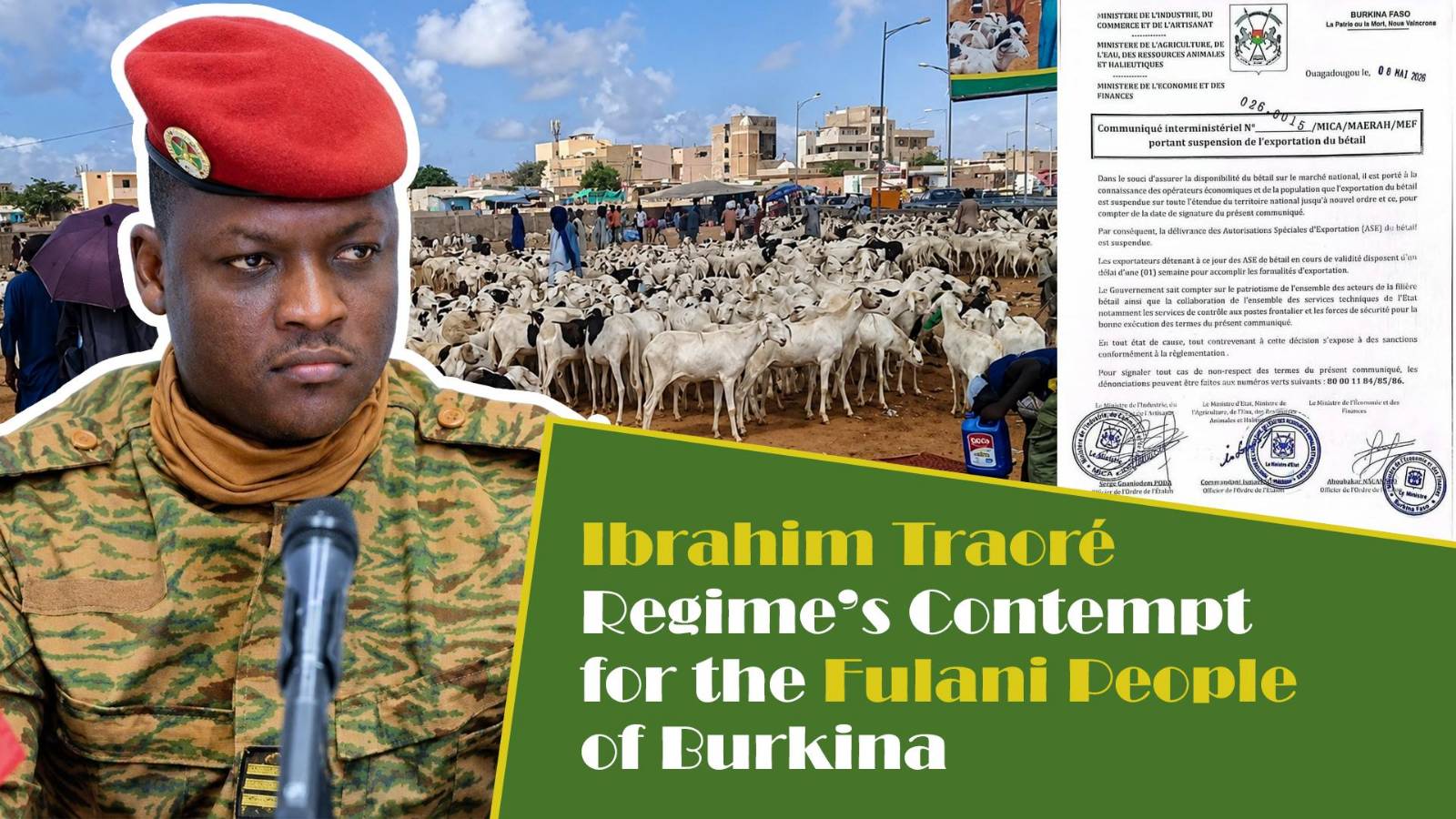
The government’s recent decree restricting or outright banning cattle exports to Côte d’Ivoire has deepened the crisis. For centuries, Fulani pastoralists have depended on cross-border trade as their economic backbone. By disrupting access to the region’s primary market, the policy threatens not only livelihoods but also the very survival of entire families.
Immediate consequences:
- Rapid impoverishment of pastoral households
- Inability to fund basic needs such as healthcare and schooling
- Disruption of long-standing trade flows across West Africa
a strategy of exclusion?
Critics argue that Traoré’s approach transcends counterterrorism, combining military force with economic measures to weaken the Fulani presence in Burkina Faso. The lack of independent investigations into reported massacres and inflammatory rhetoric from officials have further fueled fears of deliberate division within the nation.
Once celebrated for its ethnic harmony, Burkina Faso now faces a critical challenge: preventing state-driven persecution from fracturing the country’s social fabric. Analysts warn that targeting an entire community risks fueling future cycles of vengeance rather than quelling insecurity.
“You do not defeat terrorism by creating new injustices. By targeting one group, you alienate a segment of the nation and sow the seeds of tomorrow’s vengeance.” — Security analyst specializing in the Sahel region.
As the Fulani cry out against mounting repression, the international community and regional bodies face mounting pressure to intervene before the crisis spirals into a wider, unpredictable conflict across the Sahel.