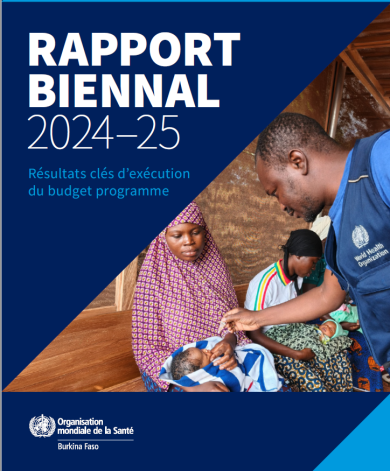
The World Health Organization’s (WHO) 2024-2025 biennial report for Burkina Faso reveals significant progress in public health, even amidst persistent security, humanitarian, and climate-related obstacles.
Among the report’s standout accomplishments is the widespread implementation of the malaria vaccine across all 70 health districts, marking a pivotal step in preventing malaria and safeguarding child health. Additionally, the WHO PEN package was rolled out in six health districts, bolstering the integrated management of non-communicable diseases (NCDs) at the primary healthcare level.
A significant policy milestone during this biennium is the enactment of a comprehensive anti-tobacco decree, which prohibits smoking in public spaces and on public transport. This demonstrates a strong national commitment to health promotion and reducing avoidable risk factors.
WHO-backed initiatives against malaria continued to yield substantial results: more than 5 million children received seasonal malaria chemoprevention, and approximately 15 million insecticide-treated mosquito nets were distributed nationwide.
In vulnerable and hard-to-reach regions, the WHO played a crucial role in maintaining essential health services by deploying advanced health posts and mobile clinics. Furthermore, the organization facilitated the delivery of 58 tons of vital medicines and medical equipment to support these at-risk populations.
The report also underscores foundational improvements in health information systems, notably the adoption of the International Classification of Diseases (ICD-11) in four key reference hospitals. This represents a critical stride toward enhancing data quality, improving mortality surveillance, and enabling evidence-based decision-making.
Collectively, these achievements underscore Burkina Faso’s advancements in building a resilient health system, fortifying healthcare services, and protecting its citizens. They also illuminate strategic priorities for consolidation in upcoming programmatic cycles.