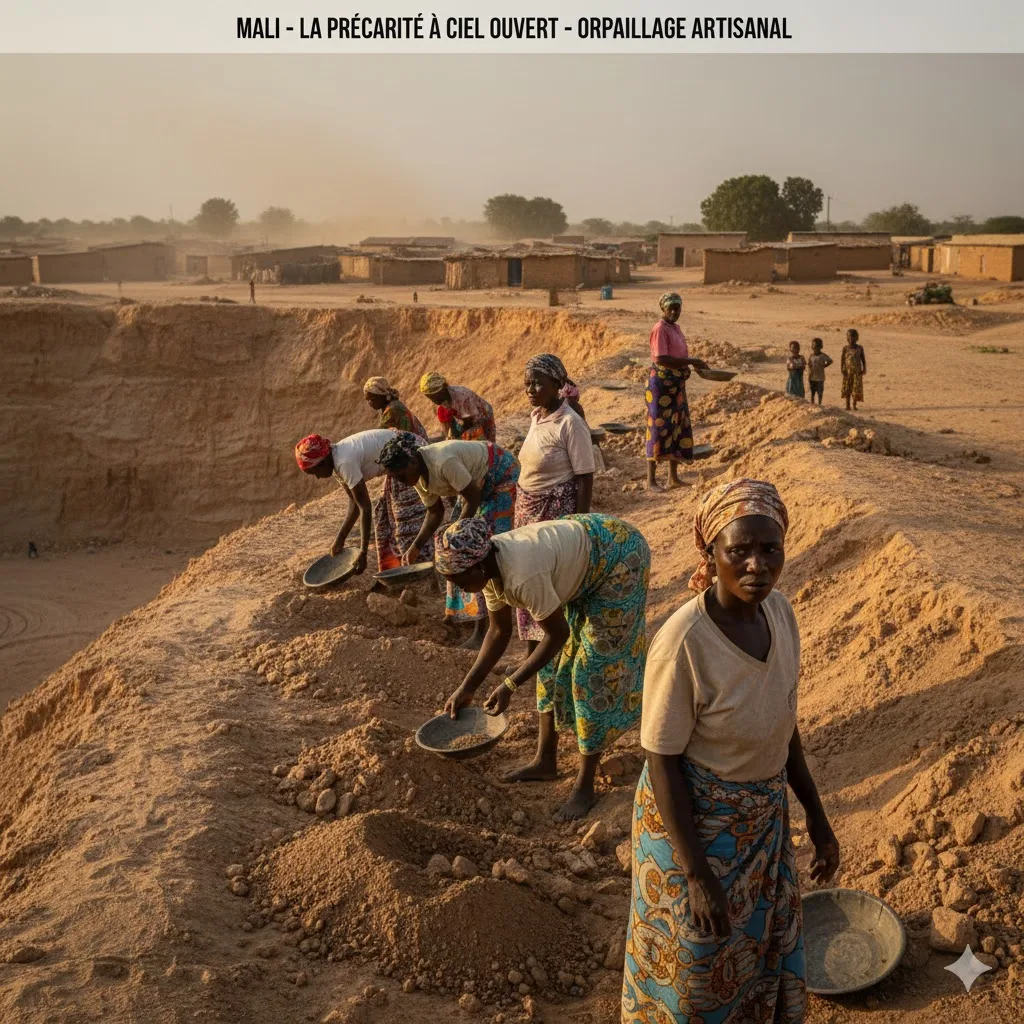

The collapse of an unstable mine shaft in Kéniéty, Kéniéba district, claimed six women’s lives on January 9, 2026. Behind this tragedy lies a harsh truth: crushing poverty forces mothers to risk everything for survival.
Mothers risking life and limb to feed their families
No woman in Mali’s artisan mining sector chooses this work—she is driven by absolute necessity. With no other means to feed her children or cover basic household expenses, she endures grueling 12-hour shifts under scorching sun in Kayes Region, extracting gold with little more than her bare hands. The meager earnings barely cover a day’s meals, yet she returns to the same life-threatening conditions day after day.
These women often work in the most dangerous sections of mines—abandoned pits, unstable tunnels, or eroded sites deemed too hazardous by male miners. When the walls give way, they become victims of a system that offers no safety net, no alternatives, just the desperate hope of scraping together enough gold to survive another day.
The hidden dangers beyond collapsed tunnels
The risks extend far beyond fatal collapses. With no access to protective gear, these women handle toxic substances like mercury, risking irreversible health damage. They face daily exposure to violence, exploitation, and humiliation—vulnerabilities that deepen with every hour spent in these lawless sites.
The tragedy in Kéniéty, where six women—including two married—died instantly under a mountain of earth, exposes the brutal cycle of poverty and peril. Their final moments came while digging through the walls of an abandoned Chinese-operated mine, their dreams of a better life buried forever beneath the rubble.
The desperate need for economic alternatives
For communities in Dialafara, the aftermath of mining operations has become a public safety nightmare. Abandoned mine shafts, left gaping and unsecured by departing companies, lure desperate women into certain danger. Residents now demand mandatory site rehabilitation as a matter of survival—a measure that could prevent future tragedies.
But reclamation alone isn’t enough. Without sustainable income opportunities, women will continue to return to these death traps. The transitional military authorities and social services must prioritize vocational training and microfinance programs to steer women toward safer, dignified livelihoods. Until then, poverty will keep claiming victims in Mali’s treacherous gold fields.