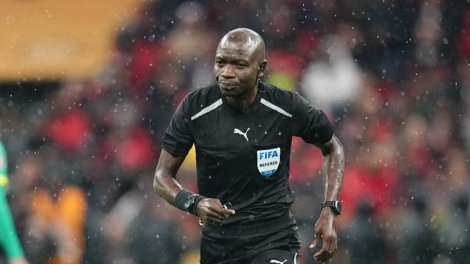
When the Confédération Africaine de Football (CAF) announced the officiating team for the first leg of the 2026 CAF Champions League final between AS FAR Rabat and Mamelodi Sundowns, controversy erupted. Jean-Jacques Ndala, the Congolese referee who oversaw the contentious 2025 Africa Cup of Nations final, was selected to lead the match scheduled for May 17 in Pretoria. The decision has sparked backlash from both sides, with the Moroccan club taking a particularly strong stance.
The Congolese referee’s appointment has reignited debates about officiating standards in African football. Critics argue that his performance in the 2025 AFCON final—widely criticized for missed calls and procedural errors—has left a questionable legacy. The 2026 CAF Champions League final, a high-stakes clash between two powerhouse teams, now faces scrutiny not just for the players on the pitch, but for the officials calling the game.
AS FAR challenges the referee’s appointment
AS FAR Rabat has formally protested the selection of Jean-Jacques Ndala, citing concerns over fairness and consistency. In an official letter to the CAF, the Moroccan club highlighted a perceived imbalance in the officiating teams across the two legs of the final. While Ndala leads the first match in Pretoria, the return leg in Rabat will feature a more diverse panel of referees—a discrepancy that AS FAR argues undermines the integrity of the competition.
The club also pointed to Ndala’s controversial track record, particularly his handling of the 2025 AFCON final. That match, which ended in a Senegalese protest and a forfeiture ruling in Morocco’s favor, exposed flaws in officiating that many believe should disqualify him from high-profile assignments. The Court of Arbitration for Sport (CAS) is now reviewing the case, adding another layer of uncertainty to the situation.
broader implications for african football officiating
The controversy extends beyond the two competing clubs. The CAF’s decision to appoint Ndala despite his recent high-profile errors raises questions about the organization’s officiating standards. With the 2026 FIFA World Cup on the horizon, African football faces pressure to demonstrate transparency and accountability in referee selection.
Mamelodi Sundowns, the South African opponent, has also expressed reservations about Ndala’s appointment, though their objections appear less vocal. Still, the broader football community in Africa is watching closely, as the final could set a precedent for how refereeing controversies are handled in the future. For AS FAR and their supporters, the battle is not just about a single match—it’s about the future credibility of African football’s premier club tournament.